Report ID: 1040 |
Published Date: 27 Jul 2026 |
Report Format: |
Delivery Timeline: 48-72 Business Hours
Wearable Diabetes Devices Market Outlook:
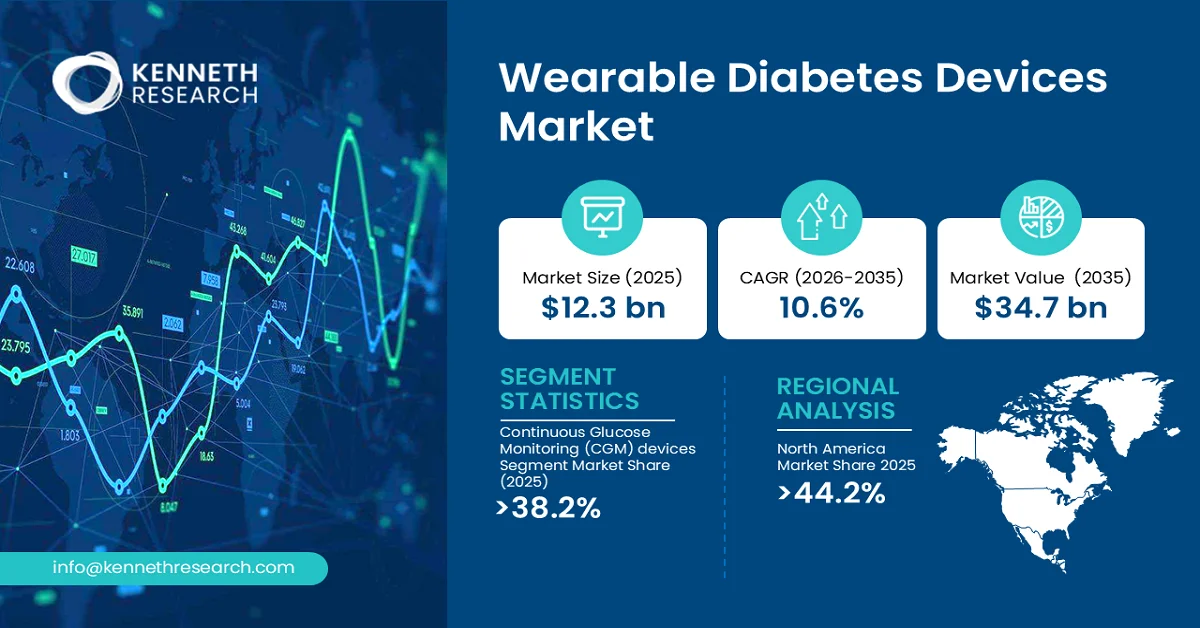
Wearable Diabetes Devices Market size was valued at USD 12.3 billion in 2025 and is projected to reach USD 34.7 billion by the end of 2035, rising at a CAGR of 10.6% during the forecast period, i.e., 2026–2035. In 2026, the industry size of wearable diabetes devices is estimated at USD 14.5 billion.
The primary growth driver for the wearable diabetes devices market is the increasing global burden of diabetes, which is accelerating demand for continuous, real-time glucose monitoring and digital disease management. Rising adoption of wearable technologies by healthcare providers and patients is further supported by initiatives promoting earlier diagnosis, improved glycemic control, and personalized diabetes care.
The wearable diabetes devices market comprises medical technologies designed to continuously monitor glucose levels or support insulin administration through wearable, patient-friendly systems. These devices include continuous glucose monitoring (CGM) systems, wearable insulin pumps, and integrated diabetes management platforms that provide real-time physiological data to users and healthcare professionals. By enabling continuous monitoring instead of periodic finger-prick testing, wearable diabetes devices improve treatment precision and facilitate timely therapeutic interventions.
A key characteristic of this market is the integration of advanced biosensors, wireless connectivity, mobile applications, and cloud-based data sharing, allowing patients and clinicians to track glucose trends, receive alerts, and make informed treatment decisions. Many wearable devices also support interoperability with digital health ecosystems, enhancing personalized disease management and remote patient monitoring.
The market is strategically important to the healthcare industry because it addresses the growing need for effective long-term diabetes management while reducing the risk of severe glycemic events and diabetes-related complications. Increasing adoption of wearable technologies is also supporting value-based healthcare by improving patient engagement, enabling data-driven clinical decisions, and strengthening chronic disease management across hospitals, specialty clinics, and home-care settings.
Key Wearable Diabetes Devices Market Insights Summary:
Key Takeaways: Market Trends & Insights
- The wearable diabetes devices market is expected to grow from USD 12.3 Billion in 2025 to USD 34.7 Billion by 2035, registering a CAGR of 10.6% during 2026–2035
- Continuous Glucose Monitoring (CGM) Devices led the market with a 38.2% share in 2025, supported by increasing adoption of connected glucose monitoring and digital diabetes management technologies
- Type 1 Diabetes is projected to witness strong growth owing to the rising adoption of wearable monitoring devices integrated with insulin delivery and remote patient management systems
- North America dominated the market with a 44.2% share in 2025, driven by advanced healthcare infrastructure, strong reimbursement frameworks, and high adoption across the United States and Canada
- Asia Pacific is expected to emerge as the fastest-growing regional market, supported by expanding healthcare investments, digital health initiatives, and increasing medical device manufacturing in China and Japan
Market Drivers
- Expansion of reimbursement coverage for wearable diabetes technologies
- Advancements in non-invasive and minimally invasive glucose sensing technologies
- Expanding integration of continuous monitoring with digital healthcare ecosystems
- Increasing emphasis on personalized and home-based diabetes management
Challenges
- High device costs and reimbursement variability
- Data security, interoperability, and regulatory compliance complexity
Wearable Diabetes Devices Market Overview & Supply Chain
The adoption of wearable diabetes devices is increasing globally as healthcare systems prioritize continuous disease management, early intervention, and digital health integration for chronic conditions. Wearable technologies such as continuous glucose monitoring systems and connected insulin delivery devices enable real-time monitoring, support remote clinical decision-making, and improve patient engagement through data-driven care. Their growing use is further reinforced by advances in biosensor technology, wireless connectivity, mobile health applications, and interoperability with electronic health records. At the policy level, governments and international health organizations are strengthening diabetes surveillance and management frameworks to improve long-term outcomes. The World Health Organization reported in 2024 that more than 800 million adults worldwide are living with diabetes, highlighting the increasing need for scalable monitoring technologies capable of supporting long-term disease management and expanding access to quality diabetes care. This growing disease burden continues to accelerate investment in wearable medical technologies across developed and emerging healthcare markets.
The value chain of the wearable diabetes devices market begins with the sourcing of high-precision electronic components, biosensors, semiconductor chips, microprocessors, batteries, medical-grade polymers, adhesives, and communication modules supplied by specialized electronics and medical material manufacturers. Device manufacturers integrate these inputs into wearable continuous glucose monitors, insulin pumps, transmitters, and associated software platforms while ensuring compliance with stringent medical device quality and regulatory standards. Following production, products undergo calibration, validation, sterilization where applicable, packaging, and distribution through direct sales channels, medical device distributors, hospital procurement networks, retail pharmacies, specialty diabetes clinics, and e-commerce platforms. End users include hospitals, endocrinology clinics, ambulatory care centers, home healthcare providers, and individuals managing diabetes. Major stakeholders across the ecosystem include component suppliers, contract manufacturers, device developers, software and cloud service providers, regulatory authorities, healthcare providers, reimbursement agencies, insurers, and patient advocacy organizations working together to support effective diabetes management.
Wearable Diabetes Devices Market: Growth Drivers & Challenges
Growth Drivers:
- Expanding Integration of Continuous Monitoring with Digital Healthcare Ecosystems: The growing integration of wearable diabetes devices with digital healthcare ecosystems is significantly accelerating market expansion. Modern wearable devices increasingly combine continuous glucose sensing with cloud connectivity, smartphone applications, artificial intelligence-assisted analytics, and remote patient monitoring platforms, enabling clinicians to make informed treatment decisions while improving patient adherence. This integration supports personalized diabetes management, reduces unnecessary clinical visits, and facilitates proactive intervention when abnormal glucose patterns are detected. Regulatory acceptance of digital health technologies and broader healthcare digitization are further encouraging hospitals and outpatient providers to adopt connected wearable solutions. Reflecting this technological advancement, Abbott announced in 2024 that its Lingo continuous glucose biosensor became available in the United States, expanding consumer access to wearable glucose monitoring technology beyond traditional diabetes management applications. The continued convergence of wearable sensors, digital therapeutics, and connected care platforms is expected to strengthen long-term adoption across preventive and chronic disease management.
- Increasing Emphasis on Personalized and Home-Based Diabetes Management: The shift toward personalized and home-based diabetes management is creating sustained demand for wearable diabetes devices across healthcare systems. Patients and healthcare providers increasingly prefer continuous, minimally invasive monitoring solutions that enable real-time treatment adjustments without frequent hospital visits. Wearable devices provide actionable glucose insights, facilitate individualized insulin dosing strategies, and improve patient engagement through digital alerts and trend analysis. Healthcare providers also benefit from longitudinal patient data that supports evidence-based clinical decision-making and remote consultations. As healthcare systems continue expanding virtual care and decentralized chronic disease management, wearable technologies are expected to become an integral component of routine diabetes care. Future innovation in sensor accuracy, interoperability with insulin delivery systems, and predictive analytics will further enhance clinical outcomes while improving accessibility across diverse patient populations, reinforcing long-term market growth.
Challenges:
- High Device Costs and Reimbursement Variability: The high cost of wearable diabetes devices remains a significant barrier to broader market adoption, particularly in price-sensitive healthcare systems and emerging economies. Advanced continuous glucose monitoring systems and wearable insulin delivery devices require sophisticated sensors, electronics, software integration, and recurring consumables, increasing the overall cost of ownership for patients and healthcare providers. In addition, reimbursement policies differ substantially across countries and insurance providers, creating unequal access to these technologies. Manufacturers often face prolonged market access timelines due to varying coverage requirements and pricing negotiations. Commercially, these factors can limit product penetration, slow sales growth, and constrain expansion into underserved markets. Looking ahead, wider reimbursement coverage, value-based healthcare models, and cost-efficient product development will be essential to improve affordability and support sustained market expansion.
- Data Security, Interoperability, and Regulatory Compliance Complexity: As wearable diabetes devices become increasingly connected through cloud platforms, mobile applications, and digital health ecosystems, ensuring data security and seamless interoperability has become a critical industry challenge. Manufacturers must comply with evolving cybersecurity, privacy, and medical device regulations while maintaining compatibility with electronic health records and other digital healthcare systems. Differences in communication standards and software architectures can complicate integration across healthcare providers and technology platforms. These challenges increase product development costs, extend regulatory approval timelines, and require continuous software updates throughout the product lifecycle. From a commercial perspective, inadequate interoperability or security concerns may reduce user confidence and delay purchasing decisions by healthcare organizations. Continued investment in standardized digital health frameworks and secure connected-device infrastructure will be necessary to support long-term market adoption.
Wearable Diabetes Devices Market Size and Forecast:
| Report Attribute | Details |
|---|---|
| Base Year |
2025 |
| Forecast Year |
2026-2035 |
| CAGR |
10.6% |
| Base Year Market Size (2025) |
USD 12.3 billion |
| Forecast Year Market Size (2035) |
USD 34.7 billion |
| Regional Scope |
|
Wearable Diabetes Devices Market Segmentation Analysis:
Device Type Segment Analysis
In the device type segment, the Continuous Glucose Monitoring (CGM) devices sub-segment is anticipated to capture the largest market share of 38.2% by the end of 2025.
Continuous Glucose Monitoring (CGM) Devices represent the leading sub-segment in the wearable diabetes devices market due to their ability to provide real-time glucose insights, reduce dependence on routine finger-prick testing, and support proactive diabetes management. Demand is being driven by the increasing preference for continuous monitoring solutions that enable timely therapeutic adjustments, improve patient engagement, and facilitate personalized care. Healthcare providers are increasingly integrating CGM systems into routine diabetes management because they offer continuous data streams that enhance clinical decision-making and support remote patient monitoring. According to the U.S. Centers for Disease Control and Prevention (CDC), anyone with diabetes can benefit from using a continuous glucose monitor, particularly individuals with type 1 diabetes, those with type 2 diabetes using insulin, and patients who frequently monitor their blood glucose levels, reflecting the expanding clinical acceptance of CGM technology. On the supply side, manufacturers continue to improve sensor accuracy, wear duration, device miniaturization, connectivity, and interoperability with insulin delivery systems and digital health platforms. Continued innovation, broader reimbursement support, and integration with automated diabetes management solutions are expected to reinforce the segment's leadership over the forecast period.
Type of Diabetes Segment Analysis
The Type 1 diabetes is projected to grow as the second-largest segment in the wearable diabetes devices market due to four converging demand drivers.
The Type 1 Diabetes sub-segment is projected to experience strong growth in the wearable diabetes devices market because individuals with this condition require lifelong insulin therapy and continuous glucose monitoring to maintain optimal glycemic control. The need for real-time glucose data has accelerated the adoption of wearable technologies that improve treatment precision, reduce the risk of severe hypoglycemia, and support automated insulin delivery systems. Healthcare providers are increasingly recommending connected diabetes devices as part of comprehensive disease management, particularly for patients requiring intensive insulin therapy. According to the U.S. National Institute of Diabetes and Digestive and Kidney Diseases (NIDDK), approximately 304,000 children and adolescents younger than 20 years had type 1 diabetes in the United States in 2021, reflecting a substantial patient population that benefits from continuous wearable monitoring technologies. On the supply side, manufacturers continue to enhance sensor accuracy, device connectivity, and interoperability with insulin pumps and digital health platforms. Continued innovation in closed-loop diabetes management systems and expanding clinical adoption are expected to sustain the growth of this segment throughout the forecast period.
Our in-depth analysis of the global wearable diabetes devices market includes the following segments:
|
Segment |
Sub-segment |
|
Device |
|
|
Type |
|
|
Type of Diabetes |
|
|
Application |
|
|
End User |
|
Wearable Diabetes Devices Market Regional Insights:
North America Market Trends & Insights:
North America wearable diabetes devices market is projected to hold the largest revenue share of 44.2% by the end of 2025.
The region's leadership is supported by advanced healthcare infrastructure, widespread adoption of digital health technologies, and strong investments in diabetes management innovation. Favorable regulatory pathways, established reimbursement systems, and increasing deployment of connected healthcare solutions have accelerated the commercialization of wearable diabetes devices across the region. In addition, the presence of leading medical device manufacturers, continuous research and development investments, and growing integration of remote patient monitoring into routine clinical practice have strengthened both production capabilities and end-user adoption. These factors continue to reinforce North America's position as the leading regional market for wearable diabetes technologies.
The United States remains the primary growth engine within North America, supported by a robust innovation ecosystem, high clinical adoption of wearable technologies, and ongoing investment in diabetes care. According to the U.S. Centers for Disease Control and Prevention (CDC), 40.1 million people in the United States had diagnosed or undiagnosed diabetes in 2023, highlighting a substantial patient population requiring advanced glucose monitoring and insulin delivery technologies. This growing disease burden continues to drive demand for wearable diabetes devices across the country.
Canada complements regional leadership through expanding digital health initiatives, increasing adoption of connected medical technologies, and supportive healthcare policies that enhance chronic disease management and improve patient access to innovative wearable diabetes devices.
Asia Pacific Market Trends & Insights:
Asia Pacific is emerging as a high-growth region in the wearable diabetes devices market, driven by the rising demand for advanced diabetes management solutions, expanding healthcare infrastructure, and increasing adoption of digital health technologies. Rapid urbanization, changing lifestyles, and a growing focus on chronic disease management have encouraged healthcare providers to integrate wearable monitoring devices into routine clinical practice. Governments across the region are strengthening healthcare systems through initiatives that promote digital healthcare, medical device innovation, and improved access to diabetes care. At the same time, expanding manufacturing capabilities, increasing investments in medical technology, and the growing presence of international and domestic device manufacturers are enhancing the regional supply ecosystem. Future opportunities are expected to arise from broader adoption of connected healthcare platforms, integration of wearable devices with telemedicine services, and continued innovation in sensor technologies and automated diabetes management systems.
China is a key contributor to regional growth owing to its expanding medical device manufacturing industry, increasing deployment of digital health solutions, and supportive government initiatives aimed at improving chronic disease prevention and management. The country's large healthcare infrastructure and continued investments in smart medical technologies are creating favorable conditions for the adoption of wearable diabetes devices.
Japan complements regional expansion through its advanced healthcare system, strong emphasis on medical technology innovation, and widespread acceptance of connected healthcare solutions. Ongoing research in biosensors, precision medicine, and remote patient monitoring, together with collaborations between healthcare providers and technology companies, is expected to strengthen the adoption of wearable diabetes devices across the Japanese healthcare ecosystem.
Leading Companies Operating in the Global Wearable Diabetes Devices Market:
Here is a list of upstream, downstream, and key players operating in the global wearable diabetes devices market competitive ecosystem:
- Abbott Laboratories (United States)
- Dexcom, Inc. (United States)
- Insulet Corporation (United States)
- Tandem Diabetes Care, Inc. (United States)
- Ascensia Diabetes Care Holdings AG (Switzerland)
- Ypsomed AG (Switzerland)
- Glucotrack, Inc. (United States)
Recent Developments
- In August 2025, Abbott launched the next-generation FreeStyle Libre® 2 Plus sensor in India, offering automatic glucose readings every minute with optional real-time alarms for low or high glucose levels, without requiring routine fingersticks.
- In September 2025, Medtronic received FDA clearance for its MiniMed™ 780G system to integrate with Abbott's Instinct sensor, expanding the automated insulin delivery system's compatibility and also received approval for use in adults with insulin-requiring type 2 diabetes.
- In July 2025, OSR Holdings signed a term sheet to acquire Woori IO, a South Korean company developing a non-invasive glucose monitoring technology using near-infrared spectroscopy (NIRS) that measures glucose without needles or skin penetration.
Frequently Asked Question
In 2025, the wearable diabetes devices market exceeded USD 12.3 Billion.
The wearable diabetes devices market is projected to reach USD 34.7 Billion by the end of 2035, expanding at a CAGR of 10.6% over the forecast period (2026–2035).
The major players in the market are Abbott, Dexcom, Insulet Corporation, Ascensia Diabetes Care, Ypsomed AG, Tandem Diabetes Care, Senseonics Holdings, Inc., and others.
In the Device segment, the Continuous Glucose Monitoring (CGM) Devices sub-segment is anticipated to capture the largest market share of 38.2% in the future and exhibit lucrative growth opportunities during 2026–2035. This growth trajectory is largely attributed to the increasing integration of continuous glucose monitoring with digital healthcare ecosystems and rising adoption of connected diabetes management technologies.
North America is projected to hold the largest market share of 44.2% by the end of 2035 and provide more business opportunities in the future. Continuous investments in diabetes technology innovation, advanced healthcare infrastructure, and strong adoption of wearable medical devices across the United States and Canada are fostering the region's dominance.
Why Choose Kenneth Research ?
-
Insight with Impact : We don’t just gather data — we uncover stories, trends, and opportunities that fuel business growth.
-
Experts Who Get It : Our team speaks your industry’s language and knows what really matters to your customers and market.
-
Custom-Built for You : Forget one-size-fits-all. We craft research and consulting solutions as unique as your business vision.
-
Partners, Not Just Providers : We work with you, not for you — collaborating closely to turn insights into smart, strategic moves.
-
Results That Speak : Our work powers brands, startups, and industry leaders alike — with a track record of ideas that work in the real world.
Report ID: 1040 |
Published Date: 27 Jul 2026 |
Report Format: |
Delivery Timeline: 48-72 Business Hours

Copyright © 2025 Kenneth Research. All rights reserved. Terms of Use | Privacy Policy
