Report ID: 1087 |
Published Date: 14 Aug 2026 |
Report Format: |
Delivery Timeline: 48-72 Business Hours
Surgical Clips Market Outlook:
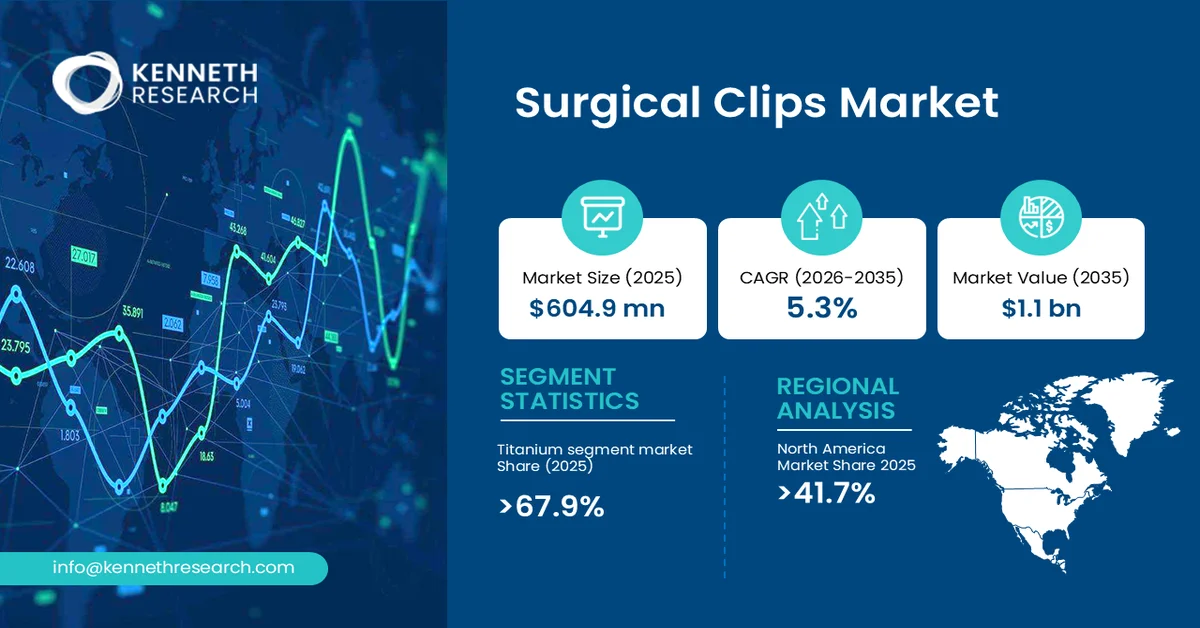
Surgical Clips Market size was valued at USD 604.9 million in 2025 and is projected to reach USD 1.1 billion by the end of 2035, rising at a CAGR of 5.3% during the forecast period, i.e., 2026-2035. In 2026, the industry size of surgical clips is estimated at USD 636.5 million.
The primary growth driver for the surgical clips market is the expanding adoption of minimally invasive surgical procedures. According to the OECD, advances in less invasive surgical interventions have increased same-day surgeries by improving patient safety, shortening recovery, and enhancing healthcare efficiency, thereby supporting sustained demand for surgical clip technologies.
The surgical clips market comprises medical devices designed to clamp, ligate, or occlude blood vessels, ducts, and other tubular anatomical structures during surgical procedures. These clips provide secure mechanical closure to achieve hemostasis or tissue approximation without the need for conventional suturing in many clinical applications. Manufactured from materials such as titanium and polymer, surgical clips are available in multiple configurations to support open, laparoscopic, endoscopic, and robotic-assisted surgeries.
Key characteristics of surgical clips include biocompatibility, reliable locking mechanisms, high retention strength, corrosion resistance, and compatibility with modern surgical imaging and instrumentation. Depending on procedural requirements, they may be permanent or absorbable and are deployed using dedicated clip appliers that enable precise placement in confined surgical fields. Their ability to reduce operative complexity, minimize tissue trauma, and improve procedural efficiency has made them an integral component of contemporary surgical practice.
The market is strategically important to hospitals, ambulatory surgical centers, and specialty clinics, supporting a broad range of procedures across general surgery, cardiovascular surgery, gynecology, urology, and gastrointestinal interventions. Growing adoption of minimally invasive techniques and continuous advancements in surgical technologies continue to reinforce the industrial relevance of surgical clips within the global medical device ecosystem.
Key Surgical Clips Market Insights Summary:
Key Takeaways: Market Trends & Insights
- The surgical clips market is projected to grow from USD 636.5 million in 2026 to USD 1.1 billion by 2035 at a CAGR of 5.3%
- Titanium led the material segment with a 67.9% share in 2025 owing to its superior biocompatibility, corrosion resistance, and widespread use in minimally invasive surgeries
- North America accounted for the largest regional share of 41.7% in 2025, supported by advanced healthcare infrastructure, strong medical device manufacturing capabilities, and high adoption of minimally invasive procedures
- Ligating clips are expected to witness robust growth due to increasing demand for laparoscopic and robotic-assisted surgeries, enhanced procedural efficiency, and continuous product innovation
- Growing investments in ambulatory surgical centers, expanding adoption of robotic-assisted surgery, and ongoing advancements in biocompatible clip materials are expected to create sustained long-term growth opportunities across the global market
Market Drivers
- Increasing prevalence of chronic diseases requiring surgical intervention
- Expansion of robotic-assisted surgery platforms
- Growing investments in hospital and ambulatory surgical center infrastructure
- Rising emphasis on surgical efficiency, patient safety, and reduced postoperative complications
Challenges
- Stringent regulatory compliance and product validation requirements
- Increasing preference for advanced energy-based vessel sealing technologies
Surgical Clips Market Overview & Supply Chain
The adoption of surgical clips is increasing globally as healthcare systems continue to expand minimally invasive, laparoscopic, endoscopic, and robot-assisted surgical procedures that improve clinical efficiency and patient recovery. Technological advancements in clip appliers, enhanced biocompatible materials, and improved compatibility with advanced imaging systems have strengthened their role across multiple surgical specialties. Regulatory emphasis on patient safety, standardized surgical practices, and value-based healthcare is further accelerating demand for reliable vessel and tissue ligation devices. Industry relevance is reinforced by the OECD, which reports that ambulatory surgery accounts for 90% or more of all cataract surgeries in most OECD countries with available data, reflecting the widespread shift toward less invasive surgical care that depends on efficient surgical instrumentation, including surgical clips.
The surgical clips industry value chain begins with the procurement of high-grade raw materials, primarily medical-grade titanium, stainless steel alloys, and advanced polymers sourced from certified biomaterial suppliers. These materials undergo precision engineering, machining, molding, and surface treatment processes to ensure biocompatibility, mechanical integrity, and compliance with medical device quality standards. Manufacturers integrate clips with dedicated reusable or disposable applicators while conducting rigorous validation, sterilization, and packaging before regulatory approval and commercial release. Distribution is managed through direct sales networks, medical device distributors, and specialized procurement organizations that supply hospitals, ambulatory surgical centers, and specialty clinics. End users include general surgeons, cardiovascular surgeons, gynecologists, urologists, and gastrointestinal specialists performing both open and minimally invasive procedures. Major stakeholders across the value chain include raw material suppliers, component manufacturers, contract manufacturers, regulatory authorities, healthcare providers, purchasing organizations, and logistics partners that collectively ensure product availability, quality assurance, and uninterrupted clinical adoption.
Surgical Clips Market: Growth Drivers & Challenges
Growth Drivers:
- Rising adoption of minimally invasive and ambulatory surgical procedures: The increasing preference for minimally invasive surgery is a major driver of the surgical clips market because these procedures require dependable vessel and tissue ligation devices that enable efficient hemostasis while minimizing tissue trauma. Surgical clips offer rapid deployment, consistent closure performance, and compatibility with laparoscopic and robotic instruments, making them essential across general surgery, gynecology, urology, and cardiovascular interventions. As healthcare providers prioritize shorter hospital stays, improved clinical outcomes, and optimized operating room efficiency, demand for advanced surgical clip systems continues to grow. The trend is further reinforced by healthcare investments in modern surgical infrastructure and training programs that expand access to minimally invasive procedures. The World Health Organization highlights the growing importance of these techniques, noting that minimally invasive surgical techniques are now used routinely and for an expanding range of clinical indications, reflecting their increasing integration into modern healthcare systems. This sustained procedural transition is expected to create long-term opportunities for manufacturers developing innovative clip materials and precision delivery systems.
- Continuous innovation in Biocompatible Materials and Surgical Instrumentation: Continuous innovation in biomaterials and surgical instrumentation is accelerating the adoption of surgical clips by improving clinical performance and expanding procedural applications. Manufacturers are developing advanced titanium and polymer-based clips with enhanced locking mechanisms, optimized retention strength, and greater compatibility with high-resolution imaging and robotic-assisted surgical platforms. These improvements increase procedural reliability while reducing the risk of clip migration or tissue damage, supporting better surgical outcomes. Simultaneously, ergonomic clip appliers with improved precision enable surgeons to perform complex procedures more efficiently in confined anatomical spaces. Ongoing research into absorbable materials and next-generation clip designs is expected to broaden the use of surgical clips across additional specialties while addressing evolving clinical requirements. As healthcare providers increasingly invest in technologically advanced operating environments, innovation will remain a key competitive differentiator, encouraging product differentiation, regulatory approvals, and wider clinical adoption across developed and emerging healthcare markets.
Challenges:
- Increasing preference for advanced energy-based vessel sealing technologies: The growing adoption of advanced energy-based vessel sealing devices presents a significant restraint for the surgical clips market. Modern bipolar and ultrasonic sealing systems enable surgeons to seal and divide blood vessels in a single step, reducing instrument exchanges and streamlining surgical workflows. These technologies are particularly attractive for complex minimally invasive and robotic procedures where procedural efficiency is prioritized. As hospitals upgrade operating rooms with integrated energy platforms, procurement budgets may increasingly favor multifunctional devices over standalone mechanical ligation products. This shift intensifies competitive pressure on surgical clip manufacturers, requiring continuous investment in product innovation and clinical evidence generation to maintain relevance. Looking ahead, suppliers that develop clips compatible with hybrid surgical techniques, enhance deployment precision, and demonstrate superior clinical value will be better positioned to compete alongside evolving vessel sealing technologies rather than being displaced by them.
- Stringent regulatory compliance and product validation requirements: Manufacturers of surgical clips face substantial challenges associated with increasingly rigorous regulatory expectations for medical device safety, quality management, sterilization validation, and post-market surveillance. Introducing new materials, clip geometries, or delivery mechanisms often requires extensive laboratory testing, clinical validation, and detailed technical documentation before regulatory approval can be obtained. These requirements lengthen product development timelines and increase research, manufacturing, and compliance costs, particularly for smaller manufacturers with limited regulatory resources. Commercially, delayed approvals can postpone product launches and reduce responsiveness to changing clinical demands or competitive innovations. Maintaining compliance across multiple international regulatory jurisdictions further adds operational complexity for global suppliers. In the coming years, organizations that strengthen regulatory expertise, invest in robust quality systems, and incorporate compliance considerations early in product development are likely to achieve more sustainable market access and stronger long-term competitiveness.
Surgical Clips Market Size and Forecast:
| Report Attribute | Details |
|---|---|
| Base Year |
2025 |
| Forecast Year |
2026-2035 |
| CAGR |
5.3% |
| Base Year Market Size (2025) |
USD 604.9 million |
| Forecast Year Market Size (2035) |
USD 1.1 billion |
| Regional Scope |
|
Surgical Clips Market Segmentation Analysis:
Material Segment Analysis
In the material segment, the titanium sub-segment is anticipated to capture the largest market share of 67.9% by the end of 2025.
Titanium dominates the surgical clips market owing to its exceptional combination of biocompatibility, mechanical strength, corrosion resistance, and long-term stability within the human body. These characteristics make titanium clips the preferred choice for permanent vessel ligation across general, cardiovascular, gastrointestinal, and urological surgeries. Growing adoption of minimally invasive and robotic-assisted procedures has further strengthened demand, as titanium clips provide reliable closure performance while remaining compatible with precision surgical instruments. On the supply side, manufacturers benefit from mature production technologies, established medical-grade titanium supply chains, and extensive clinical validation that supports regulatory acceptance across global healthcare markets. The material’s proven safety profile also contributes to continued procurement by hospitals and ambulatory surgical centers seeking standardized surgical consumables. Demand is supported by broader trends in surgical activity.
Device Type Segment Analysis
The ligating clips is projected to grow as the second-largest segment in the surgical clips market due to four converging demand drivers.
Ligating clips are projected to experience strong growth because they provide rapid, secure occlusion of blood vessels and ducts while supporting the efficiency required in minimally invasive, laparoscopic, and robotic-assisted procedures. Their ability to reduce operative time, minimize tissue manipulation, and deliver consistent mechanical ligation makes them a preferred option across general surgery, gynecological, urological, and gastrointestinal interventions. Adoption is increasing as hospitals expand ambulatory surgical capabilities and surgeons seek standardized devices that integrate seamlessly with advanced clip appliers and robotic platforms. On the supply side, manufacturers are introducing ergonomically designed applicators, improved clip-locking mechanisms, and broader compatibility with diverse surgical workflows, strengthening product availability and clinical acceptance. Demand is also supported by the expansion of ambulatory surgery infrastructure.
Our in-depth analysis of the global surgical clips market includes the following segments:
|
Segment |
Sub-segment |
|
Device Type |
|
|
Material |
|
|
Technology |
|
|
End-User |
|
Surgical Clips Market Regional Insights:
North America Market Trends & Insights:
North America surgical clips market is projected to hold the largest revenue share of 41.7% by the end of 2025.
The region benefits from established regulatory frameworks that encourage high-quality medical device manufacturing while ensuring patient safety through rigorous product evaluation and post-market surveillance. Strong investments in hospital modernization, ambulatory surgical centers, and advanced operating room technologies continue to accelerate the adoption of surgical clips across multiple specialties. The region also maintains sophisticated procurement systems and integrated healthcare supply chains that facilitate rapid commercialization of innovative surgical devices.
The United States represents the largest contributor to regional demand due to its extensive network of tertiary hospitals, ambulatory surgery centers, and continuous investments in advanced surgical technologies. A strong domestic medical device manufacturing ecosystem, favorable reimbursement pathways for surgical procedures, and rapid integration of robotic-assisted surgery further reinforce market expansion.
Canada complements regional growth through sustained public healthcare investment, increasing adoption of minimally invasive surgical techniques, and modernization of hospital infrastructure. Canadian healthcare institutions continue to strengthen procurement of advanced surgical devices while emphasizing standardized clinical practices, quality assurance, and improved patient outcomes. Together, these factors position North America as the primary innovation, manufacturing, and consumption hub for surgical clips.
Europe Market Trends & Insights:
Europe represents a strategically important region for the surgical clips market, supported by advanced healthcare systems, high procedural volumes, and sustained adoption of minimally invasive surgical techniques. The region's demand is driven by increasing utilization of laparoscopic, endoscopic, and robotic-assisted procedures across public and private healthcare institutions. Europe also benefits from a strong medical technology manufacturing base, with established capabilities in precision engineering, biomaterials, and surgical instrument production. Government initiatives aimed at improving surgical efficiency, expanding digital health infrastructure, and strengthening healthcare resilience continue to support investment in advanced medical devices. Harmonized regulatory frameworks for medical devices encourage high-quality product development while fostering patient safety and clinical performance. Looking ahead, opportunities are expected to arise from continued hospital modernization, growing integration of robotic surgery platforms, increasing emphasis on outpatient surgical care, and ongoing innovation in biocompatible materials and precision surgical instrumentation, creating favorable conditions for broader adoption of surgical clips across multiple specialties.
Germany serves as the leading contributor within the region due to its robust medical device manufacturing ecosystem, advanced hospital infrastructure, and strong emphasis on surgical innovation. The country's extensive adoption of minimally invasive and image-guided surgical procedures, combined with continuous investments in research and development, supports sustained demand for high-performance surgical clips.
France is also a significant market, driven by ongoing modernization of healthcare facilities, expanding use of minimally invasive surgical techniques, and a strong focus on improving procedural efficiency within both public and private healthcare systems. The country's regulatory environment and commitment to enhancing access to advanced surgical technologies further encourage the adoption of innovative ligation devices. Together, Germany and France reinforce Europe's position as a key region for technological advancement, manufacturing excellence, and long-term growth in the surgical clips market.
Leading Companies Operating in the Global Surgical Clips Market:
Here is a list of upstream, downstream, and key players operating in the global surgical clips market competitive ecosystem:
- Applied Medical (United States)
- Company Overview
- Business Strategy
- Key Product Offerings
- Financial Performance
- Key Performance Indicators
- Risk Analysis
- Recent Development
- Regional Presence
- SWOT Analysis
- Scanlan International (United States)
- Purple Surgical (United Kingdom)
- Meril Life Sciences Pvt. Ltd. (India)
- Edwards Lifesciences Corporation (United States)
- Smith & Nephew (United Kingdom)
Recent Developments
- January 2024: Teleflex Medical received U.S. FDA 510(k) clearance for its Hem-o-lok® Ligating Clips, supporting their continued use in open and laparoscopic procedures for secure vessel ligation. The clearance reinforces Teleflex's position in the polymer surgical clips market.
- February 2025: Teleflex announced its plan to separate into two publicly traded companies, with its Surgical business remaining part of the core hospital-focused company. The move is intended to increase strategic focus and investment in surgical technologies, including ligation and surgical access products.
Frequently Asked Question
In 2025, the surgical clips market exceeded USD 604.9 million.
The surgical clips market is projected to reach USD 1.1 billion by the end of 2035, expanding at a CAGR of 5.3% over the forecast period (2026-2035).
The major players in the market are Applied Medical (United States), Scanlan International (United States), Purple Surgical (United Kingdom), Meril Life Sciences Pvt. Ltd. (India), Edwards Lifesciences Corporation (United States), Smith & Nephew (United Kingdom), and others.
In the material segment, the titanium sub-segment is anticipated to capture the largest market share of 67.9% in the future and exhibit lucrative growth opportunities during 2026-2035. This growth trajectory is largely attributed to its superior biocompatibility, corrosion resistance, and widespread adoption in minimally invasive and robotic-assisted surgical procedures.
North America is projected to hold the largest market share of 41.7% by the end of 2025 and provide more business opportunities in the future. Continuous investments in advanced surgical infrastructure, strong adoption of minimally invasive procedures, and sustained innovation across the United States and Canada are fostering the region's dominance.
Why Choose Kenneth Research ?
-
Insight with Impact : We don’t just gather data — we uncover stories, trends, and opportunities that fuel business growth.
-
Experts Who Get It : Our team speaks your industry’s language and knows what really matters to your customers and market.
-
Custom-Built for You : Forget one-size-fits-all. We craft research and consulting solutions as unique as your business vision.
-
Partners, Not Just Providers : We work with you, not for you — collaborating closely to turn insights into smart, strategic moves.
-
Results That Speak : Our work powers brands, startups, and industry leaders alike — with a track record of ideas that work in the real world.
Report ID: 1087 |
Published Date: 14 Aug 2026 |
Report Format: |
Delivery Timeline: 48-72 Business Hours

Copyright © 2025 Kenneth Research. All rights reserved. Terms of Use | Privacy Policy
