Report ID: 1098 |
Published Date: 18 Aug 2026 |
Report Format: |
Delivery Timeline: 48-72 Business Hours
Liver Cancer Market Outlook:
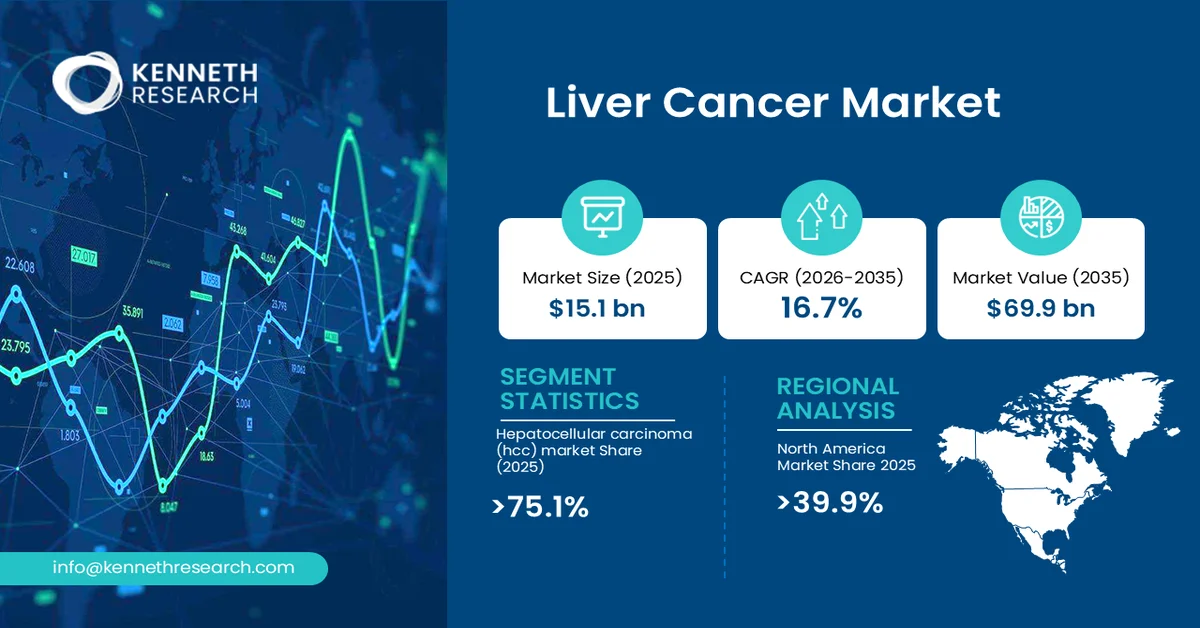
Liver Cancer Market size was valued at USD 15.1 billion in 2025 and is projected to reach USD 69.9 billion by the end of 2035, rising at a CAGR of 16.7% during the forecast period, i.e., 2026-2035. In 2026, the industry size of the liver cancer is estimated at USD 17.6 billion.
The primary growth driver for the liver cancer market is the rising global burden of liver cancer, supported by increasing prevalence of chronic hepatitis infections, metabolic liver diseases, and aging populations. International projections of substantial growth in liver cancer incidence are accelerating investments in diagnostics, targeted therapies, immunotherapies, and comprehensive oncology care pathways.
The liver cancer market comprises pharmaceuticals, biologics, immunotherapies, targeted therapies, diagnostic technologies, surgical interventions, locoregional treatment solutions, and supportive healthcare services developed for the prevention, diagnosis, treatment, and long-term management of primary liver malignancies. The market primarily addresses hepatocellular carcinoma (HCC), intrahepatic cholangiocarcinoma, and other less common primary liver cancers through integrated clinical management approaches.
A defining characteristic of this market is its multidisciplinary treatment ecosystem, combining molecular diagnostics, precision medicine, systemic drug therapies, minimally invasive procedures, transplantation programs, and continuous patient monitoring to improve clinical outcomes. Advances in biomarker-based diagnosis, immune checkpoint inhibitors, combination treatment regimens, and personalized oncology are reshaping therapeutic standards while supporting earlier intervention and more individualized patient care.
The market holds substantial industrial relevance due to increasing healthcare investments in oncology infrastructure, expanding clinical research activities, and the growing adoption of innovative cancer therapeutics across hospitals, specialty cancer centers, and academic institutions. It also supports collaborations among pharmaceutical manufacturers, biotechnology companies, healthcare providers, regulatory authorities, and research organizations to address the evolving burden of liver cancer and improve access to advanced treatment options globally.
Key Liver Cancer Market Insights Summary:
Key Takeaways: Market Trends & Insights
- Liver Cancer Market valued at USD 15.1 billion in 2025 and projected to reach USD 69.9 billion by 2035, registering a CAGR of 16.7% during 2026-2035
- Hepatocellular Carcinoma (HCC) dominated the cancer type segment with a 75.1% share in 2025, driven by increasing adoption of targeted therapies and immunotherapy
- North America accounted for the largest regional share of 39.9% in 2025, supported by advanced oncology infrastructure, strong research investments, and rapid adoption of innovative therapies
- Hospital Pharmacies emerged as the leading distribution channel owing to increasing administration of specialty oncology medicines through hospital-based cancer care settings
- Growing investments in precision oncology, biomarker-guided diagnostics, multidisciplinary cancer care, and expanding clinical research are accelerating innovation and long-term market growth
Market Drivers
- Increasing prevalence of chronic liver diseases and associated risk factors
- Rising investment in oncology-focused research and clinical trials
- Growing adoption of biomarker-based diagnostics and companion diagnostics
- Expansion of hospital-based multidisciplinary liver cancer treatment centers
Challenges
- High development complexity and clinical trial burden
- Unequal access to advanced diagnostics and specialized treatment
Liver Cancer Market Overview & Supply Chain
Growing adoption across the liver cancer market is driven by the increasing integration of precision oncology, immunotherapy, molecular diagnostics, and multidisciplinary treatment pathways into routine clinical practice. Healthcare systems are prioritizing earlier diagnosis and personalized therapeutic strategies to improve survival outcomes, while regulatory agencies continue to support innovation through accelerated approvals for novel oncology drugs. Rising investments in cancer research, digital pathology, and biomarker-guided treatment selection are further strengthening the clinical adoption of advanced liver cancer therapies. The market also benefits from expanding awareness of chronic liver disease management because viral hepatitis remains a major underlying risk factor for liver malignancies. According to the World Health Organization (WHO), an estimated 1.1 million deaths in 2024 were attributed to hepatitis B, primarily from cirrhosis and hepatocellular carcinoma (primary liver cancer), reinforcing the need for improved prevention, diagnosis, and treatment infrastructure worldwide.
The liver cancer market value chain begins with the procurement of pharmaceutical active ingredients, monoclonal antibody components, biologic materials, diagnostic reagents, imaging equipment, laboratory consumables, and medical-grade devices supplied by specialty chemical manufacturers, biotechnology firms, and life sciences companies. These inputs are transformed through drug discovery, clinical development, biologics manufacturing, formulation, quality assurance, and regulatory compliance before commercialization. Diagnostic developers simultaneously produce molecular assays, biomarker testing platforms, and imaging technologies that support disease detection and treatment planning. Distribution occurs through pharmaceutical wholesalers, specialty distributors, hospital pharmacies, oncology centers, and authorized healthcare procurement networks, ensuring timely availability of therapies and diagnostic products. End users include hospitals, cancer institutes, specialty clinics, academic medical centers, and research organizations managing liver cancer patients. Major stakeholders encompass pharmaceutical companies, biotechnology firms, diagnostic manufacturers, contract development and manufacturing organizations (CDMOs), healthcare providers, regulatory agencies, reimbursement bodies, and clinical research institutions collaborating to advance therapeutic innovation and patient access.
Liver Cancer Market: Growth Drivers & Challenges
Growth Drivers:
- Expanding precision oncology and immunotherapy adoption: The increasing adoption of precision oncology and immunotherapy is a major catalyst for the liver cancer market. Advances in molecular profiling, biomarker identification, and immune checkpoint inhibitors are enabling clinicians to personalize treatment based on disease characteristics, improving therapeutic decision-making and patient outcomes. These innovations are encouraging healthcare providers to transition from conventional systemic therapies toward targeted treatment regimens with enhanced efficacy for selected patient populations. Regulatory support for innovative oncology products, coupled with expanding clinical research and companion diagnostics, is accelerating commercialization and global adoption. As pharmaceutical companies continue to invest in combination therapies and next-generation biologics, the treatment landscape is becoming increasingly sophisticated. According to the World Health Organization (WHO), 304 million people were living with chronic hepatitis B and C worldwide in 2022, highlighting the substantial at-risk population for liver disease progression and reinforcing the long-term need for advanced liver cancer diagnostics and therapeutics.
- Increasing investment in comprehensive cancer care infrastructure: Growing investments in comprehensive oncology infrastructure are strengthening the liver cancer market by improving access to specialized diagnosis, multidisciplinary treatment, and long-term disease management. Governments, healthcare providers, and private healthcare organizations are expanding cancer centers, upgrading imaging capabilities, integrating digital pathology, and strengthening hospital-based oncology services. These developments support earlier detection, faster treatment initiation, and improved coordination among hepatologists, oncologists, surgeons, radiologists, and transplant specialists. Simultaneously, increasing adoption of electronic health records, artificial intelligence-assisted diagnostics, and precision medicine platforms is enhancing clinical workflow efficiency and treatment planning. Continued expansion of clinical trial networks and collaboration among pharmaceutical companies, biotechnology firms, academic institutions, and healthcare systems is expected to accelerate innovation, improve patient access to emerging therapies, and support sustained market growth throughout the forecast period.
Challenges:
- High development complexity and clinical trial burden: The development of liver cancer therapies is constrained by the biological complexity of the disease, heterogeneous tumor characteristics, and the frequent coexistence of chronic liver disorders that complicate clinical research. Many patients present with varying degrees of hepatic impairment, making patient selection, dose optimization, and efficacy assessment more challenging than in several other oncology indications. These factors increase trial duration, regulatory scrutiny, and research expenditures while elevating the risk of late-stage development failures. Commercially, manufacturers face prolonged product development timelines, delayed market entry, and greater investment uncertainty, which can discourage smaller biotechnology companies from advancing novel candidates independently. Looking ahead, greater use of biomarker-driven trial designs, adaptive clinical studies, and collaborative research partnerships is expected to improve development efficiency, although the complexity of liver cancer biology will remain a significant restraint.
- Unequal access to advanced diagnostics and specialized treatment: Despite continuous innovation in liver cancer management, access to advanced diagnostic technologies and specialized treatment services remains uneven across healthcare systems. Limited availability of molecular testing, high-end imaging, multidisciplinary oncology teams, and liver transplantation programs restricts timely diagnosis and optimal treatment selection in many regions. Variations in reimbursement policies, healthcare infrastructure, and specialist availability further widen disparities in patient access to innovative therapies. For industry participants, these limitations reduce the commercial reach of premium oncology products and create inconsistent adoption patterns across developed and emerging markets. The challenge also affects post-market uptake of newly approved therapies, particularly where healthcare budgets remain constrained. Future improvements in healthcare infrastructure, expanded specialist training, and broader integration of precision oncology services may gradually reduce these barriers, but achieving equitable access will require sustained investment and coordinated healthcare policy efforts.
Liver Cancer Market Size and Forecast:
| Report Attribute | Details |
|---|---|
| Base Year |
2025 |
| Forecast Year |
2026-2035 |
| CAGR |
16.7 % |
| Base Year Market Size (2025) |
USD 15.1 billion |
| Forecast Year Market Size (2035) |
USD 69.9 billion |
| Regional Scope |
|
Liver Cancer Market Segmentation Analysis:
Cancer Type Segment Analysis
In the cancer type segment, the hepatocellular carcinoma (HCC) sub-segment is anticipated to capture the largest market share of 75.1% by the end of 2025.
Hepatocellular Carcinoma (HCC) dominates the liver cancer market because it represents the principal clinical focus of liver cancer diagnosis, drug development, and therapeutic innovation. Demand remains strong due to the high prevalence of chronic liver diseases that progress to HCC, prompting healthcare providers to prioritize surveillance, early diagnosis, and timely intervention. Pharmaceutical manufacturers continue to concentrate research and development efforts on HCC, resulting in a robust pipeline of targeted therapies, immunotherapies, and combination treatment regimens supported by companion diagnostics. On the supply side, established regulatory pathways, growing manufacturing capabilities for biologics, and increasing investment in precision oncology have strengthened product availability and accelerated commercialization. Clinical guidelines also increasingly recommend multidisciplinary management strategies tailored to HCC, supporting widespread adoption across hospitals and specialized cancer centers. According to the U.S. National Cancer Institute (NCI), hepatocellular carcinoma and bile duct cancer are the main types of adult primary liver cancer, with most adult primary liver cancers being hepatocellular carcinomas, reinforcing the dominant clinical demand for HCC-focused therapies and diagnostics.
Distribution Channel Segment Analysis
The hospital pharmacies is projected to grow as the second-largest segment in the liver cancer market due to four converging demand drivers.
Hospital pharmacies are projected to experience sustained growth in the liver cancer market as they remain the primary channel for dispensing complex oncology therapies, including targeted treatments, immunotherapies, supportive medications, and combination regimens that require close clinical supervision. Increasing use of multidisciplinary cancer care models has strengthened the role of hospital pharmacies in medication management, dose verification, adverse event monitoring, and coordination with oncology specialists. Adoption is further supported by the expansion of specialized cancer centers and hospital-based infusion facilities, where high-value oncology medicines are typically administered under controlled clinical settings. On the supply side, pharmaceutical manufacturers increasingly collaborate with hospital networks to ensure secure distribution of biologics and specialty medicines while maintaining regulatory compliance and cold-chain integrity. According to the Government of India, Ministry of Health and Family Welfare, 19 State Cancer Institutes and 20 Tertiary Care Cancer Centres have been approved under the Strengthening of Tertiary Cancer Care Centres Facilities Scheme, expanding institutional capacity for cancer treatment and reinforcing demand for hospital pharmacy services.
Our in-depth analysis of the global liver cancer market includes the following segments:
|
Segment |
Sub-segment |
|
Cancer Type |
|
|
Product Type |
|
|
Age Group |
|
|
Distribution Channel |
|
Liver Cancer Market Regional Insights:
North America Market Trends & Insights:
North America liver cancer market is projected to hold the largest revenue share of 39.9% by the end of 2025.
The region benefits from substantial investments in cancer research, favorable regulatory pathways for innovative oncology products, and widespread adoption of precision medicine. High healthcare expenditure, established reimbursement frameworks, and the presence of leading pharmaceutical and biotechnology companies further support rapid commercialization and clinical uptake of novel liver cancer treatments. In addition, extensive clinical trial activity and collaborations between academic institutions, healthcare providers, and industry participants continue to accelerate therapeutic innovation.
The United States serves as the primary growth engine within North America, supported by a mature oncology ecosystem, a high concentration of specialized cancer centers, extensive clinical research networks, and continuous introduction of innovative therapeutics. Strong collaboration among pharmaceutical companies, biotechnology firms, regulatory authorities, and academic institutions enables rapid translation of scientific discoveries into clinical practice.
Canada complements regional growth through expanding investments in cancer care infrastructure, increasing adoption of precision oncology, and continued enhancement of multidisciplinary treatment services. National initiatives supporting early diagnosis, integrated healthcare delivery, and oncology research have improved patient access to advanced therapies. Together, these countries reinforce North America's position as the leading regional market through sustained innovation, strong healthcare capabilities, and an environment conducive to the commercialization and adoption of next-generation liver cancer treatments.
Asia Pacific Market Trends & Insights:
Asia Pacific is expected to remain a strategically important region for the liver cancer market due to its substantial patient population, increasing healthcare investments, and expanding adoption of advanced oncology treatments. Demand continues to rise as healthcare systems strengthen cancer screening programs, improve diagnostic capabilities, and expand access to targeted therapies and immunotherapies. Governments across the region are prioritizing cancer prevention, early detection, and modernization of oncology infrastructure through national healthcare initiatives and public health policies. Simultaneously, pharmaceutical manufacturers and biotechnology companies are increasing clinical development activities, local manufacturing capabilities, and strategic collaborations to address evolving treatment needs. The region also presents significant opportunities for precision medicine, companion diagnostics, and digital health integration as healthcare providers increasingly adopt personalized treatment approaches. Continuous improvements in reimbursement frameworks, specialist training, and hospital infrastructure are expected to further support long-term industry expansion and facilitate broader access to innovative liver cancer therapies.
China represents the largest opportunity within the region owing to its extensive healthcare reforms, expanding oncology research ecosystem, and growing investment in biopharmaceutical innovation. The country continues to strengthen domestic drug development, accelerate regulatory reviews for innovative medicines, and enhance hospital capabilities for advanced cancer management.
Japan remains a key contributor through its highly developed healthcare system, strong emphasis on precision oncology, and active participation in global clinical research. Robust collaboration among pharmaceutical companies, academic institutions, and healthcare providers supports the adoption of advanced therapeutics and diagnostic technologies, while continued innovation in oncology care is expected to reinforce the country's role in advancing liver cancer treatment across the Asia Pacific region.
Leading Companies Operating in the Global Liver Cancer Market:
Here is a list of upstream, downstream, and key players operating in the global liver cancer market competitive ecosystem:
- F. Hoffmann-La Roche Ltd (Switzerland)
- Company Overview
- Business Strategy
- Key Product Offerings
- Financial Performance
- Key Performance Indicators
- Risk Analysis
- Recent Development
- Regional Presence
- SWOT Analysis
- Eisai Co., Ltd. (Japan)
- Pfizer Inc. (United States)
- Eli Lilly and Company (United States)
- Johnson & Johnson (United States)
- Sanofi S.A. (France)
- Exelixis Inc. (United States)
Recent Developments
- April 2025: The U.S. FDA approved Opdivo® (nivolumab) plus Yervoy® (ipilimumab) from Bristol Myers Squibb as a first-line treatment for adults with unresectable or metastatic hepatocellular carcinoma (HCC). The approval was supported by the Phase III CheckMate-9DW trial, which demonstrated a significant overall survival benefit compared with lenvatinib or sorafenib.
- September 2024: Results from the LEAP-012 Phase III trial, presented at the ESMO Congress 2024, showed that Keytruda® (pembrolizumab) plus lenvatinib and TACE significantly improved progression-free survival compared with TACE alone in patients with unresectable non-metastatic hepatocellular carcinoma.
Frequently Asked Question
In 2025, the liver cancer market exceeded USD 15.1 billion.
The liver cancer market is projected to reach USD 69.9 billion by the end of 2035, expanding at a CAGR of 16.7% over the forecast period (2026-2035).
The major players in the market are F. Hoffmann-La Roche Ltd (Switzerland), Eisai Co., Ltd. (Japan), Pfizer Inc. (United States), Eli Lilly and Company (United States), Johnson & Johnson (United States), Sanofi S.A. (France), Exelixis Inc. (United States), and others.
In the cancer type segment, the hepatocellular carcinoma (hcc) sub-segment is anticipated to capture the largest market share of 75.1% in the future and exhibit lucrative growth opportunities during 2026–2035. This growth trajectory is largely attributed to increasing adoption of precision oncology, targeted therapies, and immunotherapy for liver cancer treatment.
North America is projected to hold the largest market share of 39.9% by the end of 2025 and provide more business opportunities in the future. Continuous investments in oncology research, advanced healthcare infrastructure, and innovation across the United States and Canada are fostering the region's dominance.
Why Choose Kenneth Research ?
-
Insight with Impact : We don’t just gather data — we uncover stories, trends, and opportunities that fuel business growth.
-
Experts Who Get It : Our team speaks your industry’s language and knows what really matters to your customers and market.
-
Custom-Built for You : Forget one-size-fits-all. We craft research and consulting solutions as unique as your business vision.
-
Partners, Not Just Providers : We work with you, not for you — collaborating closely to turn insights into smart, strategic moves.
-
Results That Speak : Our work powers brands, startups, and industry leaders alike — with a track record of ideas that work in the real world.
Report ID: 1098 |
Published Date: 18 Aug 2026 |
Report Format: |
Delivery Timeline: 48-72 Business Hours

Copyright © 2025 Kenneth Research. All rights reserved. Terms of Use | Privacy Policy
