Report ID: 1045 |
Published Date: 28 Jul 2026 |
Report Format: |
Delivery Timeline: 48-72 Business Hours
Interventional Neurology Market Outlook:
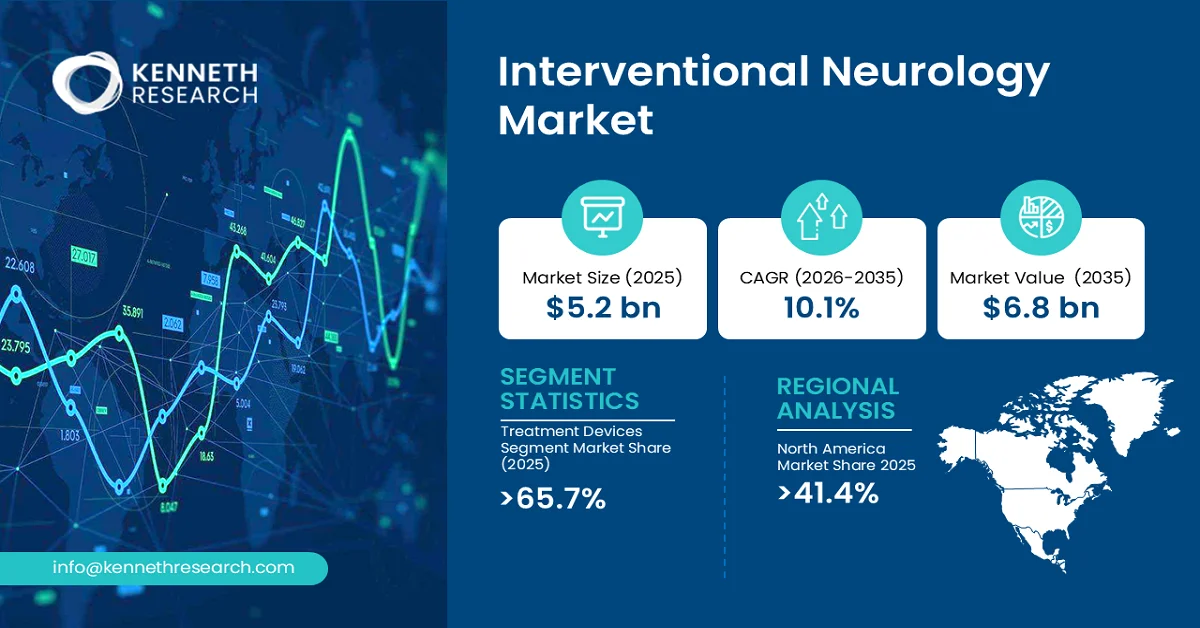
Interventional Neurology Market size was valued at USD 5.2 billion in 2025 and is projected to reach USD 10.1 billion by the end of 2035, rising at a CAGR of 6.8% during the forecast period, i.e., 2026-2035. In 2026, the industry size of the interventional neurology is estimated at USD 5.5 billion.
The rising global burden of ischemic stroke is accelerating demand for interventional neurology procedures, particularly minimally invasive endovascular therapies.
The interventional neurology market comprises medical devices, imaging technologies, and minimally invasive endovascular procedures used to diagnose and treat neurological disorders affecting the brain, spinal cord, and cerebral vasculature. The market primarily supports the management of acute ischemic stroke, intracranial aneurysms, arteriovenous malformations, carotid artery disease, and other neurovascular conditions through catheter-based interventions performed under real-time imaging guidance.
Key characteristics of the market include the use of specialized treatment devices such as stent retrievers, aspiration catheters, embolization coils, flow diverters, balloon catheters, and intracranial stents, alongside advanced diagnostic imaging systems that enable precise navigation within the cerebral vasculature. These technologies emphasize rapid intervention, reduced procedural invasiveness, shorter recovery times, and improved clinical outcomes compared with conventional open neurosurgical approaches.
The market holds significant industrial relevance as healthcare systems increasingly invest in comprehensive stroke care networks, neurointerventional infrastructure, and advanced imaging capabilities to address the growing incidence of neurovascular diseases. It also supports innovation in medical device engineering, hospital-based neurointerventional services, and specialized physician training, making it a critical component of modern neuroscience and emergency vascular care.
Key Interventional Neurology Market Insights Summary:
Key Takeaways: Market Trends & Insights
- The interventional neurology market is projected to grow from USD 5.5 billion in 2026 to USD 10.1 billion by 2035, registering a 6.8% CAGR driven by increasing adoption of minimally invasive neurovascular procedures
- Treatment devices led the product type segment with a 65.7% share in 2025, supported by rising utilization of mechanical thrombectomy and continuous innovation in neurovascular intervention technologies
- North America accounted for 41.4% of the market in 2025, benefiting from advanced stroke care infrastructure, strong medical device innovation, and widespread availability of comprehensive stroke centers
- The ischemic stroke therapeutic application is expected to witness the strongest demand owing to expanding endovascular treatment adoption, improved emergency stroke pathways, and increasing availability of specialized neurointerventional services
- Growing investments in comprehensive stroke centers, advanced imaging technologies, and next-generation neurovascular devices across the United States, Canada, China, and India are creating long-term opportunities for market expansion
Market Drivers
- Increasing prevalence of neurovascular disorders and aging populations
- Expansion of minimally invasive treatment preferences among clinicians and patients
- Rising investments in comprehensive stroke centers and neurointerventional training
- Growing regulatory approvals and commercialization of next-generation neurovascular devices
Challenges
- High procedural costs and limited reimbursement in several healthcare systems
- Shortage of skilled neurointerventional specialists and advanced treatment infrastructure
Interventional Neurology Market Overview & Supply Chain
The adoption of interventional neurology is increasing globally as healthcare systems prioritize rapid, minimally invasive treatment for neurovascular emergencies, particularly acute ischemic stroke. Continuous advances in catheter-based technologies, high-resolution neuroimaging, and specialized stroke care networks have improved procedural precision and clinical outcomes while reducing recovery time. Regulatory support for comprehensive stroke centers, growing investment in neurovascular infrastructure, and wider physician training are further strengthening market adoption. The expanding burden of neurological disorders also reinforces the need for advanced endovascular interventions. According to the World Health Organization (WHO), 11.9 million new stroke cases occurred worldwide in 2021, highlighting the increasing demand for timely neurointerventional procedures and advanced treatment devices across healthcare systems.
The interventional neurology industry value chain begins with the procurement of high-performance raw materials, including medical-grade polymers, nitinol alloys, platinum-based materials, stainless steel, radiopaque markers, and precision electronic components used in neurovascular devices and imaging systems. Manufacturers design, engineer, validate, and produce treatment devices such as stent retrievers, aspiration catheters, embolization coils, flow diverters, guidewires, and balloon catheters under stringent quality and regulatory standards. These products are distributed through direct sales organizations, specialized medical device distributors, and hospital procurement networks serving tertiary care hospitals, comprehensive stroke centers, and academic medical institutions. End users primarily include neurointerventional specialists, interventional neuroradiologists, neurosurgeons, neurologists, and emergency stroke teams performing minimally invasive procedures. Major stakeholders across the value chain include raw material suppliers, component manufacturers, medical device companies, imaging technology providers, contract manufacturing organizations, regulatory authorities, healthcare providers, reimbursement agencies, research institutions, and clinical training organizations working together to expand access to advanced neurovascular care.
Interventional Neurology Market: Growth Drivers & Challenges
Growth Drivers:
- Expanding Stroke Care Infrastructure and Adoption of Mechanical Thrombectomy: The expansion of dedicated stroke care infrastructure is a major growth driver for the interventional neurology market. Governments, healthcare providers, and medical institutions are increasing investments in comprehensive stroke centers equipped with advanced neuroimaging systems and endovascular treatment capabilities to improve outcomes for patients with acute ischemic stroke. This has accelerated the adoption of mechanical thrombectomy and other catheter-based neurointerventional procedures, creating sustained demand for treatment devices, imaging technologies, and physician training. As referral networks become more integrated and emergency treatment pathways improve, a larger proportion of eligible patients can receive timely intervention. Future market growth will also benefit from continued modernization of hospital infrastructure and wider adoption of standardized stroke treatment protocols. According to the Centers for Disease Control and Prevention (CDC), more than 795,000 people in the United States experience a stroke each year, underscoring the continued need for advanced neurovascular intervention technologies.
- Continuous Innovation in Neurovascular Device Technologies: Ongoing innovation in neurovascular devices is significantly strengthening the interventional neurology market by improving procedural efficiency, safety, and clinical outcomes. Manufacturers are developing next-generation stent retrievers, aspiration catheters, flow diverters, embolization systems, and navigation technologies that provide enhanced flexibility, better vessel access, and greater clot retrieval performance. Integration with advanced imaging platforms and artificial intelligence-assisted procedural planning is further supporting precise treatment decisions and reducing intervention times. These technological advancements enable physicians to manage increasingly complex neurovascular conditions using minimally invasive techniques while reducing complications and hospital stays. Looking ahead, continued investment in device miniaturization, biomaterial innovation, robotics-assisted intervention, and digital procedural guidance is expected to broaden treatment eligibility, improve physician confidence, and support the long-term expansion of neurointerventional services across both developed and emerging healthcare systems.
Challenges:
- High Procedural Costs and Limited Reimbursement in Several Healthcare Systems: The high cost associated with neurointerventional procedures remains a significant restraint for the interventional neurology market. Advanced treatment devices, sophisticated imaging equipment, hybrid operating suites, and specialized procedural consumables substantially increase the overall cost of care. In many developing and middle-income healthcare systems, reimbursement policies have not fully aligned with the cost of advanced neurovascular interventions, limiting patient access and slowing hospital investments. Healthcare providers often face budget constraints when expanding neurointerventional programs, while smaller hospitals may find it difficult to justify capital expenditure on specialized infrastructure. Commercially, manufacturers encounter slower product adoption and extended procurement cycles in cost-sensitive markets. Over the long term, broader reimbursement coverage, value-based healthcare models, and declining production costs for advanced devices are expected to improve affordability and support wider market penetration.
- Shortage of Skilled Neurointerventional Specialists and Advanced Treatment Infrastructure: The limited availability of highly trained neurointerventional specialists and specialized treatment facilities continues to restrict market expansion. Neurointerventional procedures require extensive physician training, multidisciplinary coordination, and access to advanced imaging technologies, making service expansion challenging in many regions. Rural and underserved healthcare systems frequently lack comprehensive stroke centers capable of performing complex endovascular interventions, resulting in delayed referrals and reduced procedural volumes. From a commercial perspective, medical device manufacturers face uneven demand across geographic markets because healthcare infrastructure varies significantly between countries and regions. Hospitals must also invest in workforce development alongside equipment procurement, increasing implementation timelines. Looking ahead, continued investment in specialist education, telemedicine-supported stroke networks, and expansion of comprehensive neurovascular centers will be essential to improving access and enabling sustainable growth.
Interventional Neurology Market Size and Forecast:
| Report Attribute | Details |
|---|---|
| Base Year |
2025 |
| Forecast Year |
2026-2035 |
| CAGR |
6.8% |
| Base Year Market Size (2025) |
USD 5.2 billion |
| Forecast Year Market Size (2035) |
USD 10.1 billion |
| Regional Scope |
|
Interventional Neurology Market Segmentation Analysis:
Product Type Segment Analysis
In the product type segment, the treatment devices sub-segment is anticipated to capture the largest market share of 65.7% by the end of 2025.
The treatment devices segment dominates the interventional neurology market due to the growing preference for minimally invasive endovascular therapies in managing complex neurovascular disorders, particularly acute ischemic stroke and intracranial aneurysms. Hospitals and comprehensive stroke centers are increasingly adopting stent retrievers, aspiration catheters, embolization coils, flow diverters, balloon catheters, and intracranial stents because these technologies enable rapid vessel recanalization, improved procedural precision, and reduced recovery times compared with conventional surgical approaches. On the supply side, continuous innovation in device materials, catheter navigation systems, and compatibility with advanced imaging platforms has strengthened product performance and expanded clinical applications. Manufacturers are also investing in physician training and procedural support to accelerate adoption across established and emerging neurointerventional centers. Future demand is expected to remain robust as healthcare systems continue expanding endovascular treatment capacity and improving access to specialized stroke care. Supporting this demand, the U.S. Centers for Disease Control and Prevention (CDC) states that about 87% of all strokes are ischemic strokes, reinforcing the substantial clinical need for treatment devices used in neurointerventional procedures.
Therapeutic Segment Analysis
The Ischemic Stroke is projected to grow as the second-largest segment in the interventional neurology market due to four converging demand drivers.
The ischemic stroke sub-segment is projected to experience strong growth as healthcare systems increasingly prioritize rapid diagnosis and minimally invasive endovascular treatment to reduce disability and mortality. Growing awareness of stroke symptoms, expansion of comprehensive stroke centers, and wider availability of advanced neuroimaging are enabling more patients to receive timely mechanical thrombectomy and other neurointerventional procedures. Clinical guidelines supporting endovascular therapy for eligible patients have also accelerated physician adoption across tertiary hospitals and specialized neuroscience centers. On the supply side, manufacturers continue to introduce advanced aspiration systems, stent retrievers, guide catheters, and navigation technologies that improve procedural efficiency and treatment success in acute ischemic stroke. Looking ahead, continued investments in emergency stroke networks, tele-stroke services, and neurovascular infrastructure are expected to expand treatment accessibility and sustain demand for interventional neurology devices.
Our in-depth analysis of the global interventional neurology market includes the following segments:
|
Segment |
Sub-segment |
|
Product Type |
|
|
Therapeutic Application |
|
|
Procedure Type |
|
|
End User |
|
Interventional Neurology Market Regional Insights:
North America Market Trends & Insights:
North America interventional neurology market is projected to hold the largest revenue share of 41.4% by the end of 2025.
Its dominance is supported by a highly developed healthcare infrastructure, widespread availability of comprehensive stroke centers, and early adoption of advanced neurointerventional technologies. The region benefits from strong investment in neuroscience research, continuous commercialization of innovative neurovascular devices, and well-established regulatory pathways that facilitate the introduction of advanced treatment solutions. High utilization of minimally invasive endovascular procedures, favorable reimbursement mechanisms in major healthcare systems, and ongoing investments in hospital modernization further reinforce regional leadership. In addition, close collaboration between healthcare providers, medical device manufacturers, and research institutions continues to accelerate technological advancement and clinical adoption across neurovascular care.
The United States remains the primary contributor to regional growth owing to its extensive network of comprehensive stroke centers, strong medical device innovation ecosystem, and high procedural volumes for neurointerventional therapies.
Canada complements regional leadership through continued investments in stroke care networks, expansion of specialized neurological services, and adoption of evidence-based treatment pathways across provincial healthcare systems. Supporting the region's leadership, the U.S. Centers for Disease Control and Prevention (CDC) reported 166,852 deaths from stroke (cerebrovascular diseases) in the United States in 2024, highlighting the substantial clinical burden that continues to drive demand for advanced neurointerventional procedures, specialized stroke centers, and innovative treatment technologies.
Asia Pacific Market Trends & Insights:
Asia Pacific is emerging as a high-growth region for the interventional neurology market due to the rising demand for advanced neurovascular care, expanding healthcare infrastructure, and increasing adoption of minimally invasive treatment procedures. Rapid urbanization, improving access to specialized neurological services, and growing investments in tertiary care hospitals are strengthening the region's neurointerventional capabilities. Governments across the region are prioritizing the modernization of healthcare systems through initiatives focused on stroke management, expansion of emergency care networks, and improved availability of advanced diagnostic imaging. At the same time, increasing domestic production of medical devices and supportive regulatory reforms are encouraging wider commercialization of neurovascular technologies. Future opportunities are expected to arise from continued expansion of comprehensive stroke centers, greater physician training in endovascular procedures, and increasing integration of digital imaging, artificial intelligence, and robotic-assisted interventions into clinical practice.
China is a major contributor to regional growth due to substantial investments in hospital modernization, expansion of comprehensive stroke care programs, and continuous advancement of its domestic medical device manufacturing industry. The country's emphasis on strengthening neurological services and accelerating the adoption of advanced endovascular technologies is supporting greater utilization of neurointerventional procedures.
India is witnessing increasing demand for interventional neurology driven by the expansion of multispecialty hospitals, improved access to advanced imaging technologies, and growing awareness of timely stroke management. Government initiatives to strengthen healthcare infrastructure, coupled with rising investments in specialist training and emergency care services, are expected to further enhance the adoption of neurointerventional therapies across the country.
Leading Companies Operating in the Global Interventional Neurology Market:
Here is a list of upstream, downstream, and key players operating in the global interventional neurology market competitive ecosystem:
- Abbott Laboratories (United States)
- Company Overview
- Business Strategy
- Key Product Offerings
- Financial Performance
- Key Performance Indicators
- Risk Analysis
- Recent Development
- Penumbra, Inc. (United States)
Recent Developments
- In November 2025, Penumbra launched the SwiftSET™ Coil, a next-generation neuro embolization coil designed for adaptive embolization with precision anchoring in small, delicate vessels, treating intracranial aneurysms, arteriovenous malformations (AVMs), and arteriovenous fistulae (AVFs)
- In July 2025, Imperative Care secured FDA 510(k) clearance for the Zoom 7X aspiration thrombectomy catheter, featuring CenTRX technology with a 96-degree pre-shaped tip for centering in vessels to maximize clot ingestion during ischemic stroke treatment.
Frequently Asked Question
In 2025, the interventional neurology market exceeded USD 5.2 billion.
The interventional neurology market is projected to reach USD 10.1 billion by the end of 2035, expanding at a CAGR of 6.8% over the forecast period (2026-2035).
The major players in the market are Abbott Laboratories (United States), Penumbra, Inc. (United States), and others.
In the product type segment, the treatment devices sub-segment is anticipated to capture the largest market share of 65.7% in the future and exhibit lucrative growth opportunities during 2026–2035. This growth trajectory is largely attributed to the increasing adoption of minimally invasive neurovascular procedures and the expanding use of mechanical thrombectomy for acute ischemic stroke.
North America is projected to hold the largest market share of 41.4% by the end of 2035 and provide more business opportunities in the future. Continuous investments in advanced stroke care infrastructure, neurovascular device innovation, and comprehensive treatment networks across the United States and Canada are fostering the region's dominance.
Why Choose Kenneth Research ?
-
Insight with Impact : We don’t just gather data — we uncover stories, trends, and opportunities that fuel business growth.
-
Experts Who Get It : Our team speaks your industry’s language and knows what really matters to your customers and market.
-
Custom-Built for You : Forget one-size-fits-all. We craft research and consulting solutions as unique as your business vision.
-
Partners, Not Just Providers : We work with you, not for you — collaborating closely to turn insights into smart, strategic moves.
-
Results That Speak : Our work powers brands, startups, and industry leaders alike — with a track record of ideas that work in the real world.
Report ID: 1045 |
Published Date: 28 Jul 2026 |
Report Format: |
Delivery Timeline: 48-72 Business Hours

Copyright © 2025 Kenneth Research. All rights reserved. Terms of Use | Privacy Policy
