Report ID: 1033 |
Published Date: 28 Jul 2026 |
Report Format: |
Delivery Timeline: 48-72 Business Hours
Insulinoma Market Outlook:
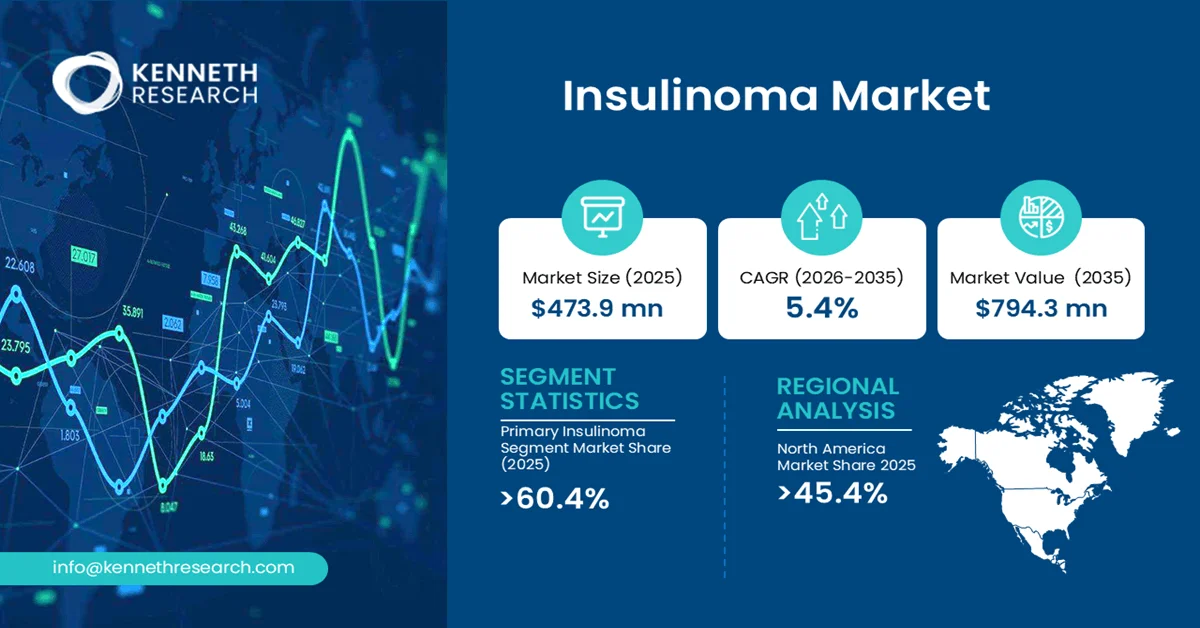
Insulinoma Market size was valued at USD 473.9 million in 2025 and is projected to reach USD 794.3 million by the end of 2035, rising at a CAGR of 5.4% during the forecast period, i.e., 2026-2035. In 2026, the industry size of the insulinoma is estimated at USD 498.9 million.
Growing adoption of advanced biochemical testing, high-resolution imaging, and multidisciplinary management for pancreatic neuroendocrine tumors is the primary growth driver of the insulinoma market. Improved diagnostic capabilities enable earlier detection, while expanding access to targeted therapies, somatostatin analogs, and specialized endocrine oncology care supports sustained market demand.
The insulinoma market comprises the diagnosis, treatment, monitoring, and long-term management of insulin-secreting pancreatic neuroendocrine tumors (pNETs), including pharmaceuticals, surgical interventions, diagnostic imaging, laboratory testing, and supportive healthcare services. Insulinomas originate from the insulin-producing beta cells of the pancreatic islets and are classified as functional pancreatic neuroendocrine tumors because they cause excessive insulin secretion, resulting in recurrent hypoglycemia. The National Cancer Institute defines pancreatic neuroendocrine tumors as neoplasms arising from hormone-producing islet cells that may be benign or malignant, while the WHO classification of tumours recognizes insulinoma as a distinct functional pancreatic neuroendocrine tumor subtype.
The market is characterized by a multidisciplinary treatment pathway involving endocrinologists, surgical oncologists, radiologists, nuclear medicine specialists, and pathology laboratories. Key market offerings include biochemical diagnostic assays, advanced imaging modalities, surgical procedures, medication-based disease control, and follow-up monitoring. Industrially, the market is significant because it supports the development of orphan drugs, precision diagnostics, molecular imaging technologies, and specialized neuroendocrine tumor care, contributing to improved clinical outcomes for patients with this rare endocrine disorder.
Key Insulinoma Market Insights Summary:
Key Takeaways: Market Trends & Insights
- Insulinoma Market expected to grow from USD 473.9 million in 2025 to USD 794.3 million by 2035 at a 5.4% CAGR
- Primary Insulinoma remained the leading Disease Type segment with a 60.4% share in 2025 driven by increasing adoption of advanced diagnostic and surgical management
- Medication is projected to witness strong growth as expanding use of pharmacological therapies supports patients requiring long-term disease management and preoperative hypoglycemia control
- North America accounted for the largest regional share at 45.4% in 2025 supported by advanced healthcare infrastructure, specialized endocrine centers, and continued innovation in neuroendocrine tumor treatment
- Increasing adoption of precision diagnostics, molecular imaging, targeted therapies, and multidisciplinary care pathways is expected to strengthen the long-term growth outlook for the insulinoma market
Market Drivers
- Rising adoption of artificial intelligence-assisted imaging and diagnostic decision support
- Increasing orphan drug development and regulatory incentives for rare endocrine disorders
- Advancements in minimally invasive pancreatic surgery and image-guided interventions
- Growing investment in neuroendocrine tumor clinical research and precision medicine initiatives
Challenges
- Diagnostic Complexity and Delayed Clinical Identification
- Limited Patient Pool and Commercial Viability of Rare Disease Therapies
Insulinoma Market Overview & Supply Chain
The global adoption of insulinoma diagnostics and therapies is increasing as healthcare systems strengthen capabilities for detecting rare endocrine disorders through advanced biochemical testing, high-resolution cross-sectional imaging, endoscopic ultrasound, and molecular nuclear medicine. Greater clinical awareness, expanding multidisciplinary neuroendocrine tumor centers, and improved access to precision diagnostics are enabling earlier diagnosis and more personalized treatment planning. Regulatory support for orphan diseases and ongoing investments in specialized oncology infrastructure further reinforce adoption. This trend is reflected in government-backed epidemiological evidence: analysis of the U.S. National Cancer Institute's Surveillance, Epidemiology, and End Results (SEER) Program reported that the incidence of pancreatic neuroendocrine neoplasms increased from 0.21 per 100,000 population in 1975 to 1.58 per 100,000 in 2021, highlighting the growing clinical importance of this disease area and the need for specialized diagnostic and therapeutic solutions.
The insulinoma market value chain begins with suppliers of active pharmaceutical ingredients, biologics, diagnostic reagents, radiopharmaceutical precursors, laboratory consumables, and medical imaging equipment components. Pharmaceutical manufacturers formulate medications used for symptom control and disease management, while diagnostic companies develop biochemical assays, immunoassays, and imaging technologies supporting disease detection. Medical device manufacturers provide endoscopic ultrasound systems, CT, MRI, and nuclear imaging platforms used throughout diagnosis and treatment planning. Products are distributed through pharmaceutical wholesalers, specialty distributors, hospital procurement networks, and direct commercial channels to tertiary care centers and specialty endocrine clinics. End users primarily include hospitals, cancer centers, endocrine specialty practices, diagnostic laboratories, ambulatory surgical centers, and academic medical institutions. Major stakeholders across the value chain include pharmaceutical companies, diagnostic manufacturers, healthcare providers, research institutions, regulatory agencies, reimbursement organizations, contract manufacturing organizations, and patient advocacy groups collaborating to improve disease diagnosis and therapeutic outcomes.
Insulinoma Market: Growth Drivers & Challenges
Growth Drivers:
- Advancements in Precision Diagnostics and Targeted Neuroendocrine Tumor Therapies: The insulinoma market is benefiting from continuous advances in precision diagnostics and targeted treatment approaches for neuroendocrine tumors. Improvements in biochemical assays, functional imaging, endoscopic ultrasound, and molecular imaging enable clinicians to localize tumors with greater accuracy, facilitating timely intervention and reducing diagnostic delays. Simultaneously, the expansion of targeted therapeutics and radioligand therapies is broadening treatment options for patients who are unsuitable for surgery or have advanced disease. These innovations strengthen confidence among healthcare providers, encourage referral to specialized endocrine centers, and support the adoption of multidisciplinary care pathways. A notable industry development occurred in April 2024, when the U.S. Food and Drug Administration expanded the approval of Lutathera (lutetium Lu 177 dotatate) to include pediatric patients aged 12 years and older with somatostatin receptor-positive gastroenteropancreatic neuroendocrine tumors, reinforcing continued innovation in the neuroendocrine tumor treatment landscape that also benefits insulinoma research and clinical practice.
- Expansion of Specialized Endocrine and Neuroendocrine Care Networks: The growing establishment of specialized endocrine and neuroendocrine tumor centers is creating a favorable environment for insulinoma diagnosis and treatment. Multidisciplinary teams comprising endocrinologists, oncologists, pancreatic surgeons, radiologists, nuclear medicine specialists, and pathologists are improving clinical decision-making through coordinated care pathways. These centers facilitate access to sophisticated imaging technologies, advanced laboratory diagnostics, minimally invasive surgical techniques, and individualized therapeutic strategies, resulting in more efficient disease management. Increasing collaboration between academic institutions, referral hospitals, and pharmaceutical developers also accelerates clinical research and the evaluation of novel therapies. As healthcare systems continue investing in centers of excellence and integrated rare disease management programs, the insulinoma market is expected to benefit from earlier diagnosis, improved treatment accessibility, stronger physician awareness, and broader adoption of innovative technologies across both developed and emerging healthcare markets.
Challenges:
- Diagnostic Complexity and Delayed Clinical Identification: Insulinoma remains one of the most diagnostically challenging endocrine disorders because its symptoms frequently resemble those of neurological, psychiatric, or metabolic conditions. Episodes of hypoglycemia are often intermittent, making it difficult to establish a definitive diagnosis without specialized biochemical testing and advanced imaging. As a result, patients may experience prolonged diagnostic pathways before receiving appropriate treatment. For industry participants, this complexity limits the timely utilization of diagnostic technologies and delays therapeutic intervention, reducing opportunities for early-stage treatment adoption. Commercially, manufacturers of diagnostic systems and pharmaceuticals face slower patient conversion rates and variable demand across healthcare settings with differing levels of clinical expertise. Looking ahead, expanding physician education, standardized diagnostic protocols, and broader access to specialized endocrine centers are expected to reduce diagnostic delays and improve treatment uptake.
- Limited Patient Pool and Commercial Viability of Rare Disease Therapies: The rarity of insulinoma presents significant commercial challenges for companies developing diagnostics and therapies. The relatively small patient population limits the ability to achieve economies of scale in research, manufacturing, and commercialization, increasing development costs on a per-patient basis. Recruiting sufficient participants for clinical trials is also difficult, extending development timelines and creating uncertainty around regulatory approval. From an industry perspective, companies must carefully balance investment in innovation with expected returns, often prioritizing products that can address multiple neuroendocrine tumor indications. Commercial adoption may also vary depending on reimbursement policies and the availability of specialized treatment centers. In the long term, advances in precision medicine, collaborative international research networks, and orphan drug incentives are expected to improve the commercial feasibility of developing innovative insulinoma therapies.
Insulinoma Market Size and Forecast:
| Report Attribute | Details |
|---|---|
| Base Year |
2025 |
| Forecast Year |
2026-2035 |
| CAGR |
5.4% |
| Base Year Market Size (2025) |
USD 473.9 million |
| Forecast Year Market Size (2035) |
USD 794.3 million |
| Regional Scope |
|
Insulinoma Market - Segment Analysis
Disease Type Segment Analysis
In the disease type segment, the primary insulinoma sub-segment is anticipated to capture the largest market share of 60.4% by the end of 2025.
The primary insulinoma segment dominates the insulinoma market because it represents the most frequently diagnosed disease presentation, making it the primary focus of diagnostic evaluation, surgical intervention, and pharmacological management. Current demand is driven by increasing utilization of advanced biochemical testing, contrast-enhanced imaging, endoscopic ultrasound, and functional nuclear imaging, which improve localization of primary pancreatic lesions and enable earlier treatment. On the supply side, pharmaceutical manufacturers, diagnostic companies, and medical device developers continue to invest in products specifically designed for pancreatic neuroendocrine tumor detection and management, ensuring broader availability of specialized solutions. Clinical practice guidelines also emphasize surgery as the preferred treatment for localized primary insulinoma, reinforcing sustained adoption across tertiary care centers. Supporting this demand, the U.S. National Cancer Institute (NCI) states that only 10% of insulinomas are malignant, indicating that the overwhelming majority present as localized primary tumors suitable for definitive management. This clinical profile sustains demand for early diagnosis, surgical expertise, and adjunctive therapies while encouraging continued innovation in precision imaging and minimally invasive treatment technologies.
Treatment Type Segment Analysis
The medication is projected to grow as the second-largest segment in the insulinoma market due to four converging demand drivers.
The medication segment is projected to witness steady growth as pharmacological therapy plays a critical role in managing patients who are not immediate surgical candidates, have recurrent disease, metastatic insulinoma, or require preoperative stabilization of hypoglycemia. Growing clinical emphasis on individualized treatment has increased the adoption of medications such as diazoxide, somatostatin analogs, and targeted therapies to control excessive insulin secretion and improve patient outcomes. The expansion of specialized endocrine and neuroendocrine treatment centers is further supporting the integration of medication into comprehensive disease management protocols. On the supply side, continued investments in orphan drug development, formulation improvements, and targeted oncology therapeutics are enhancing treatment availability and expanding therapeutic options. Supporting this trend, the 2023 International Guidelines for the Diagnosis and Management of Hyperinsulinism state that diazoxide is recommended as the first-line treatment for patients with an established diagnosis of hyperinsulinism, underscoring the sustained clinical importance of pharmacological management in hyperinsulinemic disorders. Looking ahead, advances in targeted therapies and precision medicine are expected to further strengthen the growth of the medication segment.
Our in-depth analysis of the global insulinoma market includes the following segments:
|
Segment |
Sub-segment |
|
Diagnosis Method |
|
|
Treatment Type |
|
|
End User |
|
|
Disease Type |
|
Insulinoma Market Regional Insights:
North America Trends & Insights:
North America insulinoma market is projected to hold the largest revenue share of 45.4% by the end of 2025.
North America accounted for 45.4% of the insulinoma market in 2025, making it the leading regional market. Its dominance is supported by a highly developed healthcare infrastructure, widespread availability of advanced diagnostic imaging, established endocrine and oncology referral networks, and strong adoption of precision medicine for rare diseases. The region also benefits from continuous investment in pharmaceutical innovation, orphan drug development, and clinical research involving pancreatic neuroendocrine tumors. Favorable regulatory pathways, comprehensive reimbursement mechanisms for specialized treatments, and the presence of leading biotechnology and medical device companies further strengthen market leadership. Supporting the region's clinical relevance, the U.S. National Cancer Institute's SEER Program reported an age-adjusted incidence of pancreatic neuroendocrine tumors reaching 1.00 per 100,000 person-years during the most recent study period (2012–2016), reflecting increasing diagnosis driven by improved detection and healthcare access.
The United States represents the largest contributor to the North American market owing to its extensive network of academic medical centers, specialized endocrine surgery programs, robust clinical trial ecosystem, and early adoption of innovative diagnostics and targeted therapies for neuroendocrine tumors. Strong collaboration between healthcare providers, research institutions, and pharmaceutical companies accelerates the commercialization of new treatment options.
Canada complements regional growth through universal healthcare coverage, expanding access to specialized oncology services, and increasing availability of multidisciplinary neuroendocrine tumor management across major tertiary care hospitals. Continued investments in advanced diagnostic technologies, precision medicine initiatives, and collaborative research programs are expected to reinforce North America's leadership in the insulinoma market over the forecast period.
Europe Market Trends & Insights:
Europe represents a strategically important market for insulinoma diagnosis and treatment, supported by a mature healthcare ecosystem, well-established rare disease policies, and extensive expertise in endocrine oncology. Demand is driven by increasing adoption of advanced imaging modalities, specialized biochemical diagnostics, and multidisciplinary care for pancreatic neuroendocrine tumors. The region benefits from active collaboration between academic institutions, pharmaceutical companies, and healthcare providers to improve disease detection and therapeutic outcomes. Government-backed initiatives promoting rare disease research, cross-border clinical collaboration, and innovation in precision medicine continue to strengthen the regional landscape. In addition, supportive regulatory frameworks for orphan medicinal products encourage the development of novel therapies for rare endocrine disorders. Looking ahead, expanding access to molecular diagnostics, radioligand therapies, and personalized treatment approaches is expected to create new opportunities for manufacturers of pharmaceuticals, diagnostic technologies, and medical devices serving the insulinoma market.
Germany is a leading contributor to the European insulinoma market due to its advanced hospital infrastructure, strong endocrine surgery capabilities, and extensive network of specialized cancer and neuroendocrine treatment centers. The country's emphasis on clinical research, adoption of innovative imaging technologies, and collaboration between academic institutions and industry participants supports continued market development.
France also plays a significant role through its comprehensive healthcare system, established rare disease networks, and growing focus on precision oncology. National initiatives supporting early diagnosis, specialized referral pathways, and access to innovative therapies continue to enhance disease management. Ongoing investments in translational research, pharmaceutical innovation, and multidisciplinary endocrine care are expected to reinforce the positions of both Germany and France within the European insulinoma market.
Leading Companies Operating in the Global Insulinoma Market:
Here is a list of upstream, downstream, and key players operating in the global insulinoma market competitive ecosystem:
- Abcam plc (United Kingdom)
- Company Overview
- Business Strategy
- Key Product Offerings
- Financial Performance
- Key Performance Indicators
- Risk Analysis
- Recent Development
- Ipsen S.A. (France)
- Boston Scientific Corporation (United States)
- Bristol-Myers Squibb Company (United States)
Recent Developments
- In December 2025, a Phase 2 clinical trial published in The Journal of Clinical Endocrinology & Metabolism demonstrated that the novel PET/CT imaging probe [¹⁸F]FB(ePEG12)₁₂-exendin-4 achieved 100% sensitivity in noninvasively detecting insulinomas across 12 patients. The detection rate surpassed conventional modalities, including CT (83%), MRI (63%), and endoscopic ultrasonography (90%), offering a reliable alternative to invasive diagnostic procedures.
- A retrospective study published in 2025 analyzing 57 malignant insulinoma patients at the Mayo Clinic found that Peptide Receptor Radionuclide Therapy (PRRT) demonstrated the highest efficacy in controlling hypoglycemia (93%), followed by CAPTEM chemotherapy (68%) and everolimus (62%). PRRT emerged as a promising treatment option for refractory hypoglycemia in malignant insulinoma patients.
Frequently Asked Question
In 2025, the insulinoma market exceeded USD 473.9 million.
The insulinoma market is projected to reach USD 794.3 million by the end of 2035, expanding at a CAGR of 5.4% over the forecast period (2026–2035).
The major players in the market are Abcam plc (United Kingdom), Ipsen S.A. (France), Boston Scientific Corporation (United States), Bristol-Myers Squibb Company (United States), and others.
In the disease type segment, the primary insulinoma sub-segment is anticipated to capture the largest market share of 60.4% in the future and exhibit lucrative growth opportunities during 2026–2035. This growth trajectory is largely attributed to increasing adoption of advanced biochemical testing, high-resolution imaging, and multidisciplinary management for pancreatic neuroendocrine tumors.
North America is projected to hold the largest market share of 45.4% by the end of 2035 and provide more business opportunities in the future. Continuous investments in specialized endocrine care, advanced diagnostic technologies, and neuroendocrine tumor research across the United States and Canada are fostering the region's dominance.
Why Choose Kenneth Research ?
-
Insight with Impact : We don’t just gather data — we uncover stories, trends, and opportunities that fuel business growth.
-
Experts Who Get It : Our team speaks your industry’s language and knows what really matters to your customers and market.
-
Custom-Built for You : Forget one-size-fits-all. We craft research and consulting solutions as unique as your business vision.
-
Partners, Not Just Providers : We work with you, not for you — collaborating closely to turn insights into smart, strategic moves.
-
Results That Speak : Our work powers brands, startups, and industry leaders alike — with a track record of ideas that work in the real world.
Report ID: 1033 |
Published Date: 28 Jul 2026 |
Report Format: |
Delivery Timeline: 48-72 Business Hours

Copyright © 2025 Kenneth Research. All rights reserved. Terms of Use | Privacy Policy
