Report ID: 1101 |
Published Date: 18 Aug 2026 |
Report Format: |
Delivery Timeline: 48-72 Business Hours
Diabetes Pen Market Outlook:
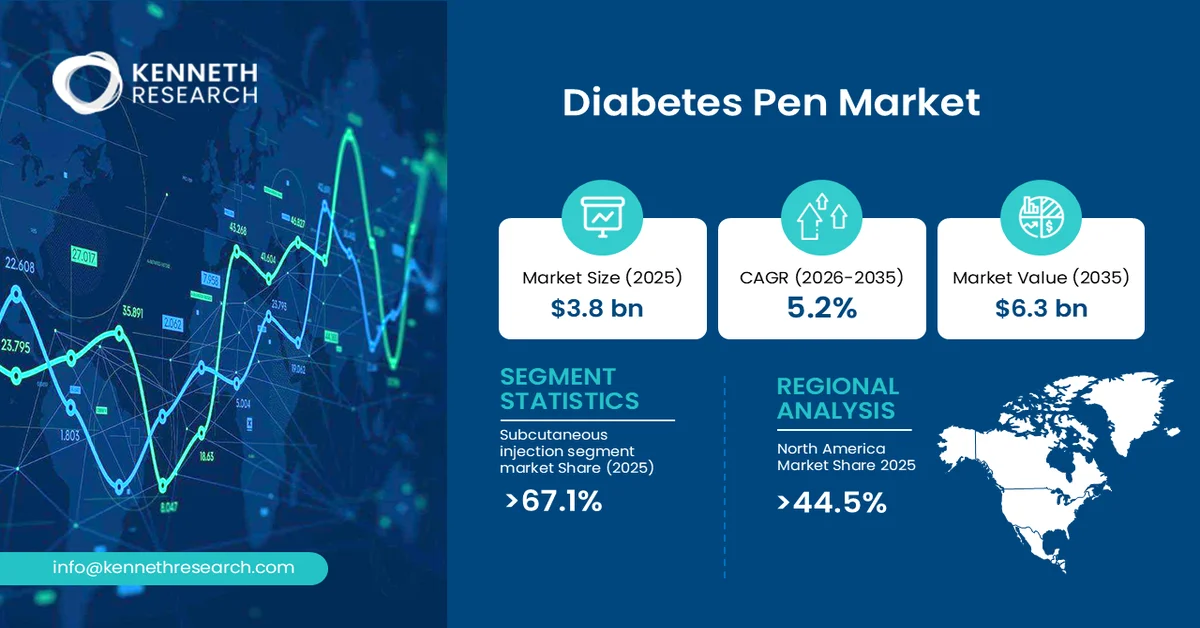
Diabetes Pen Market size was valued at USD 3.8 billion in 2025 and is projected to reach USD 6.3 billion by the end of 2035, rising at a CAGR of 5.2% during the forecast period, i.e., 2026-2035. In 2026, the industry size of the diabetes pen is estimated at USD 4.1 billion.
The primary growth driver for the diabetes pen market is the rising global diabetes burden, which is increasing demand for convenient, accurate, and patient-friendly insulin and injectable drug delivery devices. As diabetes prevalence continues to rise worldwide, healthcare systems are expanding access to long-term treatment solutions that support self-administration and improve therapy adherence.
The diabetes pen market comprises reusable and disposable pen-based drug delivery devices designed for the administration of insulin and other injectable therapies used in diabetes management. These devices provide a prefilled or refillable mechanism that enables patients to self-administer prescribed doses with greater precision, convenience, and portability than conventional vial-and-syringe methods. Diabetes pens are widely used across both insulin-dependent and selected non-insulin injectable treatment regimens in clinical and homecare settings.
Key characteristics of the market include dose-adjustment capability, ergonomic design, improved injection accuracy, compatibility with replaceable needles, and features that simplify routine self-management. Manufacturers continue to focus on patient-centric designs that enhance usability, treatment adherence, and medication safety while supporting integration with evolving diabetes care pathways.
From an industrial perspective, the market is an important component of the broader diabetes therapeutics and drug delivery ecosystem. It supports pharmaceutical manufacturers, medical device companies, healthcare providers, and distribution networks by enabling efficient delivery of injectable diabetes therapies. The market also aligns with healthcare priorities centered on chronic disease management, patient self-care, and the expansion of outpatient treatment models.
Key Diabetes Pen Market Insights Summary:
Key Takeaways: Market Trends & Insights
- Diabetes Pen Market valued at USD 3.8 billion in 2025 and projected to reach USD 6.3 billion by 2035, registering a CAGR of 5.2% during 2026-2035
- Subcutaneous Injection emerged as the leading delivery method segment and is anticipated to account for 67.1% of the market by 2035 due to its widespread clinical adoption and ease of self-administration
- Type 2 Diabetes is projected to witness significant growth within the therapeutic Area segment, supported by increasing use of injectable therapies and expanding patient population
- North America accounted for 44.5% of the global market in 2025, driven by advanced healthcare infrastructure, high adoption of diabetes pen technologies, and strong presence of leading industry participants
- The market is supported by continuous innovation in reusable and smart pen technologies, increasing preference for home-based diabetes management, and expanding availability of advanced injectable therapies
Market Drivers
- Increasing Shift Toward Home-Based Chronic Disease Management
- Growing Adoption of Reusable and Smart Injection Pen Technologies
- Expanding Availability of Injectable GLP-1 and Insulin Therapies
- Strengthening Healthcare Infrastructure and Diabetes Awareness Programs
Challenges
- High Cost of Advanced Pen Devices and Limited Reimbursement Coverage
- Compatibility Constraints Between Drug Formulations and Delivery Devices
Diabetes Pen Market Overview & Supply Chain
Global adoption of diabetes pens is increasing as healthcare systems prioritize patient-centric management of chronic diseases and expand access to self-administered therapies. Compared with conventional vial-and-syringe administration, pen devices improve dosing convenience, portability, and treatment adherence, making them well suited for long-term diabetes care in home and outpatient settings. Ongoing innovation in reusable pen platforms, dose accuracy, ergonomic design, and compatibility with advanced insulin formulations further supports their adoption across developed and emerging healthcare markets. Regulatory emphasis on improving chronic disease outcomes and reducing complications through timely treatment also reinforces demand for reliable injectable drug delivery solutions. Industry relevance continues to strengthen as the global diabetes burden expands. According to the World Health Organization (WHO), the number of people living with diabetes increased from 200 million in 1990 to 830 million in 2022, highlighting the growing need for effective and scalable diabetes management technologies, including pen-based delivery systems.
The diabetes pen market value chain begins with the sourcing of pharmaceutical-grade polymers, engineering plastics, stainless steel components, precision springs, glass cartridges, elastomeric seals, and electronic components for smart pen variants. These materials are supplied by specialized chemical manufacturers, component producers, and medical-grade material suppliers operating under stringent quality standards. Device manufacturers integrate these inputs through precision molding, cartridge assembly, sterilization, calibration, and quality assurance processes while ensuring compliance with applicable medical device regulations. Pharmaceutical companies collaborate closely with device manufacturers to ensure compatibility between pen platforms and injectable diabetes therapies. Finished products are distributed through pharmaceutical wholesalers, medical device distributors, hospital procurement networks, retail pharmacies, specialty pharmacies, and e-commerce healthcare channels. End users include hospitals, clinics, ambulatory care centers, and patients managing diabetes in homecare settings. Key stakeholders across the ecosystem include raw material suppliers, contract manufacturers, pharmaceutical companies, medical device manufacturers, regulatory authorities, healthcare providers, distributors, reimbursement organizations, and patient advocacy groups.
Diabetes Pen Market - Growth Drivers & Challenges
Growth Drivers:
- Rising global diabetes burden strengthening demand for pen-based therapies: The increasing prevalence of diabetes remains one of the strongest catalysts for the diabetes pen market. As healthcare providers emphasize earlier diagnosis and sustained glycemic control, demand for delivery devices that simplify long-term injectable therapy continues to grow. Diabetes pens improve dose precision, portability, and ease of self-administration, enabling patients to manage treatment more consistently outside traditional clinical settings. This supports healthcare systems seeking to reduce avoidable complications and optimize chronic disease management. The growing patient population also encourages pharmaceutical and device manufacturers to invest in differentiated pen platforms, reusable systems, and patient-focused designs that improve treatment adherence. Over the coming years, broader screening programs, earlier therapeutic intervention, and integration of personalized diabetes care are expected to reinforce demand for pen-based delivery solutions. According to the International Diabetes Federation, approximately 589 million adults aged 20–79 years were living with diabetes in 2024, demonstrating the expanding need for effective diabetes management technologies.
- Technological Advancements in Pen Devices Enhancing Treatment Efficiency: Continuous innovation in pen-based drug delivery technologies is reshaping diabetes management by improving usability, precision, and patient engagement. Manufacturers are introducing reusable pens with enhanced dose accuracy, ergonomic designs, memory functions, digital connectivity, and compatibility with connected diabetes management ecosystems. These developments minimize administration errors while allowing patients and healthcare professionals to monitor treatment more effectively. The integration of digital health capabilities also enables personalized therapy and more informed clinical decision-making. From an industry perspective, ongoing innovation strengthens product differentiation, supports strategic collaborations between pharmaceutical and medical device companies, and expands opportunities for premium offerings. Looking ahead, greater integration with digital therapeutics, connected care platforms, and artificial intelligence-enabled diabetes management solutions is expected to reinforce the role of diabetes pens across hospitals, clinics, and home-based care.
Challenges:
- High cost of advanced pen devices and limited reimbursement coverage: The adoption of advanced diabetes pens is constrained by their comparatively higher acquisition cost, particularly for reusable and smart pen systems that incorporate digital features and precision dosing technologies. While these devices improve treatment convenience and adherence, their affordability remains a concern in cost-sensitive healthcare markets where reimbursement policies are limited or inconsistent. Healthcare providers and payers often prioritize lower-cost alternatives, slowing the uptake of premium pen products despite their clinical advantages. For manufacturers, pricing pressure compresses margins and complicates commercialization strategies, particularly in emerging economies. Companies must balance innovation with cost optimization to expand market access. Looking ahead, broader reimbursement support, value-based healthcare models, and manufacturing efficiencies are expected to improve affordability, although pricing challenges are likely to remain a key restraint for widespread adoption of technologically advanced diabetes pen systems.
- Compatibility Constraints Between Drug Formulations and Delivery Devices: Compatibility limitations between diabetes pens and specific drug formulations present a significant challenge for manufacturers, pharmaceutical companies, and healthcare providers. Many pen devices are designed to function exclusively with proprietary insulin cartridges or injectable medications, reducing flexibility for patients and restricting interchangeability across brands. This creates barriers for healthcare providers seeking standardized treatment protocols and increases inventory complexity for hospitals and pharmacies. From a commercial perspective, limited compatibility may discourage switching between therapies and require manufacturers to maintain separate development, validation, and regulatory pathways for multiple device-drug combinations. These factors increase development costs and extend product launch timelines. As combination products and biologic therapies continue to evolve, greater industry collaboration and standardized compatibility frameworks are expected to become increasingly important for improving interoperability and expanding patient access to diabetes pen technologies.
Diabetes Pen Market Size and Forecast:
| Report Attribute | Details |
|---|---|
| Base Year |
2025 |
| Forecast Year |
2026-2035 |
| CAGR |
5.2% |
| Base Year Market Size (2025) |
USD 3.8 billion |
| Forecast Year Market Size (2035) |
USD 6.3 billion |
| Regional Scope |
|
Diabetes Pen Market Segmentation Analysis:
Delivery Method Segment Analysis
In the delivery method segment, the subcutaneous Injection sub-segment is anticipated to capture the largest market share of 67.1% by the end of 2035.
Subcutaneous injection is the leading delivery method in the diabetes pen market, accounting for the largest share due to its established clinical acceptance, ease of self-administration, and compatibility with a broad range of insulin formulations and injectable diabetes therapies. The segment continues to benefit from increasing adoption of home-based diabetes management, where patients prefer convenient and minimally invasive drug delivery methods that support accurate dose administration. Healthcare providers also favor subcutaneous pen devices because they simplify treatment initiation, improve adherence, and reduce dosing errors compared with conventional vial-and-syringe techniques. On the supply side, manufacturers have invested extensively in reusable and disposable pen platforms, advanced needle technologies, and user-centric ergonomic designs, ensuring consistent product availability and regulatory compliance across major healthcare markets. The expanding portfolio of injectable diabetes therapies compatible with pen devices further reinforces segment leadership. According to the U.S. Centers for Disease Control and Prevention (CDC), 26.5% of adults with diagnosed diabetes used GLP-1 injectable medications in 2024, reflecting the growing demand for subcutaneous injectable therapies that are commonly administered through pen-based delivery systems. Continued innovation in connected pen technologies and long-acting injectable therapies is expected to sustain the segment's dominant position.
Therapeutic Area Segment Analysis
The Type 2 Diabetes is projected to grow as the second-largest segment in the diabetes pen market due to four converging demand drivers.
Type 2 diabetes is projected to witness strong growth within the diabetes pen market because it represents the largest treatment population requiring long-term glycemic management and increasingly involves injectable therapies as the disease progresses. Demand is being driven by rising diagnosis rates, earlier treatment intensification, and the expanding use of GLP-1 receptor agonists and basal insulin therapies that are commonly delivered through pen devices. Healthcare providers are adopting pen-based delivery systems more widely for Type 2 diabetes because they improve patient adherence, simplify dose titration, and support outpatient and home-based care models. On the supply side, pharmaceutical companies are expanding the availability of combination therapies and long-acting injectable formulations, while device manufacturers are developing reusable and connected pens tailored to the needs of patients managing complex treatment regimens.
Our in-depth analysis of the global diabetes pen market includes the following segments:
|
Segment |
Sub-segment |
|
Type |
|
|
Delivery Method |
|
|
Therapeutic Area |
|
|
End User |
|
Diabetes Pen Market Regional Insights:
North America Market Trends & Insights:
North America diabetes pen market is projected to hold the largest revenue share of 44.5% by the end of 2025.
The region benefits from the presence of leading pharmaceutical and medical device manufacturers, enabling continuous product innovation and commercialization of reusable, disposable, and connected diabetes pen systems. Favorable reimbursement frameworks, widespread availability of prescription injectable therapies, and regulatory oversight that supports the introduction of innovative medical devices further strengthen regional market performance. High healthcare expenditure, extensive outpatient care infrastructure, and increasing integration of digital health solutions also contribute to the widespread adoption of diabetes pens across hospitals, specialty clinics, retail pharmacies, and homecare settings. According to the U.S. Centers for Disease Control and Prevention (CDC), an estimated 40.1 million people in the United States had diagnosed or undiagnosed diabetes in 2023, reinforcing North America's position as the largest demand center for advanced diabetes management technologies.
The United States represents the largest country market owing to its extensive patient base, rapid adoption of innovative insulin and GLP-1 delivery devices, strong reimbursement environment, and significant investment in diabetes research and product development. Continuous product launches, integration of connected health technologies, and collaboration between pharmaceutical and medical device companies further support market expansion.
Canada complements regional growth through universal healthcare coverage, expanding diabetes awareness initiatives, and increasing emphasis on early diagnosis and long-term disease management. Government-supported chronic disease programs, improving access to injectable therapies, and growing utilization of patient-centric drug delivery devices continue to strengthen Canada's contribution to the regional diabetes pen ecosystem.
Europe Market Trends & Insights:
Europe represents a strategically important region in the diabetes pen market, supported by a mature healthcare infrastructure, increasing adoption of advanced injectable therapies, and a strong focus on chronic disease management. Demand for diabetes pens continues to rise as healthcare providers encourage patient-centric treatment approaches that improve medication adherence and facilitate home-based care. The region also benefits from an established pharmaceutical manufacturing base, extensive medical device innovation, and close collaboration between healthcare institutions and industry participants. Government initiatives promoting early diabetes diagnosis, integrated disease management, and digital healthcare transformation further strengthen the adoption of pen-based drug delivery systems. In addition, evolving regulatory frameworks supporting innovative combination products and connected medical devices create favorable conditions for manufacturers introducing next-generation diabetes pens. Future opportunities are expected to emerge from the increasing use of smart pen technologies, expansion of long-acting injectable therapies, and continued investment in personalized diabetes care across European healthcare systems.
Germany serves as a major contributor to regional growth due to its advanced pharmaceutical and medical device industries, strong research capabilities, and widespread adoption of innovative diabetes treatment technologies. The country's emphasis on digital health integration and value-based healthcare supports continued demand for modern pen-based delivery systems.
The United Kingdom also plays a significant role through its well-developed healthcare infrastructure, increasing utilization of outpatient diabetes management programs, and ongoing adoption of advanced injectable therapies. Continued investments in digital healthcare, patient education, and integrated chronic disease management are expected to reinforce the country's importance within the European diabetes pen market.
Leading Companies Operating in the Global Diabetes Pen Market:
Here is a list of upstream, downstream, and key players operating in the global diabetes pen market competitive ecosystem:
- Novo Nordisk A/S (Denmark)
- Company Overview
- Business Strategy
- Key Product Offerings
- Financial Performance
- Key Performance Indicators
- Risk Analysis
- Recent Development
- Regional Presence
- SWOT Analysis
- Ypsomed AG (Switzerland)
- Eli Lilly and Company (United States)
- Wockhardt Limited (India)
- Biocon (India)
- Nipro Europe Group Companies (Netherlands)
Recent Developments
- December 2024: The U.S. FDA approved the first generic version of Victoza® (liraglutide injection), a prefilled diabetes injection pen for adults and children aged 10 years and older with type 2 diabetes. The approval is expected to improve patient access to affordable pen-based GLP-1 therapies.
- March 2025: Dexcom announced the integration of its G7 Continuous Glucose Monitoring (CGM) system with Novo Nordisk's smart insulin pens, allowing users to view insulin dose history alongside glucose data in a single platform, enhancing diabetes management through connected care.
Frequently Asked Question
In 2025, the diabetes pen market exceeded USD 3.8 billion.
The diabetes pen market is projected to reach USD 6.3 billion by the end of 2035, expanding at a CAGR of 5.2% over the forecast period (2026-2035).
The major players in the market are Novo Nordisk A/S (Denmark), Ypsomed AG (Switzerland), Eli Lilly and Company (United States), Wockhardt Limited (India), Biocon (India), Nipro Europe Group Companies (Netherlands), and others.
In the delivery method segment, the subcutaneous injection sub-segment is anticipated to capture the largest market share of 67.1% in the future and exhibit lucrative growth opportunities during 2026-2035. This growth trajectory is largely attributed to the increasing adoption of self-administered injectable therapies supported by the rising global prevalence of diabetes and the growing preference for patient-friendly drug delivery devices.
North America is projected to hold the largest market share of 44.5% by the end of 2025 and provide more business opportunities in the future. Continuous investments in diabetes care innovation, widespread adoption of advanced pen technologies, and strong healthcare infrastructure in the United States and Canada are fostering the region's dominance.
Why Choose Kenneth Research ?
-
Insight with Impact : We don’t just gather data — we uncover stories, trends, and opportunities that fuel business growth.
-
Experts Who Get It : Our team speaks your industry’s language and knows what really matters to your customers and market.
-
Custom-Built for You : Forget one-size-fits-all. We craft research and consulting solutions as unique as your business vision.
-
Partners, Not Just Providers : We work with you, not for you — collaborating closely to turn insights into smart, strategic moves.
-
Results That Speak : Our work powers brands, startups, and industry leaders alike — with a track record of ideas that work in the real world.
Report ID: 1101 |
Published Date: 18 Aug 2026 |
Report Format: |
Delivery Timeline: 48-72 Business Hours

Copyright © 2025 Kenneth Research. All rights reserved. Terms of Use | Privacy Policy
