Report ID: 1022 |
Published Date: 29 Jul 2026 |
Report Format: |
Delivery Timeline: 48-72 Business Hours
Diabetes Market Outlook:
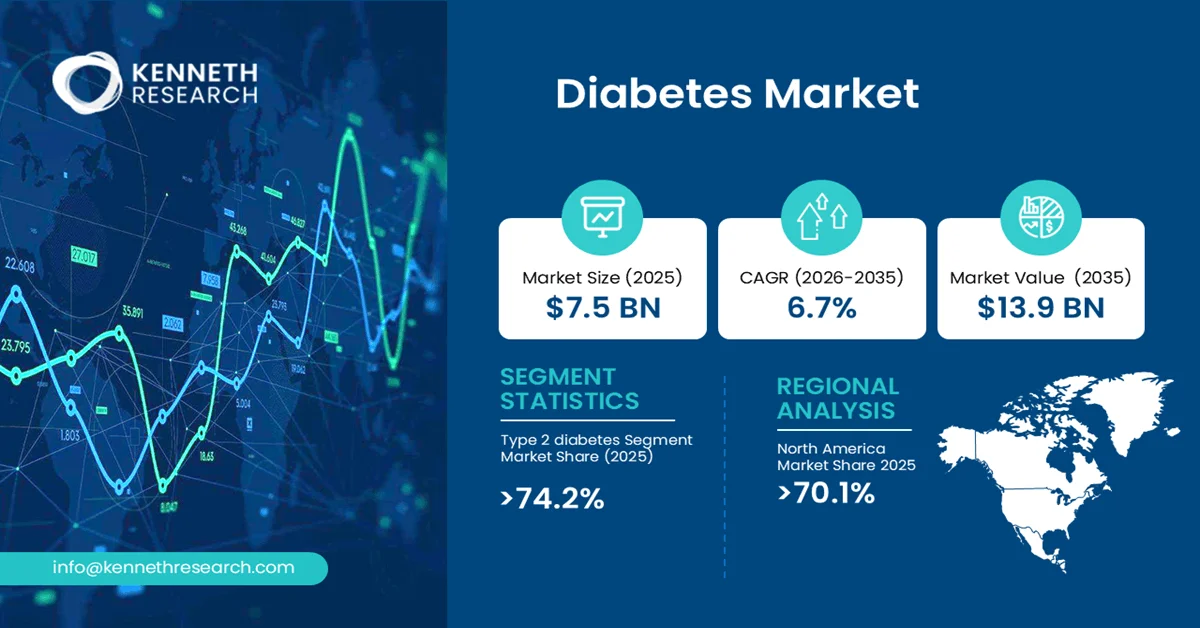
Diabetes Market size was valued at USD 7.5 billion in 2025 and is projected to reach USD 13.9 billion by the end of 2035, rising at a CAGR of 6.7% during the forecast period, i.e., 2026-2035. In 2026, the industry size of the diabetes is estimated at USD 7.9 billion.
The primary growth driver of the diabetes market is the increasing global prevalence of diabetes, particularly type 2 diabetes, fueled by aging populations, sedentary lifestyles, obesity, and unhealthy dietary patterns. Expanding access to diagnosis, insulin therapies, glucose monitoring technologies, and long-term disease management solutions continues to accelerate market demand.
The diabetes market comprises pharmaceutical products, medical devices, diagnostic solutions, and disease management services designed to prevent, diagnose, monitor, and treat diabetes mellitus, including type 1, type 2, and gestational diabetes. It encompasses insulin formulations, non-insulin medications, continuous glucose monitoring systems, blood glucose meters, insulin delivery devices, digital health platforms, and supportive care solutions that enable effective glycemic control across diverse patient populations.
The market is characterized by continuous innovation in drug development, advanced insulin delivery technologies, wearable monitoring devices, and integrated digital healthcare ecosystems that improve patient outcomes and treatment adherence. Increasing emphasis on personalized medicine, remote patient monitoring, and value-based healthcare has further strengthened the adoption of advanced diabetes management solutions across hospitals, specialty clinics, ambulatory care settings, and home healthcare environments.
Industrially, the Diabetes Market plays a vital role within the global healthcare and life sciences sector by supporting chronic disease management, reducing the burden of diabetes-related complications, and enhancing healthcare system efficiency. Its continued evolution drives investment in biopharmaceutical research, medical technology innovation, digital therapeutics, and preventive healthcare initiatives, making it a strategically significant segment of the global healthcare industry.
Key Diabetes Market Insights Summary:
Key Takeaways: Market Trends & Insights
- The diabetes market was valued at USD 7.5 billion in 2025 and is projected to reach USD 13.9 billion by 2035, registering a 6.7% CAGR during 2026–2035
- Type 2 diabetes led the market with a 74.2% share in 2025, driven by its high prevalence and increasing adoption of advanced monitoring and treatment technologies
- North America accounted for the largest regional share of 70.1% in 2025, supported by strong healthcare infrastructure, technological innovation, and widespread adoption of diabetes management solutions
- Growing adoption of continuous glucose monitoring systems, insulin delivery devices, and digital health platforms is accelerating innovation and improving long-term diabetes management outcomes
- Increasing investments by leading companies such as Novo Nordisk, Eli Lilly, Sanofi, Abbott, Dexcom, and Roche Diabetes Care continue to strengthen product development and expand access to advanced diabetes therapies
Market Drivers
- Increasing adoption of continuous glucose monitoring and connected diabetes technologies
- Expansion of preventive care and integrated chronic disease management
- Growing innovation in insulin formulations and non-insulin therapeutic agents
- Rising investment in digital health platforms, artificial intelligence, and remote patient monitoring for diabetes care
Challenges
- High cost of advanced diabetes therapies and monitoring technologies
- Complex regulatory requirements and lengthy product approval processes
Diabetes Market Overview & Supply Chain
The adoption of diabetes management solutions is increasing globally due to the growing burden of chronic metabolic disorders, expanding access to early diagnosis, and continuous advancements in insulin delivery systems, glucose monitoring technologies, and digital disease management platforms. Healthcare systems are increasingly prioritizing integrated chronic care models that combine pharmaceuticals, connected medical devices, and remote patient monitoring to improve long-term patient outcomes while reducing complications. Regulatory agencies and public health organizations are also strengthening screening, prevention, and treatment initiatives to address the escalating disease burden. According to the World Health Organization (WHO), the number of people living with diabetes increased from 200 million in 1990 to 830 million in 2022, highlighting the expanding need for effective therapeutic and monitoring solutions across global healthcare systems.
The diabetes market operates through a highly regulated and integrated value chain involving pharmaceutical manufacturers, biotechnology companies, medical device producers, healthcare providers, distributors, and digital health solution developers. The upstream stage begins with the procurement of active pharmaceutical ingredients, biologic raw materials, medical-grade polymers, electronic sensors, semiconductors, diagnostic reagents, packaging materials, and sterile manufacturing components required for insulin formulations, glucose monitoring systems, and drug delivery devices. Manufacturing involves stringent quality-controlled production, formulation, device assembly, calibration, clinical validation, and regulatory compliance to ensure product safety and efficacy. Products are distributed through pharmaceutical wholesalers, hospital procurement networks, retail pharmacies, specialty pharmacies, and online healthcare channels supported by cold-chain logistics where required. End users include hospitals, diabetes specialty clinics, ambulatory care centers, home healthcare providers, and individual patients managing long-term diabetes. Major stakeholders comprise pharmaceutical companies, medical device manufacturers, contract manufacturing organizations, healthcare providers, regulatory authorities, payers, distributors, and digital health technology firms collaborating to improve accessibility, treatment adherence, and patient outcomes.
Diabetes Market: Growth Drivers & Challenges
Growth Drivers:
- Rising Adoption of Continuous Glucose Monitoring and Connected Diabetes Technologies: The increasing adoption of continuous glucose monitoring (CGM) systems and connected diabetes management technologies is significantly accelerating the diabetes market. These solutions enable real-time glucose tracking, data sharing with healthcare professionals, and personalized treatment adjustments, improving glycemic control while reducing the risk of acute and long-term complications. Integration with insulin pumps, mobile health applications, and cloud-based analytics has enhanced patient engagement and facilitated remote disease management, making advanced diabetes care more accessible across healthcare settings. As healthcare providers continue to embrace digital therapeutics and value-based care, demand for interoperable diabetes technologies is expected to expand further. Supporting this trend, the U.S. Food and Drug Administration (FDA) authorized the first over-the-counter continuous glucose monitor, Dexcom Stelo, in 2024, broadening access to glucose monitoring technology for adults not using insulin and marking an important advancement in diabetes management innovation.
- Expansion of Preventive Care and Integrated Chronic Disease Management: The growing emphasis on preventive healthcare and integrated chronic disease management is creating sustained opportunities across the Diabetes Market. Healthcare systems are increasingly implementing early screening initiatives, multidisciplinary care pathways, and patient education programs to identify diabetes sooner and improve long-term disease management. Collaboration among endocrinologists, primary care physicians, pharmacists, nutrition specialists, and digital health providers enables coordinated treatment strategies that enhance medication adherence and reduce preventable complications. At the same time, reimbursement reforms and investments in telehealth infrastructure are encouraging broader adoption of comprehensive diabetes management services. Looking ahead, advances in predictive analytics, personalized treatment planning, and remote monitoring platforms are expected to strengthen preventive care models, improve clinical outcomes, and support the continued evolution of integrated diabetes management across both developed and emerging healthcare markets.
Challenges:
- High Cost of Advanced Diabetes Therapies and Monitoring Technologies: The high cost of advanced diabetes therapies, continuous glucose monitoring systems, insulin pumps, and digital disease management solutions remains a significant restraint for the diabetes market. Although technological innovation has improved treatment precision and patient outcomes, affordability continues to limit adoption, particularly in cost-sensitive healthcare systems and regions with limited reimbursement coverage. Healthcare providers and payers often face budget constraints when expanding access to premium therapies, while patients may experience financial barriers to long-term adherence. These cost pressures also influence procurement decisions and slow the commercialization of next-generation diabetes management technologies. Going forward, manufacturers will need to focus on cost optimization, scalable production, and value-based pricing strategies while collaborating with healthcare stakeholders to improve reimbursement frameworks and expand access to innovative diabetes care solutions.
- Complex Regulatory Requirements and Lengthy Product Approval Processes: The diabetes market is also constrained by stringent regulatory requirements governing pharmaceutical products, biologics, medical devices, and digital health technologies. Manufacturers must demonstrate extensive clinical evidence related to safety, efficacy, cybersecurity, interoperability, and quality before receiving regulatory approvals. These rigorous evaluation processes often increase development timelines, raise compliance costs, and delay the commercialization of innovative therapies and connected diabetes management devices. Regulatory variations across different countries further complicate global product launches and require region-specific clinical documentation and manufacturing compliance. As innovation accelerates in digital therapeutics, artificial intelligence, and integrated diabetes care platforms, regulatory expectations are likely to become even more comprehensive, encouraging companies to invest earlier in regulatory planning, quality management systems, and post-market surveillance to maintain competitive market access.
Diabetes Market Size and Forecast:
| Report Attribute | Details |
|---|---|
| Base Year |
2025 |
| Forecast Year |
2026-2035 |
| CAGR |
6.7% |
| Base Year Market Size (2025) |
USD 7.5 billion |
| Forecast Year Market Size (2035) |
USD 13.9 billion |
| Regional Scope |
|
Diabetes Market Segmentation Analysis:
Type of Diabetes Segment Analysis
In the type of diabetes segment, the type 2 diabetes sub-segment is anticipated to capture the largest market share of 74.2% by the end of 2025.
Type 2 diabetes dominates the diabetes market due to its substantially higher disease prevalence, increasing incidence across adult and aging populations, and strong demand for long-term disease management solutions. The segment benefits from widespread adoption of oral antidiabetic drugs, insulin therapy where clinically indicated, continuous glucose monitoring systems, and digital disease management platforms. Rising rates of obesity, sedentary lifestyles, and metabolic disorders continue to expand the patient pool requiring continuous monitoring and treatment, reinforcing sustained demand across healthcare systems. On the supply side, pharmaceutical manufacturers and medical device companies continue to invest heavily in innovative therapeutics, combination therapies, wearable monitoring devices, and connected care technologies, ensuring broad product availability and continuous innovation. According to the U.S. Centers for Disease Control and Prevention (CDC), about 90% to 95% of all people with diabetes have type 2 diabetes, underscoring the overwhelming clinical demand for therapies targeting this patient population.
Treatment Method Segment Analysis
The insulin therapy is projected to grow as the second-largest segment in the diabetes market due to four converging demand drivers.
Insulin therapy is projected to witness strong growth in the diabetes market as the rising prevalence of diabetes and longer disease duration increase the need for effective glycemic management. The segment is benefiting from continuous advancements in rapid-acting, long-acting, and ultra-long-acting insulin formulations, as well as innovations in insulin pens, pumps, and automated insulin delivery systems that improve treatment convenience and adherence. Healthcare providers are increasingly adopting personalized insulin regimens supported by continuous glucose monitoring and digital health platforms, enabling more precise dosing and improved clinical outcomes. On the supply side, pharmaceutical manufacturers are expanding production capacity while investing in next-generation biologics, smart insulin technologies, and connected delivery devices to meet growing global demand. According to the U.S. National Institute of Diabetes and Digestive and Kidney Diseases (NIDDK), people with type 1 diabetes must take insulin because their pancreas does not make it, while many individuals with type 2 diabetes also require insulin when other treatments no longer provide adequate glucose control. This expanding clinical need is expected to sustain long-term demand for insulin therapies and associated delivery technologies.
Our in-depth analysis of the global diabetes market includes the following segments:
|
Segment |
Sub-segment |
|
Type |
|
|
Test |
|
|
Devices |
|
|
Treatment |
|
|
Patient Demographics |
|
|
Complications |
|
|
Market Channel |
|
Antimony Market Regional Insights:
North America Market Trends & Insights:
North America diabetes market is projected to hold the largest revenue share of 70.1% by the end of 2025.
The region's leadership is supported by advanced healthcare infrastructure, high adoption of innovative diabetes therapeutics, widespread utilization of continuous glucose monitoring systems and insulin delivery technologies, and strong investment in pharmaceutical and medical device research. A well-established reimbursement landscape, robust regulatory oversight, and the presence of leading biotechnology and healthcare companies further strengthen commercialization and adoption of advanced diabetes management solutions. Continuous investments in digital health, remote patient monitoring, and precision medicine are also accelerating the integration of connected diabetes care across hospitals, specialty clinics, and home healthcare settings. According to the U.S. Centers for Disease Control and Prevention (CDC) National Diabetes Statistics Report, an estimated 40.1 million people in the United States had diagnosed or undiagnosed diabetes in 2023, reflecting the substantial disease burden that continues to drive demand for innovative diabetes therapies, diagnostics, and monitoring technologies.
The United States represents the largest contributor to the North American diabetes market due to its extensive pharmaceutical innovation ecosystem, strong clinical research capabilities, widespread adoption of advanced diabetes technologies, and favorable reimbursement environment. The country's healthcare providers continue to integrate digital therapeutics, continuous glucose monitoring, and automated insulin delivery systems into routine diabetes care.
Canada also contributes significantly through universal healthcare coverage, increasing investments in chronic disease management, expanding access to diabetes education programs, and growing adoption of innovative treatment modalities. Ongoing collaboration among healthcare providers, research institutions, technology developers, and regulatory authorities across both countries continues to strengthen regional leadership while supporting the commercialization of next-generation diabetes management solutions.
Europe Market Trends & Insights:
Europe represents a strategically important region in the diabetes market, supported by growing demand for comprehensive diabetes management solutions, well-established healthcare systems, and strong industrial capabilities in pharmaceutical manufacturing and medical technology. The region continues to witness increasing adoption of innovative insulin formulations, continuous glucose monitoring systems, insulin delivery devices, and digital health platforms aimed at improving long-term disease management. Government-led initiatives promoting early diagnosis, preventive healthcare, and integrated chronic disease management have strengthened access to diabetes care across multiple European countries. In addition, collaborative research programs involving healthcare institutions, biotechnology companies, and academic organizations are accelerating the development of next-generation therapeutics and connected diabetes technologies. Looking ahead, expanding investments in precision medicine, artificial intelligence-enabled disease management, and remote patient monitoring are expected to create new opportunities for innovation while supporting more personalized and efficient diabetes care throughout the region.
Germany is a leading contributor to the european diabetes market due to its advanced pharmaceutical industry, strong medical device manufacturing capabilities, and extensive clinical research ecosystem. The country continues to invest in digital healthcare infrastructure and innovative diabetes treatment technologies, supporting widespread adoption across hospitals and outpatient care settings.
France also plays a significant role through its comprehensive public healthcare system, emphasis on chronic disease prevention, and increasing integration of digital health solutions into diabetes management. Continued collaboration among healthcare providers, research organizations, regulatory authorities, and life sciences companies across both countries is expected to strengthen innovation, improve patient access to advanced therapies, and support sustained growth in diabetes care across Europe.
Leading Companies Operating in the Global Diabetes Market:
Here is a list of upstream, downstream, and key players operating in the global diabetes market competitive ecosystem:
- Eli Lilly and Company (United States)
- Company Overview
- Business Strategy
- Key Product Offerings
- Financial Performance
- Key Performance Indicators
- Risk Analysis
- Recent Development
- Embecta (United States)
- Abbott Diabetes Care (United States)
- Tandem Diabetes Care (United States)
- LifeScan (United States)
- MannKind Corporation (United States)
Recent Developments
- Dexcom, in March 2024, received U.S. FDA approval for its Dexcom G7 15-Day Continuous Glucose Monitoring (CGM) System, extending sensor wear time and enhancing convenience for people with diabetes.
- Dexcom, in 2025, unveiled a new Type 2 Diabetes Management Report at the American Diabetes Association (ADA) Scientific Sessions, highlighting expanding adoption of continuous glucose monitoring (CGM) among people with type 2 diabetes.
Frequently Asked Question
In 2025, the diabetes market exceeded USD 7.5 billion.
The diabetes market is projected to reach USD 13.9 billion by the end of 2035, expanding at a CAGR of 6.7% over the forecast period (2026-2035).
The major players in the market are Novo Nordisk, Eli Lilly and Company, Sanofi, Merck & Co., AstraZeneca, Boehringer Ingelheim, Abbott Diabetes Care, Dexcom, Roche Diabetes Care, Insulet Corporation, Tandem Diabetes Care, and others.
In the Type of diabetes segment, the Type 2 diabetes sub-segment is anticipated to capture the largest market share of 74.2% in the future and exhibit lucrative growth opportunities during 2026–2035. This growth trajectory is largely attributed to the increasing prevalence of type 2 diabetes and the expanding adoption of advanced diabetes management technologies and long-term treatment solutions.
North America is projected to hold the largest market share of 70.1% by the end of 2035 and provide more business opportunities in the future. Continuous investments in advanced diabetes therapies, digital health technologies, and healthcare infrastructure across the United States and Canada are fostering the region's dominance.
Why Choose Kenneth Research ?
-
Insight with Impact : We don’t just gather data — we uncover stories, trends, and opportunities that fuel business growth.
-
Experts Who Get It : Our team speaks your industry’s language and knows what really matters to your customers and market.
-
Custom-Built for You : Forget one-size-fits-all. We craft research and consulting solutions as unique as your business vision.
-
Partners, Not Just Providers : We work with you, not for you — collaborating closely to turn insights into smart, strategic moves.
-
Results That Speak : Our work powers brands, startups, and industry leaders alike — with a track record of ideas that work in the real world.
Report ID: 1022 |
Published Date: 29 Jul 2026 |
Report Format: |
Delivery Timeline: 48-72 Business Hours

Copyright © 2025 Kenneth Research. All rights reserved. Terms of Use | Privacy Policy
