Report ID: 1023 |
Published Date: 24 Jul 2026 |
Report Format: |
Delivery Timeline: 48-72 Business Hours
Canine Stem Cell Therapy Market Outlook:
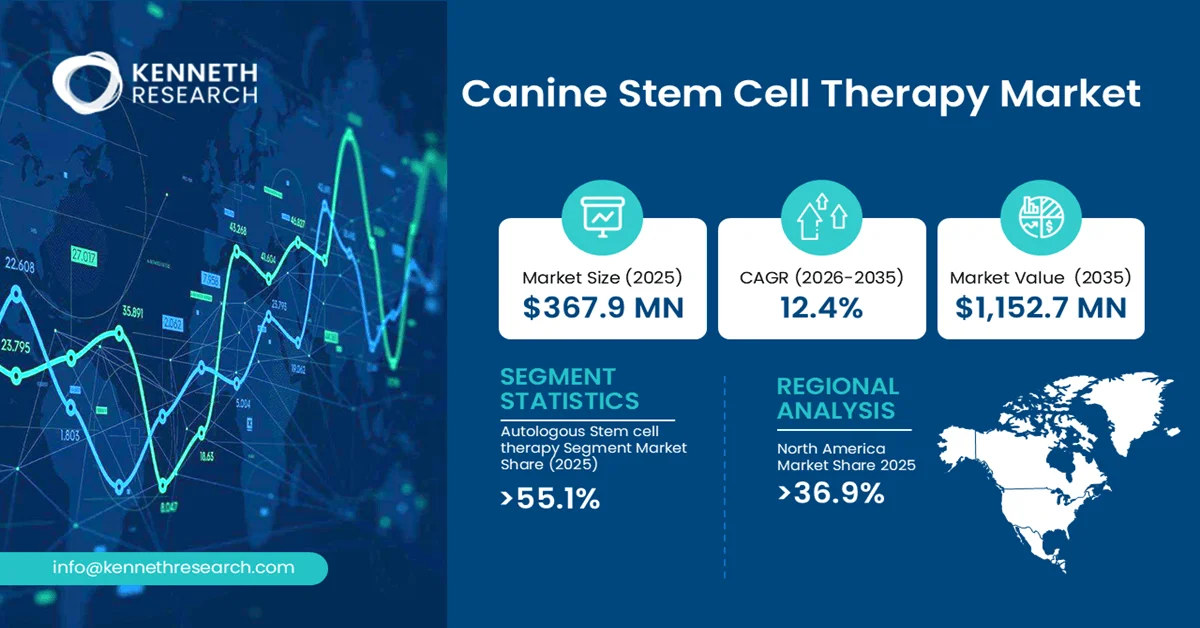
The Canine Stem Cell Therapy Market size was valued at USD 367.9 million in 2025 and is projected to reach USD 1,152.7 million by the end of 2035, rising at a CAGR of 12.4% during the forecast period, i.e., 2026–2035. In 2026, the industry size of the Canine stem cell therapy market is estimated at USD 412.2 million.
Growing demand for regenerative veterinary treatments is the primary growth driver for the Canine Stem Cell Therapy Market. The increasing clinical burden of canine osteoarthritis, which affects at least 25% of dogs during their lifetime, is encouraging veterinarians to adopt stem cell-based therapies that improve mobility, reduce inflammation, and enhance long-term joint function.
The Canine Stem Cell Therapy Market comprises regenerative veterinary treatments that utilize stem cells to repair, regenerate, or replace damaged tissues in dogs affected by orthopedic, inflammatory, degenerative, and immune-mediated disorders. These therapies primarily employ mesenchymal stem cells derived from adipose tissue, bone marrow, or other biological sources and are administered either as autologous therapies using the patient's own cells or as allogeneic therapies sourced from donor animals. The market encompasses cell collection, processing, expansion, cryopreservation, laboratory services, and therapeutic administration performed through specialized veterinary hospitals, clinics, and regenerative medicine providers.
A defining characteristic of this market is its focus on restoring biological function rather than only managing symptoms, making it an important advancement in companion animal healthcare. Stem cell therapy is increasingly incorporated into veterinary regenerative medicine because of its anti-inflammatory, immunomodulatory, and tissue-repair capabilities, particularly for chronic musculoskeletal disorders and complex soft tissue injuries. Industrially, the market supports innovation across veterinary biotechnology, cell processing technologies, advanced diagnostics, and specialized clinical services, strengthening the development of precision regenerative therapies for companion animals while expanding opportunities for veterinary research, commercialization, and long-term animal health management.
Key Canine Stem Cell Therapy Market Insights Summary:
Key Takeaways: Market Trends & Insights
- The market is projected to expand from USD 412.2 Million in 2026 to USD 1,152.7 Million by 2035, reflecting a robust 12.4% CAGR over the forecast period
- Autologous Stem Cell Therapy led the therapy type segment with 55.1% of the market share in 2025, supported by its personalized treatment approach and lower risk of immune rejection
- North America accounted for the largest regional share of 36.9% in 2025, driven by advanced veterinary healthcare infrastructure, regenerative medicine research, and strong biotechnology investments
- The Osteoarthritis application segment is expected to witness significant growth through 2035, fueled by increasing demand for regenerative therapies that improve long-term mobility and joint function in companion animals
Market Drivers
- Expansion of veterinary regenerative medicine research collaborations
- Growing investment in veterinary biotechnology and cell processing infrastructure
- Increasing awareness among companion animal owners regarding regenerative treatment options
- Advancements in stem cell manufacturing, cryopreservation, and quality control technologies
Challenges
- Lack of standardized clinical protocols and regulatory harmonization
- High treatment costs and limited reimbursement support
Canine Stem Cell Therapy Market Overview & Supply Chain
Global adoption of canine stem cell therapy is increasing as veterinary medicine advances toward regenerative treatment strategies that restore tissue function rather than only alleviating symptoms. Improvements in stem cell isolation, cell expansion, cryopreservation, and minimally invasive administration techniques are enhancing treatment consistency and clinical acceptance. Regulatory progress for innovative veterinary biologics is also encouraging investment and translational research across the animal health sector. The broader acceptance of innovative biologics is creating a favorable ecosystem for stem cell-based regenerative therapies in veterinary practice.
The value chain of the Canine Stem Cell Therapy Market begins with the procurement of biological materials, including adipose tissue, bone marrow, and other eligible tissue sources collected under controlled veterinary protocols. These samples are transported to specialized cell-processing laboratories where stem cells are isolated, cultured, expanded, characterized, tested for quality, and cryopreserved using validated laboratory procedures. Biotechnology companies supply culture media, laboratory reagents, processing equipment, storage systems, and quality assurance services required for manufacturing therapeutic cell products. Following regulatory and clinical quality verification, stem cell therapies are distributed through specialized cold-chain logistics providers to veterinary hospitals, regenerative medicine centers, and advanced veterinary clinics. Veterinarians evaluate patient suitability, administer treatments, and monitor therapeutic outcomes through follow-up care. Key stakeholders across the value chain include veterinary biotechnology companies, contract laboratory service providers, cold-chain logistics firms, veterinary practitioners, academic research institutions, regulatory authorities, companion animal owners, and animal health technology developers collaborating to advance regenerative veterinary care.
Canine Stem Cell Therapy Market: Growth Drivers & Challenges
Growth Drivers:
- Expanding Regulatory Acceptance of Advanced Veterinary Biologics: The growing regulatory acceptance of advanced biologic therapies is strengthening the commercial outlook for the Canine Stem Cell Therapy Market by encouraging innovation in regenerative veterinary medicine. As regulatory agencies establish clearer pathways for evaluating novel veterinary therapeutics, biotechnology companies gain greater confidence to invest in stem cell processing technologies, clinical validation, and product commercialization. This also accelerates collaborations between research institutions, veterinary hospitals, and industry participants to develop standardized regenerative treatment protocols. Continued regulatory advancement is expected to improve clinician confidence, expand treatment accessibility, and stimulate broader investment across regenerative veterinary biotechnology.
- Increasing Integration of Regenerative Medicine into Veterinary Practice: The integration of regenerative medicine into routine veterinary practice is creating sustained growth opportunities for canine stem cell therapy. Veterinary hospitals and specialty clinics are increasingly incorporating regenerative procedures alongside conventional orthopedic surgery, rehabilitation, and pain management to improve long-term clinical outcomes. Enhanced practitioner training, greater availability of specialized laboratory services, and advances in cell preservation technologies are making these therapies more accessible across referral networks. As clinical experience grows, veterinarians are becoming more confident in recommending stem cell-based interventions for complex musculoskeletal and inflammatory conditions where conventional treatment options may provide limited long-term benefits. Looking ahead, broader integration of regenerative medicine with advanced imaging, precision diagnostics, and personalized treatment planning is expected to further strengthen adoption while encouraging continuous innovation throughout the veterinary biotechnology ecosystem.
Challenges:
- Lack of Standardized Clinical Protocols and Regulatory Harmonization: Differences in clinical protocols, stem cell processing methods, and regulatory expectations remain a significant restraint for the Canine Stem Cell Therapy Market. Veterinary providers often rely on varying approaches for cell sourcing, expansion, dosage, administration frequency, and patient selection, making it difficult to achieve consistent therapeutic outcomes across healthcare settings. The absence of harmonized standards also complicates product validation, cross-border commercialization, and comparison of clinical evidence among treatment providers. From a commercial perspective, biotechnology companies face longer development timelines and additional investment requirements to satisfy diverse regulatory and quality expectations across multiple markets. Looking ahead, greater collaboration between regulatory authorities, veterinary associations, and industry stakeholders to establish standardized manufacturing and treatment guidelines will be essential for improving market credibility and accelerating wider commercial adoption.
- High Treatment Costs and Limited Reimbursement Support: The relatively high cost of stem cell therapy, combined with limited reimbursement options, continues to restrict broader market penetration. The therapy requires specialized laboratory infrastructure, skilled personnel, quality-controlled cell processing, cryopreservation capabilities, and comprehensive clinical monitoring, all of which contribute to elevated treatment expenses. Many pet owners must bear these costs directly because regenerative veterinary procedures are not consistently covered under companion animal insurance policies or reimbursement programs. This creates affordability challenges and limits adoption, particularly for elective or long-term treatment plans. Commercially, service providers may experience slower patient conversion despite growing clinical interest, while developers face challenges in achieving economies of scale. Future market expansion will depend on reducing processing costs, improving operational efficiency, and expanding insurance coverage for regenerative veterinary treatments.
Canine Stem Cell Therapy Market Size and Forecast:
| Report Attribute | Details |
|---|---|
| Base Year |
2025 |
| Forecast Year |
2026-2035 |
| CAGR |
12.4% |
| Base Year Market Size (2025) |
USD 367.9 million |
| Forecast Year Market Size (2035) |
USD 1,152.7 million |
| Regional Scope |
|
Canine Stem Cell Therapy Market Segmentation Analysis:
Therapy Type Segment Analysis
In the therapy type segment, the Autologous Stem cell therapy sub-segment is anticipated to capture the largest market share of 55.1% by the end of 2025.
Autologous Stem Cell Therapy dominates the Canine Stem Cell Therapy Market because it offers a personalized regenerative approach by utilizing stem cells harvested from the patient's own tissue, minimizing the risk of immune rejection and improving treatment compatibility. Veterinary specialists increasingly prefer this therapy for managing orthopedic injuries, osteoarthritis, tendon disorders, and ligament damage due to its favorable safety profile and growing clinical acceptance. On the supply side, advancements in veterinary cell processing, cryopreservation, and laboratory expansion techniques have improved the consistency and availability of autologous treatments across specialized veterinary centers. Supporting the growing demand for regenerative therapies, the Dog Aging Project reported in 2023 that osteoarthritis was among the top 10 most frequently reported medical conditions across 15 of the 25 most common dog breeds studied, highlighting the substantial burden of musculoskeletal disease in companion animals. Looking ahead, continued improvements in standardized treatment protocols and regenerative biotechnology are expected to reinforce the segment's leadership in veterinary regenerative medicine.
Application Segment Analysis
The Osteoarthritis is projected to grow as the second-largest segment in the Canine Stem Cell Therapy market due to four converging demand drivers.
The osteoarthritis application segment is projected to witness strong growth as veterinarians increasingly adopt regenerative therapies to improve mobility, reduce chronic pain, and delay disease progression in aging dogs. Conventional treatment approaches primarily manage symptoms, whereas stem cell therapy offers the potential to repair damaged joint tissues and support long-term functional recovery, making it an attractive option for both clinicians and pet owners. Growing awareness of advanced regenerative medicine, coupled with expanding availability of specialized veterinary rehabilitation and cell-processing services, is accelerating clinical adoption. On the supply side, biotechnology companies continue to refine stem cell isolation, expansion, and preservation technologies, enabling more standardized therapeutic procedures. Supporting this demand, the U.S. Food and Drug Administration states that several FDA-approved veterinary nonsteroidal anti-inflammatory drugs (NSAIDs) are available for dogs to control pain and inflammation associated with osteoarthritis, reflecting the significant clinical burden and sustained treatment demand for this condition. Looking ahead, continued advances in regenerative medicine and personalized veterinary care are expected to further drive the adoption of stem cell therapy for canine osteoarthritis.
Our in-depth analysis of the global canine stem cell therapy market includes the following segments:
|
Segment |
Sub-segment |
|
Therapy Type |
|
|
Application |
|
|
End Use |
|
Canine Stem Cell Therapy Market Regional Insights:
North America Trends & Insights:
North America canine stem cell therapy market is projected to hold the largest revenue share of 36.9% by the end of 2025.
The region's dominance is supported by its well-established veterinary healthcare infrastructure, advanced regenerative medicine research, and strong presence of animal health biotechnology companies. Continuous investment in cell processing technologies, veterinary specialty hospitals, and translational research has accelerated the commercialization of stem cell-based therapies for companion animals. In addition, a well-defined regulatory environment for veterinary biologics and strong collaboration among biotechnology firms, research institutions, and veterinary practitioners have fostered innovation and clinical adoption. Demand is further supported by high expenditure on companion animal healthcare and increasing acceptance of advanced regenerative treatment options for chronic orthopedic and degenerative disorders, positioning North America as the primary hub for veterinary stem cell therapy development and commercialization.
The United States remains the principal contributor to regional leadership due to its concentration of regenerative medicine developers, veterinary teaching hospitals, and specialized cell therapy laboratories. According to the U.S. Census Bureau's 2021 American Housing Survey, 49.0 million U.S. households owned one or more dogs, demonstrating the country's large companion animal base that supports demand for advanced veterinary healthcare services.
Canada complements regional growth through expanding veterinary specialty care, increasing research activities in animal biotechnology, and growing collaboration between academic institutions and veterinary clinics to advance regenerative treatment capabilities for companion animals.
Europe Market Trends & Insights:
Europe is emerging as a strategically important region for the Canine Stem Cell Therapy Market, supported by growing demand for advanced companion animal healthcare and increasing investment in regenerative veterinary medicine. Veterinary biotechnology companies, research institutes, and specialty animal hospitals across the region are actively exploring stem cell-based therapies for orthopedic, inflammatory, and degenerative disorders in dogs. A strong research ecosystem, established animal health regulations, and collaborative public-private innovation programs are encouraging the development and clinical evaluation of regenerative therapies. The region is also witnessing greater adoption of precision veterinary medicine, supported by advances in cell processing technologies, laboratory infrastructure, and veterinary rehabilitation services. As clinical evidence continues to expand and standardized manufacturing practices become more established, Europe is expected to create significant opportunities for technology developers, contract laboratory providers, and veterinary healthcare organizations participating in regenerative medicine.
Germany serves as a leading center for veterinary biotechnology and translational research, supported by renowned research institutions, advanced laboratory capabilities, and a robust animal health industry. The country continues to promote innovation through collaborations between universities, biotechnology companies, and veterinary clinics, accelerating the adoption of regenerative treatment approaches.
France is strengthening its position through investments in veterinary research, modern diagnostic infrastructure, and specialty animal healthcare services. Increasing collaboration among veterinary practitioners, biotechnology firms, and academic institutions is supporting the development of stem cell-based therapeutic solutions while enhancing clinical expertise and expanding access to advanced regenerative care for companion animals.
Leading Companies Operating in the Global Canine Stem Cell Therapy Market:
Here is a list of upstream, downstream, and key players operating in the global Canine Stem Cell Therapy Market competitive ecosystem:
- VetStem, Inc. (United States)
- Ardent Animal Health, LLC (United States)
- Magellan Stem Cells (Australia)
- JangoPet, LLC (United States)
- Animacel (Slovenia)
Recent Developments
- In March 2025, VetStem Biopharma secured strategic funding to accelerate the final steps toward U.S. FDA conditional approval of StemStat™ Ortho, an allogeneic, off-the-shelf stem cell therapy for canine osteoarthritis. This positions VetStem to potentially become the first company to bring an FDA-approved allogeneic stem cell product to the veterinary market.
- In February 2025, VetStem entered into an exclusive license and supply agreement with PetVivo Holdings, Inc. to commercialize its PrecisePRP™ Products, which were subsequently launched at the Western Veterinary Conference. This partnership followed VetStem's milestone of processing over 40,000 stem cell treatments for nearly 17,000 patients.
Frequently Asked Question
In 2025, the Canine Stem Cell Therapy Market exceeded USD 367.9 Million.
The Canine Stem Cell Therapy Market is projected to reach USD 1,152.7 Million by the end of 2035, expanding at a CAGR of 12.4% over the forecast period (2026–2035).
The major players in the market are VetStem, Inc., Ardent Animal Health, LLC, Magellan Stem Cells, JangoPet, LLC, Enovis (Companion Animal Health), Animacel, and others.
In the Therapy Type segment, the Autologous Stem Cell Therapy sub-segment is anticipated to capture the largest market share of 55.1% in the future and exhibit lucrative growth opportunities during 2026–2035. This growth trajectory is largely attributed to its personalized treatment approach, lower risk of immune rejection, and increasing adoption for orthopedic and degenerative conditions in companion animals.
North America is projected to hold the largest market share of 36.9% by the end of 2035 and provide more business opportunities in the future. Continuous investments in veterinary regenerative medicine, advanced biotechnology infrastructure, and strong innovation across the United States and Canada are fostering the region's dominance.
Why Choose Kenneth Research ?
-
Insight with Impact : We don’t just gather data — we uncover stories, trends, and opportunities that fuel business growth.
-
Experts Who Get It : Our team speaks your industry’s language and knows what really matters to your customers and market.
-
Custom-Built for You : Forget one-size-fits-all. We craft research and consulting solutions as unique as your business vision.
-
Partners, Not Just Providers : We work with you, not for you — collaborating closely to turn insights into smart, strategic moves.
-
Results That Speak : Our work powers brands, startups, and industry leaders alike — with a track record of ideas that work in the real world.
Report ID: 1023 |
Published Date: 24 Jul 2026 |
Report Format: |
Delivery Timeline: 48-72 Business Hours

Copyright © 2025 Kenneth Research. All rights reserved. Terms of Use | Privacy Policy
