Report ID: 1068 |
Published Date: 11 Aug 2026 |
Report Format: |
Delivery Timeline: 48-72 Business Hours
Cancer Gene Therapy Market Outlook:
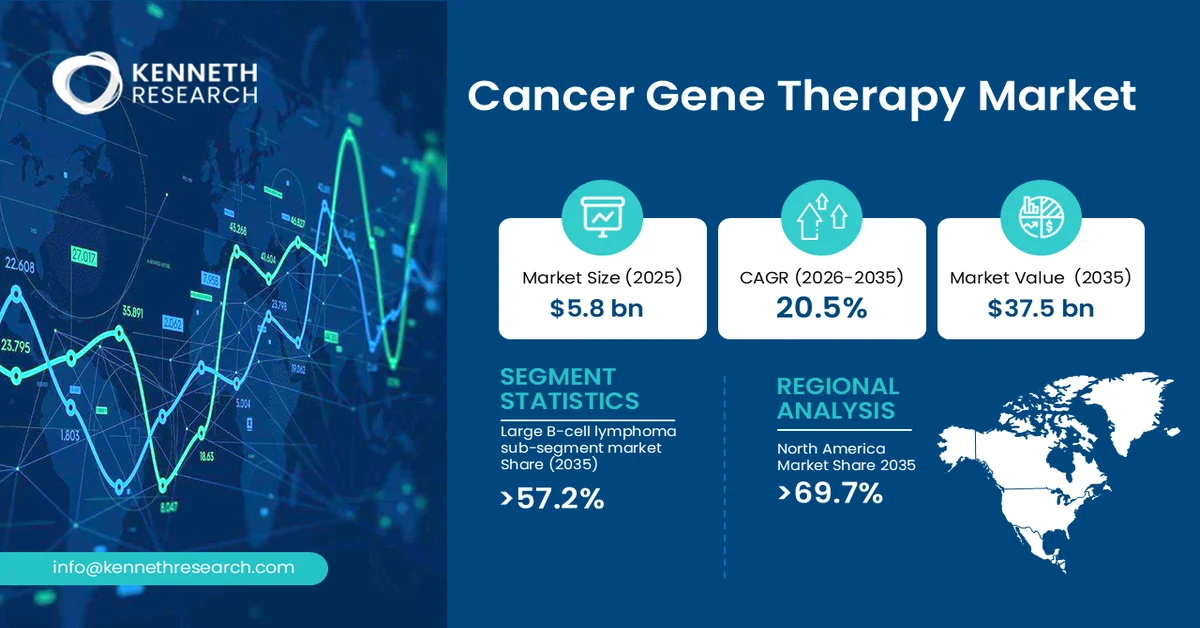
Cancer Gene Therapy Market size was valued at USD 5.8 billion in 2025 and is projected to reach USD 37.5 billion by the end of 2035, rising at a CAGR of 20.5% during the forecast period, i.e., 2026-2035. In 2026, the industry size of cancer gene therapy is estimated at USD 7 billion.
The primary growth driver for the cancer gene therapy market is the expanding regulatory approval and clinical adoption of genetically engineered cell and gene therapies for oncology. The growing number of approved cellular and gene therapy products by the U.S. FDA is accelerating commercialization, strengthening clinical confidence, and encouraging continued investment in oncology innovation.
Cancer gene therapy refers to therapeutic approaches that modify, replace, introduce, or regulate genetic material within a patient's cells to prevent, treat, or eliminate malignant diseases. These therapies employ vectors such as viral and non-viral delivery systems to transfer therapeutic genes, engineer immune cells, or silence cancer-promoting genetic pathways. The market is characterized by highly personalized treatment strategies, advanced vector engineering, precision medicine integration, and stringent regulatory oversight. It includes ex vivo and in vivo therapeutic approaches designed to enhance anti-tumor immune responses, restore normal cellular function, or selectively destroy cancer cells while minimizing damage to healthy tissues. Cancer gene therapy has become increasingly relevant across hematological malignancies and selected solid tumors, supported by advances in molecular diagnostics, genome engineering technologies, and specialized manufacturing capabilities.
Key Cancer Gene Therapy Market Insights Summary:
Key Takeaways: Market Trends & Insights
- In the indication segment, the large B-cell lymphoma sub-segment is anticipated to capture the revenue share of 57.2% during 2026-2035
- North America cancer gene therapy market is projected to hold the largest revenue share of 69.7% by the end of 2035
- The european cancer gene therapy market is projected to grow significantly due to presence of EIC (European Innovation Council) cell and gene therapy symposium
- Key players operating in the cancer gene therapy market include Gilead Sciences, Bristol Myers Squibb, Johnson & Johnson, Loyance Biotherapeutics, Pfizer Inc., and Adaptimmune Therapeutics
Market Drivers
- Expanding Regulatory Approvals and Commercialization of Gene-Based Cancer Therapies
- Advances in Viral Vector Engineering and Precision Oncology
- Growing integration of genomic diagnostics into precision cancer treatment pathways.
- Rising strategic collaborations and licensing agreements among biotechnology, pharmaceutical, and research organizations.
Challenges
- Complex manufacturing processes and limited commercial production capacity
- Reimbursement complexity and uneven healthcare infrastructure
Cancer Gene Therapy Market Overview & Supply Chain
Global adoption of cancer gene therapy is increasing as precision oncology, engineered immune cell therapies, and advanced gene delivery technologies become integrated into routine cancer care. Continued regulatory support, expanding translational research, and investments in specialized manufacturing infrastructure are accelerating commercialization across developed and emerging healthcare systems. The market also benefits from advances in genomic sequencing, viral vector engineering, and personalized medicine, enabling therapies tailored to specific cancer subtypes. According to the U.S. Food and Drug Administration (FDA), the Center for Drug Evaluation and Research approved 17 novel cancer drugs, while the Center for Biologics Evaluation and Research approved two new cellular therapy products in 2024, highlighting sustained regulatory momentum for advanced oncology therapeutics.
The cancer gene therapy value chain begins with the procurement of critical biological inputs, including viral vectors, plasmid DNA, cell culture media, reagents, donor or patient-derived cells, and specialized laboratory consumables supplied by biotechnology and life science companies. These materials are utilized by biotechnology firms, pharmaceutical manufacturers, and contract development and manufacturing organizations (CDMOs) to engineer therapeutic genes or genetically modified immune cells under stringent good manufacturing practice (GMP) conditions. Following quality assurance, analytical testing, cryopreservation, and regulatory release, products are distributed through temperature-controlled logistics networks to certified hospitals, oncology centers, and specialized treatment facilities.
Cancer Gene Therapy Market: Growth Drivers & Challenges
Growth Drivers:
- Expanding regulatory approvals and commercialization of gene-based cancer therapies: The commercialization of innovative gene therapies is accelerating the adoption of advanced oncology treatments worldwide. Regulatory approvals validate the safety and efficacy of novel platforms, encourage investment in clinical development, and strengthen physician confidence in gene-based interventions. As more therapies transition from clinical trials to commercial use, manufacturers continue to expand production capacity, improve manufacturing consistency, and develop scalable delivery models. This momentum is also encouraging healthcare providers to establish specialized treatment centers and invest in advanced cell-processing capabilities. A notable example is the launch of India's first home-grown CAR-T cell therapy, NexCAR19, in April 2024, developed through collaboration between IIT Bombay, Tata Memorial Centre, and ImmunoACT, representing a significant milestone in expanding access to cancer gene therapies. Such developments are expected to accelerate innovation, improve treatment availability, and foster broader adoption across global oncology markets.
- Advances in viral vector engineering and precision oncology: Continuous innovation in viral vector technologies and precision oncology is strengthening the clinical potential of cancer gene therapies. Improvements in vector design, transduction efficiency, gene expression control, and manufacturing reproducibility are enabling the development of safer and more targeted therapeutic products. Simultaneously, advances in molecular diagnostics and biomarker profiling allow clinicians to identify patients most likely to benefit from genetically engineered treatments, supporting personalized therapeutic strategies. These technological developments reduce development complexity while improving treatment specificity and long-term therapeutic outcomes. Growing collaboration among biotechnology companies, academic institutions, contract development and manufacturing organizations, and healthcare providers is further accelerating innovation across the value chain.
Challenges:
- Complex manufacturing processes and limited commercial production capacity: Cancer gene therapy manufacturing involves highly specialized processes that require stringent quality control, advanced cleanroom infrastructure, skilled personnel, and validated production systems. The production of viral vectors and genetically modified cells is technically demanding, with limited opportunities for standardization across therapy types. Variability in patient-derived materials, lengthy production timelines, and strict regulatory compliance increase operational complexity and reduce manufacturing flexibility. Commercially, these constraints can delay product availability, restrict treatment capacity, and increase production costs for developers. Limited manufacturing scalability also creates supply bottlenecks as demand for approved therapies expands. Although investments in automated manufacturing platforms, closed-system processing, and dedicated cell and gene therapy facilities are expected to improve efficiency over time, achieving reliable large-scale production remains a significant challenge for companies seeking broader commercialization.
- Reimbursement complexity and uneven healthcare infrastructure: The successful commercialization of cancer gene therapies depends not only on regulatory approval but also on the availability of specialized healthcare infrastructure and sustainable reimbursement mechanisms. Many healthcare systems are still adapting to the unique clinical pathways associated with personalized gene therapies, including patient identification, cell collection, product handling, and long-term follow-up. Differences in reimbursement policies, health technology assessment requirements, and funding models create uncertainty for manufacturers entering multiple geographic markets. Hospitals may also face operational challenges in establishing accredited treatment centers capable of administering advanced gene therapies. These factors can slow market penetration despite strong clinical evidence.
Cancer Gene Therapy Market Size and Forecast:
| Report Attribute | Details |
|---|---|
| Base Year |
2025 |
| Forecast Year |
2026-2035 |
| CAGR |
20.5% |
| Base Year Market Size (2025) |
USD 5.8 billion |
| Forecast Year Market Size (2035) |
USD 37.5 billion |
| Regional Scope |
|
Cancer Gene Therapy Market Segmentation Analysis:
Indication Segment Analysis
The large B-cell lymphoma sub-segment is estimated to hold largest share of 57.2% during the 2026-2035 in the global market.
The large B-cell lymphoma sub-segment dominates the cancer gene therapy market due to its established role as a primary indication for commercially approved gene and cell therapies, particularly genetically engineered T-cell treatments. Strong clinical evidence, well-defined treatment guidelines, and increasing physician familiarity have supported broader adoption across specialized oncology centers. Demand is driven by the need for effective therapeutic options in patients with relapsed or refractory disease who have limited alternatives after conventional treatment. On the supply side, manufacturers continue to prioritize this indication because of mature clinical development pathways, existing manufacturing expertise, and proven regulatory precedents, enabling faster commercialization than many emerging oncology indications. According to the U.S. National Cancer Institute's Surveillance, Epidemiology, and End Results (SEER) Program, the rate of new cases of diffuse large B-cell lymphoma was 5.6 per 100,000 men and women annually, based on 2019–2023 cases, demonstrating the sustained clinical demand for therapies targeting this disease.
Vector Type Segment Analysis
Lentivirus sub-segment is estimated to hold second-largest share in the global market during the forecast period.
The Lentivirus sub-segment is projected to grow due to its increasing application as a delivery platform for engineered immune cell therapies, particularly in the development of CAR-T cell treatments for hematological cancers. Lentiviral vectors offer advantages such as stable gene integration, efficient delivery into dividing and non-dividing cells, and suitability for long-term therapeutic gene expression, making them valuable for advanced oncology applications. Industry adoption is supported by expanding cell therapy pipelines, improvements in vector manufacturing processes, and increased investment in specialized production facilities capable of meeting clinical and commercial requirements.
Our in-depth analysis of the global cancer gene therapy market includes the following segments:
|
Segment |
Sub-segment |
|---|---|
|
Indication |
|
|
Route of Administration |
|
|
Vector Type |
|
Cancer Gene Therapy Market Regional Insights:
North America Market Trends & Insights:
North America dominates the cancer gene therapy market, accounting for 69.7% share in 2035 according to the provided market inputs. The region’s leadership is supported by a mature biotechnology ecosystem, advanced oncology research infrastructure, strong clinical trial activity, and favorable regulatory frameworks for innovative therapeutic platforms. The region benefits from significant investments in cell and gene therapy manufacturing capabilities, specialized treatment centers, academic-industry collaborations, and precision medicine initiatives. Strong adoption of advanced cancer treatments is also supported by established reimbursement systems and regulatory pathways that facilitate commercialization. The presence of leading biotechnology companies, research institutions, and contract manufacturing organizations further strengthens North America’s role in production, innovation, and clinical deployment of gene-based oncology therapies.
United States represents the primary contributor due to its extensive biomedical research network, advanced healthcare infrastructure, and regulatory support from agencies such as the U.S. Food and Drug Administration (FDA).
Canada also contributes through government-supported cancer research programs, biotechnology innovation, and expanding capabilities in clinical research and advanced therapeutics. The combination of research funding, healthcare capacity, and regulatory advancement positions both countries as key markets for cancer gene therapy adoption.
Asia Pacific Market Trends & Insights:
Asia Pacific is emerging as a strategically important region for the cancer gene therapy market due to increasing investments in biotechnology innovation, expanding oncology research capabilities, and improving access to advanced healthcare technologies. Rising demand for personalized cancer treatments, growing clinical research activity, and the development of specialized cell and gene therapy infrastructure are encouraging regional adoption. Governments across the region are supporting biotechnology advancement through research funding programs, regulatory modernization, and initiatives focused on strengthening domestic healthcare innovation ecosystems. The region also presents opportunities for manufacturers through expanding healthcare networks, increasing collaboration between academic institutions and industry participants, and the establishment of regional production capabilities for advanced therapies.
China represents a major contributor due to its expanding biotechnology sector, large oncology patient population, growing clinical trial ecosystem, and increasing focus on domestic development of innovative therapies. Government-backed biotechnology initiatives and regulatory improvements are supporting faster advancement of cell and gene therapy research.
Japan is also strengthening its position through advanced healthcare infrastructure, supportive regenerative medicine policies, and strong collaboration between pharmaceutical companies, research institutions, and healthcare providers. The country’s emphasis on innovative medicine approval pathways and precision healthcare is creating favorable conditions for cancer gene therapy adoption. Together, China and Japan are expected to remain important contributors to regional innovation and commercialization.
Leading Companies Operating in the Global Cancer Gene Therapy Market:
- Gilead Sciences (United States)
- Company Overview
- Business Strategy
- Key Product Offerings
- Financial Performance
- Key Performance Indicators
- Risk Analysis
- Recent Development
- Regional Presence
- SWOT Analysis
- Bristol Myers Squibb (United States)
- Johnson & Johnson (United States)
- Lovance Biotherapeutics (United States)
- Pfizer Inc. (United States)
- Adaptimmune Therapeutics (United States/United Kingdom
Recent Developments
- In November 2024, The U.S. Food and Drug Administration approved AUCATZYL (obecabtagene autoleucel) of Autolus Therapeutics for eligible adults with relapsed or refractory B-cell precursor acute lymphoblastic leukemia. The approval broadens the portfolio of commercially available CAR-T therapies and strengthens competition within the hematologic cancer gene therapy segment.
- In July 2024, Novartis announced a strategic collaboration with Dren Bio to develop next-generation bispecific antibody therapies for cancer using Dren Bio's targeted myeloid engager platform. The collaboration strengthens Novartis' oncology innovation portfolio and expands its pipeline of advanced targeted cancer therapies complementary to its cell and gene therapy business.
Frequently Asked Question
In 2025, the cancer gene therapy market exceeded USD 5.8 billion.
The cancer gene therapy market is projected to reach USD 37.5 billion by the end of 2035, expanding at a CAGR of 20.5% over the forecast period (2026-2035).
The major players in the market are Gilead Sciences, Bristol Myers Squibb, Johnson & Johnson, Iovance Biotherapeutics, and others.
In the indication segment, the large B-cell lymphoma sub-segment is anticipated to capture the largest market share of 57.2% in the future and exhibit lucrative growth opportunities during 2026-2035. This growth trajectory is largely attributed to increasing adoption of genetically engineered cell therapies for relapsed or refractory hematological malignancies.
North America is projected to hold the largest market share of 69.7% by the end of 2035 and provide more business opportunities in the future. Strong biotechnology infrastructure, regulatory support, and continued investments in oncology research and advanced therapeutic manufacturing across the U.S. and Canada are fostering the region's dominance.
Why Choose Kenneth Research ?
-
Insight with Impact : We don’t just gather data — we uncover stories, trends, and opportunities that fuel business growth.
-
Experts Who Get It : Our team speaks your industry’s language and knows what really matters to your customers and market.
-
Custom-Built for You : Forget one-size-fits-all. We craft research and consulting solutions as unique as your business vision.
-
Partners, Not Just Providers : We work with you, not for you — collaborating closely to turn insights into smart, strategic moves.
-
Results That Speak : Our work powers brands, startups, and industry leaders alike — with a track record of ideas that work in the real world.
Report ID: 1068 |
Published Date: 11 Aug 2026 |
Report Format: |
Delivery Timeline: 48-72 Business Hours

Copyright © 2025 Kenneth Research. All rights reserved. Terms of Use | Privacy Policy
