Report ID: 1049 |
Published Date: 28 Jul 2026 |
Report Format: |
Delivery Timeline: 48-72 Business Hours
Anal Cancer Market Outlook:
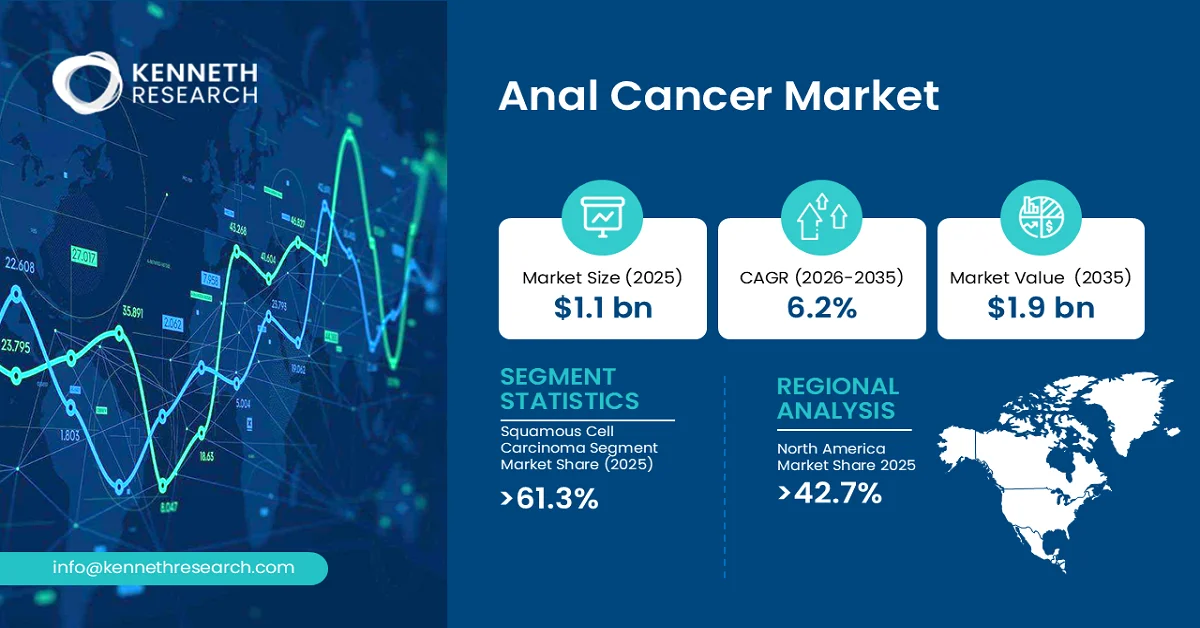
Anal Cancer Market size was valued at USD 1.1 billion in 2025 and is projected to reach USD 1.9 billion by the end of 2035, rising at a CAGR of 6.2% during the forecast period, i.e., 2026-2035. In 2026, the industry size of the anal cancer is estimated at USD 1.2 billion.
The primary growth driver for the anal cancer market is the increasing focus on early diagnosis and multidisciplinary treatment supported by expanding HPV prevention initiatives, improved oncology infrastructure, and greater access to chemoradiotherapy, targeted therapies, and immunotherapies. Rising awareness among high-risk populations is further strengthening demand for advanced diagnostic and therapeutic solutions.
The anal cancer market comprises the development, manufacturing, commercialization, and clinical use of products and services for the prevention, diagnosis, treatment, and management of malignancies affecting the anal canal and surrounding tissues. The market encompasses diagnostic technologies, imaging systems, pathology services, chemotherapy, radiation therapy, immunotherapy, targeted therapies, surgical interventions, supportive care, and follow-up monitoring delivered across hospitals, specialty cancer centers, and ambulatory healthcare facilities.
Anal cancer is a relatively uncommon gastrointestinal malignancy, with squamous cell carcinoma (SCC) representing the predominant histological subtype. Persistent infection with high-risk human papillomavirus (HPV) is recognized as the principal etiological factor for most cases, making HPV vaccination, risk-based screening, and early detection important components of disease management.
Key Anal Cancer Market Insights Summary:
Key Takeaways: Market Trends & Insights
- The anal cancer market is projected to grow from USD 1.1 billion in 2025 to USD 1.9 billion by 2035, registering a CAGR of 6.2% during the forecast period (2026-2035)
- Squamous Cell Carcinoma (SCC) accounted for the largest cancer type segment with a 61.3% share in 2025, supported by established treatment protocols and increasing focus on HPV-associated cancer management
- Hospitals and Clinics are expected to remain the fastest-growing end-user segment owing to expanding multidisciplinary oncology care, greater adoption of advanced therapeutics, and continued investments in specialized cancer treatment infrastructure
- North America held the leading regional position with a 42.7% market share in 2025, driven by advanced oncology infrastructure, strong clinical research capabilities, and widespread access to innovative cancer therapies
- Asia Pacific is emerging as a key growth region, led by expanding oncology infrastructure and government-backed cancer care initiatives across India and Japan that are improving access to diagnosis and treatment
Market Drivers
- Expansion of HPV vaccination and early detection programs
- Advancements in multidisciplinary oncology treatment
- Increasing adoption of precision medicine and biomarker-based cancer therapies
- Growing investments in oncology clinical research and immuno-oncology drug development
Challenges
- Limited patient pool and complex clinical trial recruitment
- High cost and limited accessibility of advanced oncology therapies
Anal Cancer Market Overview & Supply Chain
Global adoption of anal cancer diagnostics and therapies is increasing as healthcare systems expand HPV prevention initiatives, improve oncology care pathways, and strengthen access to precision diagnostics and multidisciplinary cancer treatment. Advances in radiation oncology, immunotherapy, molecular pathology, and digital imaging are improving clinical decision-making and patient outcomes. Regulatory support for HPV vaccination and evidence-based cancer prevention strategies is also reinforcing long-term demand for screening and treatment solutions. According to the World Health Organization (WHO), in 2019, human papillomavirus (HPV) caused an estimated 620,000 cancer cases in women and 70,000 cancer cases in men worldwide, highlighting the substantial burden of HPV-associated malignancies, including anal cancer, and underscoring the importance of expanding preventive and therapeutic interventions across global healthcare systems.
The anal cancer market value chain begins with suppliers of pharmaceutical active ingredients, biologics, monoclonal antibody components, diagnostic reagents, imaging equipment, radiation therapy systems, and laboratory consumables. Pharmaceutical and biotechnology companies conduct research, clinical development, manufacturing, quality assurance, and regulatory compliance for oncology drugs and companion diagnostics. Medical device manufacturers produce imaging platforms, radiotherapy equipment, and pathology technologies that support disease diagnosis and treatment planning. Products are distributed through specialty pharmaceutical distributors, hospital procurement networks, group purchasing organizations, and authorized medical device channels. Hospitals, oncology centers, specialty clinics, ambulatory care facilities, and academic medical institutions serve as the primary end users, delivering integrated diagnostic and therapeutic services. Major stakeholders include pharmaceutical manufacturers, biotechnology firms, diagnostic laboratories, healthcare providers, contract manufacturing organizations, regulatory agencies, public health organizations, payers, research institutions, and patient advocacy groups that collectively influence innovation, access, reimbursement, and clinical adoption across the oncology ecosystem.
Anal Cancer Market: Growth Drivers & Challenges
Growth Drivers:
- Expansion of HPV Vaccination and Early Detection Programs: The expansion of HPV vaccination initiatives and early detection programs is a major driver of the anal cancer market. Governments and public health organizations are strengthening immunization strategies, increasing awareness of HPV-associated malignancies, and promoting evidence-based screening for high-risk populations. These initiatives encourage earlier diagnosis, enabling timely intervention with chemoradiotherapy, surgery, and emerging immunotherapies, thereby improving treatment outcomes and increasing demand for comprehensive oncology services. As healthcare systems continue integrating preventive care with advanced diagnostics, manufacturers of diagnostic platforms, imaging technologies, and oncology therapeutics benefit from broader clinical adoption. Over the long term, continued investment in vaccination coverage, molecular diagnostics, and risk-based surveillance is expected to support innovation in precision oncology while encouraging pharmaceutical companies and healthcare providers to expand specialized anal cancer treatment capabilities. According to the U.S. National Cancer Institute, 57.3% of adolescents aged 13–15 years had received the recommended HPV vaccination in 2023, reflecting continued progress in preventive strategies against HPV-related cancers.
- Advancements in Multidisciplinary Oncology Treatment: The growing adoption of multidisciplinary oncology care is accelerating the evolution of the anal cancer market by integrating medical oncology, radiation oncology, surgical oncology, pathology, radiology, and supportive care into coordinated treatment pathways. Improvements in intensity-modulated radiation therapy, image-guided radiotherapy, immunotherapy, and biomarker-informed treatment selection are enabling more personalized therapeutic approaches while preserving organ function and enhancing quality of life. Simultaneously, increasing participation in clinical trials is expanding the evidence base for novel therapeutic combinations and next-generation immuno-oncology agents. Healthcare providers are investing in specialized cancer centers equipped with advanced treatment technologies, creating opportunities for pharmaceutical developers, diagnostic companies, and medical device manufacturers. As personalized medicine continues to mature, multidisciplinary care models are expected to improve treatment efficiency, accelerate clinical innovation, and strengthen the adoption of integrated oncology solutions across developed and emerging healthcare markets.
Challenges:
- Limited Patient Pool and Complex Clinical Trial Recruitment: The relatively low incidence of anal cancer creates a constrained patient pool, making clinical trial recruitment more difficult than in high-prevalence oncology indications. This limitation delays patient enrollment, extends study timelines, and increases research costs for pharmaceutical and biotechnology companies evaluating novel therapies. Smaller trial populations can also complicate the generation of robust clinical evidence required for regulatory submissions and reimbursement negotiations. From a commercial standpoint, developers often face uncertainty regarding return on investment, leading some organizations to prioritize larger oncology markets with broader patient populations. Healthcare providers may also experience slower adoption of emerging treatments until sufficient real-world evidence becomes available. Looking ahead, greater international collaboration, multicenter clinical trials, and adaptive trial designs are expected to improve recruitment efficiency, although the rarity of the disease will remain a structural challenge influencing product development and commercialization strategies.
- High Cost and Limited Accessibility of Advanced Oncology Therapies: The introduction of advanced immunotherapies, targeted therapies, precision diagnostics, and sophisticated radiation technologies has improved treatment capabilities but has also increased the overall cost of anal cancer management. Many healthcare systems, particularly in resource-constrained regions, face challenges in funding these specialized interventions and maintaining the infrastructure required for comprehensive multidisciplinary care. Differences in reimbursement policies, regulatory approval timelines, and healthcare spending further contribute to unequal access across countries and treatment centers. Commercially, manufacturers encounter pricing pressures and prolonged market access negotiations, while providers must carefully balance clinical benefits with budgetary constraints. In the coming years, broader reimbursement reforms, value-based healthcare models, and expanded access initiatives may improve treatment availability, but affordability and infrastructure disparities are expected to continue influencing market penetration and long-term adoption.
Anal Cancer Market Size and Forecast:
| Report Attribute | Details |
|---|---|
| Base Year |
2025 |
| Forecast Year |
2026-2035 |
| CAGR |
6.2% |
| Base Year Market Size (2025) |
USD 1.1 billion |
| Forecast Year Market Size (2035) |
USD 1.9 billion |
| Regional Scope |
|
Anal Cancer Market Segmentation Analysis:
Cancer Type Segment Analysis
In the cancer type segment, the squamous cell carcinoma sub-segment is anticipated to capture the largest market share of 61.3% by the end of 2025.
Squamous Cell Carcinoma (SCC) dominates the anal cancer market because it represents the most clinically recognized and extensively studied histological subtype, resulting in well-established diagnostic pathways and standardized treatment protocols. Strong demand is driven by increasing awareness of HPV-associated malignancies, broader implementation of risk-based screening in high-risk populations, and expanding access to multidisciplinary oncology care. Clinicians have accumulated substantial experience in managing SCC through combined chemoradiotherapy, surgery for selected cases, and emerging immunotherapy approaches, contributing to its continued prominence in clinical practice. On the supply side, pharmaceutical companies, diagnostic developers, and radiation technology providers prioritize SCC in research programs because of the availability of established clinical endpoints and treatment guidelines. This focus supports continued innovation in targeted therapeutics, biomarker development, and precision radiation techniques. According to the U.S. Centers for Disease Control and Prevention (CDC), about 91% of anal cancers are thought to be caused by HPV, reinforcing the sustained demand for diagnostics and therapies targeting HPV-associated squamous cell malignancies. Future market growth is expected to be supported by advances in personalized oncology, earlier diagnosis, and expanded access to innovative treatment modalities.
End User Segment Analysis
The hospitals and clinics is projected to grow as the second-largest segment in the anal cancer market due to four converging demand drivers.
The Hospitals and Clinics segment is projected to experience sustained growth because these facilities serve as the primary point of care for the diagnosis, treatment, and long-term management of anal cancer. Increasing adoption is driven by the availability of multidisciplinary oncology teams, advanced diagnostic imaging, pathology services, radiation oncology infrastructure, and access to systemic therapies within integrated healthcare settings. Hospitals are also the preferred sites for administering chemoradiotherapy, immunotherapy, complex surgical procedures, and post-treatment surveillance, leading to continued growth in patient volumes. On the supply side, healthcare providers are expanding oncology capabilities through investments in specialized cancer centers, modern radiotherapy equipment, and precision diagnostic technologies, creating greater opportunities for pharmaceutical companies and medical device manufacturers. Future growth is expected to be supported by continued modernization of tertiary care infrastructure, wider integration of precision oncology, and strengthened referral networks. Reflecting this trend, the Government of India reported in 2023 that 19 State Cancer Institutes (SCIs) and 20 Tertiary Care Cancer Centres (TCCCs) have been approved under the Strengthening of Tertiary Cancer Care Facilities Scheme, reinforcing the expansion of hospital-based oncology services.
Our in-depth analysis of the global anal cancer market includes the following segments:
|
Segment |
Sub-segment |
|
Type |
|
|
Cancer Type |
|
|
Treatment Type |
|
|
End User |
|
Anal Cancer Market Regional Insights:
North America Market Trends & Insights:
North America anal cancer market is projected to hold the largest revenue share of 42.7% by the end of 2025.
The region benefits from significant investments in oncology research, precision medicine, radiation therapy technologies, and immuno-oncology, supported by well-established reimbursement systems and regulatory pathways for innovative cancer therapeutics. High awareness of HPV-associated cancers, comprehensive cancer surveillance programs, and the presence of leading pharmaceutical and biotechnology companies further reinforce regional leadership. Continuous collaboration among research institutions, healthcare providers, and regulatory agencies also accelerates the introduction of novel diagnostics and treatment approaches. According to the U.S. National Cancer Institute's SEER Program, an estimated 88,564 people were living with anal cancer in the United States in 2023, highlighting the ongoing need for specialized oncology services and sustained therapeutic innovation.
The United States remains the principal contributor to regional dominance through its extensive network of comprehensive cancer centers, robust clinical trial ecosystem, and continuous investment in oncology drug development and precision diagnostics. Strong collaboration between federal research agencies, academic institutions, and industry participants supports rapid clinical adoption of emerging therapies.
Canada complements regional growth through universal healthcare coverage, nationally coordinated cancer control initiatives, expanding oncology research programs, and continued investments in cancer diagnosis and treatment infrastructure. The country's focus on equitable access to specialized oncology services and collaborative research strengthens the regional value chain while supporting the adoption of advanced treatment technologies across hospital networks.
Asia Pacific Market Trends & Insights:
Asia Pacific is emerging as a high-growth region for the anal cancer market, driven by expanding healthcare infrastructure, improving access to oncology services, and increasing emphasis on cancer prevention and early diagnosis. Governments across the region are strengthening national cancer control programs, expanding HPV vaccination initiatives, and investing in advanced diagnostic and treatment capabilities to address the growing burden of HPV-associated malignancies. Rising healthcare expenditure, greater availability of radiation oncology facilities, and broader adoption of precision medicine are encouraging healthcare providers to integrate multidisciplinary treatment approaches into routine clinical practice. In addition, pharmaceutical companies and medical device manufacturers are increasing their presence through research collaborations, technology transfers, and localized production, improving the availability of innovative oncology solutions. As regulatory frameworks continue to evolve and healthcare capacity expands, Asia Pacific is expected to offer substantial opportunities for manufacturers of diagnostics, therapeutics, and radiation technologies serving specialized oncology care.
India is strengthening its position through continued investments in tertiary oncology infrastructure, expansion of government-supported cancer treatment programs, and growing participation in clinical research. Increasing availability of specialized cancer centers, improved diagnostic capabilities, and broader implementation of public health initiatives aimed at cancer awareness and prevention are supporting greater adoption of advanced treatment modalities.
Japan remains a key contributor owing to its highly developed healthcare system, strong pharmaceutical research capabilities, and early adoption of innovative oncology therapies. The country's focus on precision medicine, advanced radiation oncology, and collaborative clinical research continues to foster the integration of next-generation diagnostics and targeted treatments, positioning it as an important innovation hub within the regional anal cancer market.
Leading Companies Operating in the Global Anal Cancer Market:
Here is a list of upstream, downstream, and key players operating in the global anal cancer market competitive ecosystem:
- Bristol-Myers Squibb Company (United States)
- Company Overview
- Business Strategy
- Key Product Offerings
- Financial Performance
- Key Performance Indicators
- Risk Analysis
- Recent Development
- F. Hoffmann-La Roche Ltd (Switzerland)
- Pfizer Inc. (United States)
- GlaxoSmithKline plc (GSK) (United Kingdom)
- Eli Lilly and Company (United States)
- Johnson & Johnson (United States)
Recent Developments
- June 2025: CURE Today highlighted the FDA approval of Zynyz® plus chemotherapy as one of the most important oncology approvals of May 2025, emphasizing its role as a new standard first-line treatment option for recurrent or metastatic anal cancer.
- September 2024: Results from the POD1UM-303/InterAACT 2 Phase III study presented at the European Society for Medical Oncology (ESMO) Congress 2024 showed that adding retifanlimab to carboplatin and paclitaxel significantly improved progression-free survival in patients with advanced squamous cell anal carcinoma, supporting the subsequent FDA approval.
Frequently Asked Question
In 2025, the anal cancer market exceeded USD 1.1 billion.
The anal cancer market is projected to reach USD 1.9 billion by the end of 2035, expanding at a CAGR of 6.2% over the forecast period (2026-2035).
The major players in the market are Bristol-Myers Squibb Company (United States), F. Hoffmann-La Roche Ltd (Switzerland), Pfizer Inc. (United States), GlaxoSmithKline plc (GSK) (United Kingdom), Eli Lilly and Company (United States), Johnson & Johnson (United States), and others.
In the Cancer Type segment, the Squamous Cell Carcinoma (SCC) sub-segment is anticipated to capture the largest market share of 61.3% in the future and exhibit lucrative growth opportunities during 2026–2035. This growth trajectory is largely attributed to expanding HPV vaccination and early detection programs, along with increasing adoption of multidisciplinary oncology treatment.
North America is projected to hold the largest market share of 42.7% by the end of 2035 and provide more business opportunities in the future. Continuous investments in oncology research, advanced cancer treatment infrastructure, and innovation across the United States and Canada are fostering the region's dominance.
Why Choose Kenneth Research ?
-
Insight with Impact : We don’t just gather data — we uncover stories, trends, and opportunities that fuel business growth.
-
Experts Who Get It : Our team speaks your industry’s language and knows what really matters to your customers and market.
-
Custom-Built for You : Forget one-size-fits-all. We craft research and consulting solutions as unique as your business vision.
-
Partners, Not Just Providers : We work with you, not for you — collaborating closely to turn insights into smart, strategic moves.
-
Results That Speak : Our work powers brands, startups, and industry leaders alike — with a track record of ideas that work in the real world.
Report ID: 1049 |
Published Date: 28 Jul 2026 |
Report Format: |
Delivery Timeline: 48-72 Business Hours

Copyright © 2025 Kenneth Research. All rights reserved. Terms of Use | Privacy Policy
