Report ID: 1198 |
Published Date: 27 Aug 2026 |
Report Format: |
Delivery Timeline: 48-72 Business Hours
Human Insulin Market Outlook:
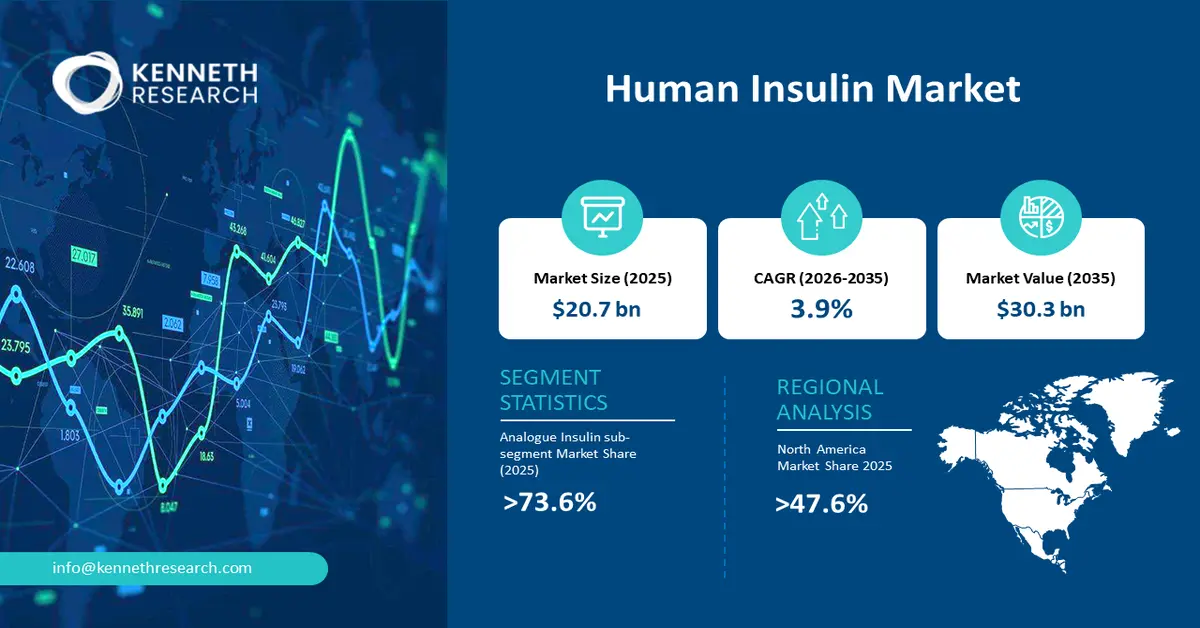
Human Insulin Market size was valued at USD 20.7 billion in 2025 and is projected to reach USD 30.3 billion by the end of 2035, rising at a CAGR of 3.9% during the forecast period, i.e., 2026-2035. In 2026, the industry size of the human insulin is estimated at USD 21.5 billion.
The primary growth driver of the human insulin market is the rising global burden of diabetes, which continues to increase the demand for lifelong insulin therapy. Governments are strengthening diabetes management programmes and improving access to essential medicines, reinforcing the sustained need for human insulin across both developed and emerging healthcare systems.
The human insulin market comprises the production, distribution, and commercial supply of biosynthetic human insulin and insulin analogues used to regulate blood glucose levels in individuals with diabetes mellitus. Human insulin is a biologic medicine manufactured using recombinant DNA technology to replicate the action of naturally occurring insulin produced by the pancreas. It is administered through vials, cartridges, prefilled pens, or insulin pumps to support effective glycaemic control in patients requiring insulin replacement or supplementation.
The market is characterised by continuous product innovation, stringent regulatory oversight, specialised cold-chain distribution, and integration with modern diabetes management technologies. It includes short-, intermediate-, long-, and rapid-acting formulations that address diverse clinical requirements across Type 1 and Type 2 diabetes populations. Human insulin remains an essential medicine within healthcare systems because it reduces the risk of severe diabetes-related complications and supports long-term disease management. Industrially, the market plays a critical role in the global biopharmaceutical sector by driving investments in biologics manufacturing, biosimilar development, pharmaceutical supply chains, and public health initiatives focused on expanding access to affordable insulin therapy worldwide.
Key Human Insulin Market Insights Summary:
Key Takeaways: Market Trends & Insights
- Human Insulin Market is projected to grow from USD 20.7 billion in 2025 to USD 30.3 billion by 2035, registering a CAGR of 3.9% during the forecast period.
- North America accounted for the largest regional share at 47.6% in 2025, supported by advanced diabetes care infrastructure, strong biopharmaceutical manufacturing capabilities, and widespread adoption of insulin therapies.
- Analogue Insulin is expected to remain the leading by type segment, accounting for 73.6% of the market, driven by its improved glycaemic control, flexible dosing, and compatibility with advanced diabetes management technologies.
- Type 1 Diabetes will continue to represent a key application segment, as lifelong dependence on insulin therapy and increasing adoption of personalised diabetes management support sustained demand for human insulin products.
- The market is benefiting from expanding adoption of biosimilar insulin products, continuous advancements in insulin delivery devices, increasing integration with digital diabetes management technologies, and ongoing investments in biologics manufacturing and healthcare access initiatives.
Market Drivers
- Rising global diabetes burden and expansion of insulin-dependent patient population
- Advancements in insulin delivery technologies and manufacturing capabilities
- Expansion of government reimbursement programmes and public procurement of essential insulin medicines.
- Increasing adoption of biosimilar human insulin to improve affordability and accessibility.
- Rising investment in biologics manufacturing capacity and cold-chain pharmaceutical infrastructure.
- Growing integration of insulin therapy with digital diabetes management and connected healthcare technologies.
Challenges
- Complex manufacturing processes and stringent regulatory compliance requirements
- Pricing pressure and intensifying competition from biosimilar insulin products
Human Insulin Market Overview & Supply Chain
The adoption of human insulin is increasing globally due to the growing prevalence of diabetes, improved diagnosis rates, and expanding public healthcare initiatives focused on chronic disease management. Governments are strengthening access to essential medicines, while advances in recombinant DNA technology, insulin delivery devices, and cold-chain logistics are improving treatment availability and patient adherence. Regulatory agencies continue to support quality standards for biologics and biosimilars, encouraging broader market penetration across both developed and emerging economies. The market also benefits from increasing integration of insulin therapy with digital diabetes management platforms and national non-communicable disease strategies. According to the World Health Organization, the number of people living with diabetes increased from 200 million in 1990 to 830 million in 2022, underscoring the expanding clinical need for insulin-based therapies and sustained investment across healthcare systems.
The human insulin value chain begins with the procurement of specialised biological raw materials, recombinant DNA expression systems, fermentation media, pharmaceutical-grade excipients, glass packaging components, cartridges, and pen delivery materials sourced from certified suppliers. Manufacturing involves microbial fermentation, protein expression, purification, formulation, aseptic filling, quality assurance, and regulatory compliance under Good Manufacturing Practices (GMP). Following production, insulin products are transported through validated cold-chain logistics to preserve product stability and efficacy during storage and distribution. Pharmaceutical wholesalers, specialty distributors, hospital procurement organisations, retail pharmacies, and government healthcare programmes facilitate product availability across domestic and international markets. End users include hospitals, diabetes clinics, ambulatory care centres, retail pharmacies, and patients managing Type 1 and Type 2 diabetes. Key stakeholders comprise biotechnology manufacturers, contract manufacturing organisations, regulatory authorities, logistics providers, healthcare professionals, reimbursement agencies, and public health organisations responsible for improving access to insulin therapy.
Human Insulin Market: Growth Drivers & Challenges
Growth Drivers:
- Rising global diabetes burden and expansion of insulin-dependent patient population: The increasing prevalence of diabetes worldwide remains the strongest catalyst for sustained demand for human insulin. A growing number of patients with Type 1 diabetes require lifelong insulin therapy, while many individuals with advanced Type 2 diabetes also transition to insulin-based treatment as disease progression reduces endogenous insulin production. This expanding patient pool is encouraging pharmaceutical manufacturers to strengthen production capacity, improve supply resilience, and invest in differentiated insulin formulations. Simultaneously, governments are prioritising diabetes prevention and treatment through national non-communicable disease strategies, reimbursement programmes, and broader access initiatives, supporting long-term market expansion. According to the U.S. Centers for Disease Control and Prevention (CDC), an estimated 2.1 million people in the United States were living with diagnosed Type 1 diabetes in 2023, highlighting the persistent clinical need for daily insulin therapy and reinforcing stable demand across healthcare systems.
- Advancements in insulin delivery technologies and manufacturing capabilities: Continuous innovation in insulin delivery systems and biopharmaceutical manufacturing is enhancing the accessibility, convenience, and clinical effectiveness of human insulin therapy. Manufacturers are developing improved insulin pens, refillable cartridges, wearable delivery systems, and compatibility with digital diabetes management platforms to support patient adherence and optimise glycaemic control. At the production level, advances in recombinant DNA technology, process automation, and quality-by-design manufacturing are improving production efficiency while maintaining stringent quality standards. Growing adoption of biosimilar insulin products is also expanding therapeutic options and strengthening competitive dynamics in multiple healthcare markets. Looking ahead, integration of connected delivery devices, real-time glucose monitoring technologies, and digital health ecosystems is expected to improve treatment outcomes while supporting broader adoption of human insulin across hospital, outpatient, and homecare settings.
Challenges:
- Complex manufacturing processes and high regulatory compliance requirements: Human insulin is a biologic product manufactured through sophisticated recombinant DNA technology, requiring highly controlled production environments, advanced purification processes, and rigorous quality assurance systems. Even minor deviations in manufacturing conditions can affect product consistency, making regulatory compliance exceptionally demanding. Manufacturers must continuously invest in facility upgrades, validation procedures, skilled personnel, and comprehensive quality management systems to satisfy evolving regulatory expectations across multiple jurisdictions. These operational requirements increase production complexity, extend approval timelines for new manufacturing sites or process modifications, and create significant barriers for new market entrants. Commercially, the industry faces higher operating costs and limited manufacturing flexibility, while supply disruptions at a single production facility can have widespread consequences. Going forward, manufacturers will increasingly focus on process digitalisation, manufacturing resilience, and regulatory harmonisation to improve efficiency while maintaining consistent product quality and uninterrupted supply.
- Pricing pressure and intensifying competition from biosimilars: The human insulin market is experiencing sustained pricing pressure due to expanding biosimilar competition, government cost-containment initiatives, and aggressive procurement practices by public healthcare systems. As more manufacturers introduce comparable insulin products, competition increasingly shifts towards pricing, contract negotiations, and value-added services rather than product differentiation alone. This environment compresses profit margins for established manufacturers and requires continuous investment in manufacturing efficiency and supply chain optimisation to remain competitive. Companies must also balance affordability expectations with ongoing research, regulatory compliance, and production investments, creating complex commercial trade-offs. In addition, tender-based procurement in several healthcare markets often favours lower-cost suppliers, reducing pricing flexibility. Over the long term, successful companies are expected to differentiate through reliable supply, enhanced delivery devices, patient support programmes, and manufacturing excellence rather than relying solely on product pricing.
Human Insulin Market Size and Forecast:
| Report Attribute | Details |
|---|---|
| Base Year |
2025 |
| Forecast Period |
2026-2035 |
| CAGR |
3.9% |
| Base Year Market Size (2025) |
USD 20.7 billion |
| Forecast Year Market Size (2035) |
USD 30.3 billion |
| Regional Scope |
|
Human Insulin Market Segmentation Analysis:
Analogue insulin type Segment Analysis
Analogue insulin, accounting for 73.6% of the market in 2025, remains the leading sub-segment due to its ability to provide more physiological glucose control, flexible dosing schedules, and improved convenience for patients requiring long-term insulin therapy. Demand continues to rise as healthcare providers increasingly prescribe rapid-acting and long-acting analogue formulations to minimise hypoglycaemia risk and support personalised diabetes management. Their compatibility with insulin pumps, continuous glucose monitoring systems, and connected insulin pens further strengthens adoption across advanced diabetes care pathways. From the supply side, manufacturers continue to prioritise analogue insulin production by expanding biologics manufacturing capabilities and developing biosimilar analogues to improve accessibility while maintaining high quality standards. The segment also benefits from ongoing regulatory support for biosimilar approvals and investments in modern insulin delivery technologies. According to the World Health Organization (WHO), about 9 million people living with Type 1 diabetes require insulin for survival, while approximately 15% of people with Type 2 diabetes also require insulin, highlighting the sustained clinical demand that supports continued adoption of analogue insulin products worldwide.
By Diabetes Type Segment Analysis
The Type 1 Diabetes sub-segment is projected to experience sustained growth because insulin therapy remains the cornerstone of treatment throughout a patient's lifetime. Unlike other forms of diabetes, individuals with Type 1 diabetes depend on exogenous insulin from diagnosis, creating stable and recurring demand for human insulin products and advanced delivery systems. Increasing awareness, earlier diagnosis, and improved access to diabetes care are supporting higher treatment adoption across both developed and emerging healthcare markets. On the supply side, manufacturers are expanding portfolios of analogue and biosimilar insulins while improving compatibility with insulin pumps, continuous glucose monitoring systems, and connected insulin pens. These developments are strengthening patient adherence and clinical outcomes while encouraging healthcare providers to adopt personalised insulin regimens. Looking ahead, continued innovation in insulin formulations, digital diabetes management technologies, and broader healthcare access initiatives is expected to reinforce the long-term growth of this segment. According to the National Institute of Diabetes and Digestive and Kidney Diseases, about 304,000 children and adolescents younger than 20 years in the United States were living with Type 1 diabetes in 2021, highlighting the enduring requirement for lifelong insulin therapy.
Our in-depth analysis of the global human insulin market includes the following segments:
|
Segment |
Sub-segment |
|
Type |
|
|
Diabetes Type |
|
|
Delivery Device |
|
|
Distribution Channel |
|
|
End User |
|
Human Insulin Market Regional Insights:
North America Market Trends & Insights:
North America accounted for the largest revenue share of 47.6% in 2025, supported by its advanced healthcare infrastructure, high diabetes diagnosis and treatment rates, well-established reimbursement systems, and strong presence of leading insulin manufacturers.
The region benefits from extensive investment in biopharmaceutical research, large-scale biologics manufacturing, and widespread adoption of advanced insulin delivery technologies, including insulin pumps and connected insulin pens. Regulatory agencies maintain rigorous quality standards while facilitating the availability of innovative insulin products and biosimilars, strengthening market competitiveness. In addition, favourable public and private healthcare spending, integrated diabetes management programmes, and robust cold-chain pharmaceutical infrastructure enable consistent access to insulin therapies. These factors collectively reinforce North America's position as the leading regional market for human insulin.
The United States represents the largest contributor within the region due to its sizeable insulin-dependent population, strong pharmaceutical manufacturing ecosystem, and continued investment in diabetes research and treatment innovation.
Canada complements regional growth through universal healthcare coverage, structured diabetes management programmes, and increasing access to essential insulin therapies across provinces. The region's focus on improving affordability, expanding biosimilar adoption, and enhancing patient access is expected to sustain long-term market leadership. According to the U.S. Centers for Disease Control and Prevention (CDC), 38.4 million people in the United States had diabetes in 2021, demonstrating the substantial clinical demand supporting North America's leadership in the human insulin market.
APAC Market Trends & Insights:
Asia Pacific is projected to be the fastest-growing region in the human insulin market, driven by the expanding burden of diabetes, improving healthcare accessibility, and increasing investments in pharmaceutical manufacturing. Rising urbanisation, changing dietary patterns, and ageing populations are contributing to higher demand for long-term diabetes management solutions, including human insulin therapies. Governments across the region are strengthening national programmes for non-communicable disease prevention, expanding health insurance coverage, and improving access to essential medicines through public procurement and reimbursement initiatives. At the same time, regional pharmaceutical manufacturers are increasing biologics production capacity and investing in advanced manufacturing technologies to support both domestic demand and export opportunities. The growing adoption of biosimilar insulin products, together with continuous improvements in healthcare infrastructure and cold-chain logistics, is expected to create significant long-term opportunities for market participants throughout Asia Pacific.
Japan remains a key market owing to its advanced healthcare system, ageing population, and strong emphasis on high-quality diabetes management. The country's well-established regulatory framework, widespread adoption of innovative insulin formulations, and integration of digital diabetes care technologies continue to support sustained demand.
China is emerging as a major growth engine due to its large diabetic population, expanding healthcare coverage, and ongoing investments in domestic biopharmaceutical manufacturing. Government initiatives encouraging local biologics production, coupled with increasing availability of biosimilar insulin and improvements in healthcare access, are expected to strengthen China's role in regional market expansion over the forecast period.
Leading Companies Operating in the Global Human Insulin Market:
Here is a list of upstream, downstream, and key players operating in the global human insulin market competitive ecosystem:
- Eli Lilly and Company(United States)
- Company Overview
- Business Strategy
- Key Product Offerings
- Financial Performance
- Key Performance Indicators
- Risk Analysis
- Recent Development
- Regional Presence
- SWOT Analysis
- Novo Nordisk A/S (Denmark)
- Sanofi (France)
- Biocon Biologics Ltd.(India)
- Wockhardt Ltd. (India)
Recent Developments
- July 2025: Novo Nordisk launched Awiqli® (insulin icodec), the world's first once-weekly basal insulin, in India for diabetes management.
- March 2024: Novo Nordisk announced that the European Medicines Agency's Committee for Medicinal Products for Human Use (CHMP) adopted a positive opinion recommending marketing authorisation for Awiqli® (once-weekly basal insulin icodec) for the treatment of diabetes in adults. This represented a significant regulatory milestone ahead of commercialisation across the European Union.
- May 2024: The European Commission granted marketing authorisation for Awiqli® (insulin icodec) following the EMA recommendation, making it the world's first approved once-weekly basal insulin in the European Union. The approval strengthened Novo Nordisk's insulin portfolio and advanced innovation in diabetes care.
Frequently Asked Question
In 2025, the human insulin market exceeded USD 20.7 billion.
The human insulin market is projected to reach USD 30.3 billion by the end of 2035, expanding at a CAGR of 3.9% over the forecast period (2026-2035).
The major players in the market are Eli Lilly and Company, Novo Nordisk A/S, Sanofi, Biocon Biologics Ltd., Wockhardt Ltd., and others.
In the by type segment, the analogue insulin sub-segment is anticipated to capture the largest market share of 73.6% in the future and exhibit lucrative growth opportunities during 2026–2035. this growth trajectory is largely attributed to increasing adoption of advanced insulin formulations that offer improved glycaemic control, flexible dosing, and compatibility with modern diabetes management technologies.
North America is projected to hold the largest market share of 47.6% by the end of 2025 and provide more business opportunities in the future. Continuous investments in diabetes care, strong biopharmaceutical manufacturing capabilities, and advanced healthcare infrastructure in the U.S. and Canada are fostering the region's dominance.
Why Choose Kenneth Research ?
-
Insight with Impact : We don’t just gather data — we uncover stories, trends, and opportunities that fuel business growth.
-
Experts Who Get It : Our team speaks your industry’s language and knows what really matters to your customers and market.
-
Custom-Built for You : Forget one-size-fits-all. We craft research and consulting solutions as unique as your business vision.
-
Partners, Not Just Providers : We work with you, not for you — collaborating closely to turn insights into smart, strategic moves.
-
Results That Speak : Our work powers brands, startups, and industry leaders alike — with a track record of ideas that work in the real world.
Report ID: 1198 |
Published Date: 27 Aug 2026 |
Report Format: |
Delivery Timeline: 48-72 Business Hours

Copyright © 2025 Kenneth Research. All rights reserved. Terms of Use | Privacy Policy
